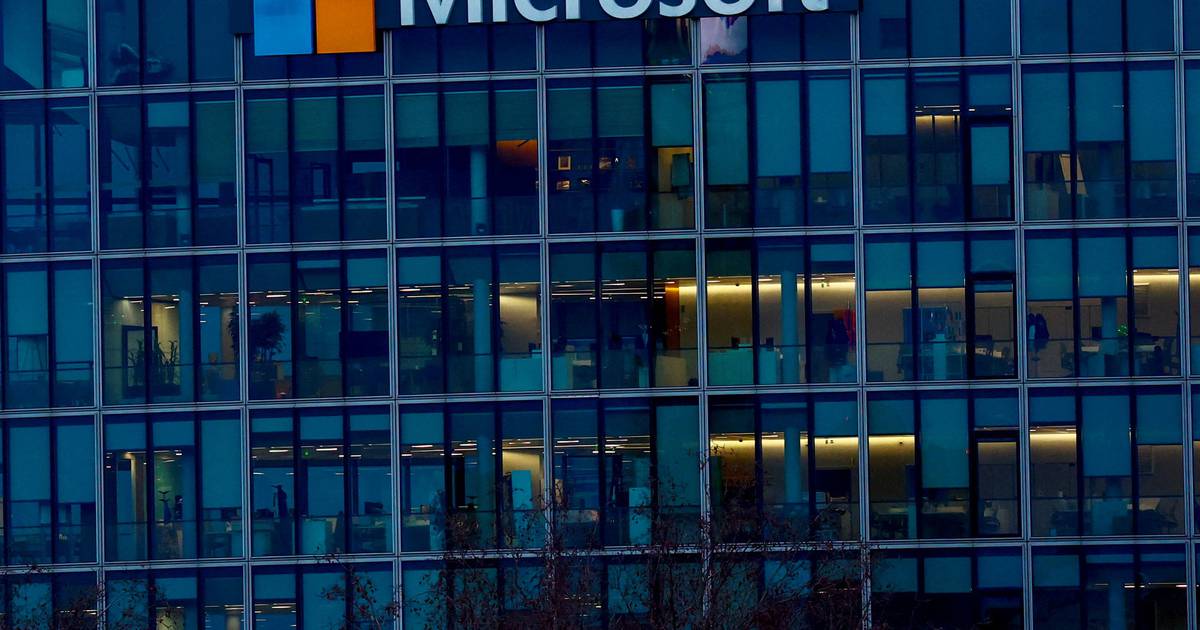
The relationship between OpenAI and Microsoft, its long-time investor and cloud partner, is today considered one of the most important alliances in the technology industry. But the partnership that created ChatGPT and turned the world of header technology on its head almost didn’t happen. Internal communications from Microsoft executives from 2017 and 2018, shown in federal court this week during the trial between Elon Musk and Sam Altman, reveal deep skepticism and hesitation within the tech giant about funding the then-tiny research lab.
“The most impressive thing in the history of artificial intelligence”
It all started in August 2017, when Microsoft CEO Satya Nadella sent an email to Sam Altman, head of OpenAI, to congratulate him on winning a video game competition where artificial intelligence managed to mimic human gameplay. Ten days later, Altman responded with an ambitious request: he sought Microsoft Azure cloud services worth about $300 million. OpenAI’s work on AI systems that could play video games showed early signs of success, but to continue the project they needed five times more computing power than they originally secured from Microsoft.
“We could figure out how to finance some of it, but not that much,” Altman wrote, apparently seeking both financial and engineering help. “I think it will be the most impressive thing in the history of artificial intelligence.”
Back then, OpenAI was still a small non-profit research organization, and this request set off alarms within Microsoft. Nadella forwarded Altman’s email to four of his CEOs for their opinion.
Cold shower from Redmond
The response from the Microsoft teams was far from enthusiastic. According to an email from Jason Zander, an executive vice president at Microsoft, the internal AI team “did not see any value in the collaboration.” Their research team thought their own work was “more advanced”, while the PR team didn’t like the idea of supporting a group pushing a “machines defeating humans” narrative.
Zander suggested that the Azure brand could benefit from being associated with Musk and Altman, but that he wouldn’t want the company to “burn out completely” or take a big financial hit. Subsequent analysis showed that Microsoft, if it fulfills Altman’s wishes, could lose about 150 million dollars over several years.
“Unless it can help us pull off a more direct network effect with OpenAI -> business value for Microsoft, we’ll have to turn it down,” Zander wrote.
The communication died down for a few months, but was revived in January 2018. Altman then offered Microsoft to license its game AI technology to the Xbox division in exchange for $35 to $50 million in Azure credits, but Xbox could not approve such an amount. On the same day, Nadella forwarded that information to fifteen directors, asking for their opinion and sharing his own doubts.
- All in all, I can’t say what kind of research they are doing and how, if they share it with us, it could help us move forward – wrote Nadella.
- From what Elon is telling everyone… he feels that OpenAI is on the verge of some major AGI breakthroughs… It’s clear that they are pushing AI to a level that none of our internal or external teams are pushing – he added.
Fear of Amazon as a key motivator
While they were skeptical of the technology, emails shown in federal court reveal, Microsoft executives feared something else: that OpenAI could end up in the hands of competitors. Chief technology officer Kevin Scott was clear about his doubts about the technological breakthrough, but pointed out the potential negative consequences of rejection.
- I am very skeptical about an imminent breakthrough in AGI. In my opinion, they treat us as a bucket of undifferentiated graphics processors, which is not interesting to us at all. They don’t say ‘there is a key piece of research that we can only do on Azure because of its technical differentiation’. If they were talking, it could be interesting marketing – Scott wrote.
However, he added that there could be “some PR downside” if they don’t fund them, “so they go to Amazon in a rage and smear us and Azure on the way out.”
Jason Zander repeated that fear the same day.
- My worst case scenario is that they leave Azure for AWS, that, as Kevin says, vilify us on the way there, and then achieve some great new innovation that is shared with our competitors – wrote Zander.
The upheaval that created the tech giant
In the end, Microsoft informed Altman that no team within the company wanted to sponsor OpenAI. Nevertheless, the fear of Amazon was apparently enough for the talks to continue. Less than 18 months after that correspondence, Microsoft announced its first major investment of $1 billion in OpenAI, after the lab established a for-profit arm. Over the years, Microsoft has become OpenAI’s most generous sponsor, investing a total of $13 billion in cash and cloud credits from 2019 to 2023.
That “bet”, as Kevin Scott once called it, paid off many times over. Microsoft gained access to cutting-edge AI technology, which it integrated into its key products such as Microsoft 365 Copilot and the Bing search engine, while OpenAI gained the enormous computing power needed to train its models. Although the relationship has recently become less exclusive, Microsoft remains a key partner of OpenAI, and Satya Nadella, čthe man whoć doubted their research, he should testify about this partnership in court.