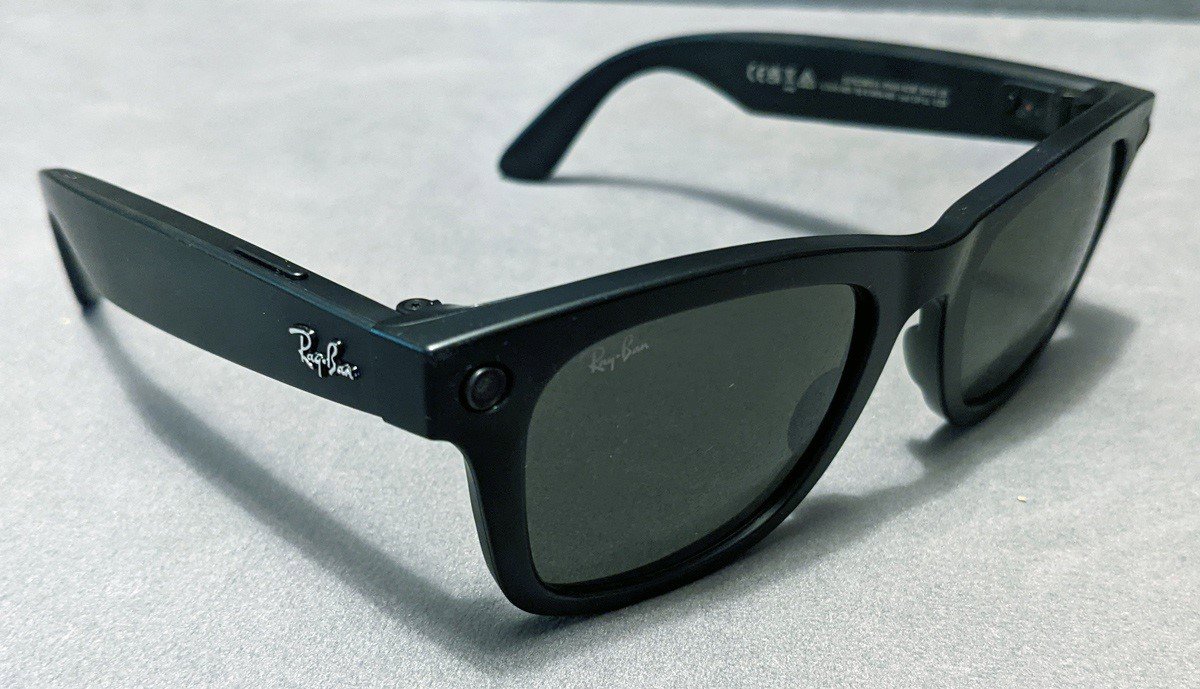
Meta has discreetly included facial recognition technology for its smart glasses in an application downloaded on millions of smartphones, which is capable of identifying people captured with the camera included in the glasses themselves.
The latest smart glasses launched by Meta were the Ray-Ban Meta Smart Glasses in late 2023 and have been constantly updated with artificial intelligence functions throughout 2024 and 2025.
An analysis by WIRED has discovered that code has been silently injected into the Meta AI ‘app’ during multiple updates, which internally it is known as ‘NameTag’ (name tag), and which, once activated, alerts the user when it recognizes someone.
The discovery of ‘NameTag’ clashes with the statements of Meta’s own directors, that in various interviews they have acknowledged that facial recognition in the glasses was only a possibility that they were reviewing.
In fact, in April, when a group of 75 human rights and consumer privacy organizations asked Meta to suspend its plans to integrate facial recognition functions into its glasses, including the ‘NameTag’ function, a Meta spokesperson told WIRED that “if we were to launch such a function, we would take a very thoughtful approach before integrating anything“.
The American media discovered the integration of this code in January, and which was already distributed on millions of mobile phones, just a few months before the Meta spokesperson’s statement in which he referred to a “very thoughtful approach.”
This function is not active yet, but it is based on an application that serves as Meta AI support and has been downloaded more than 50 million times. It is part of certain key functions, and once fully operational, will be in charge of transforming the captured faces into unique biometric signatures.
Meta spokesperson, Ryan Daniels, in defense of the analysis published yesterday by the American media, has stated that “nothing has been sent to consumers and no final decision has been made about what to do here, if anything.
In recent months, Meta has found itself in the middle of controversy due to several scandals that have affected its smart glasses. Not only because of the more than 75 groups that have requested the suspension of recognition technology, but also because of the journalistic investigation that uncovered how human contractors in Kenya manually watched videos with highly sensitive content recorded to train multimodal AI.
After the Kenya leaks, Meta was again accused of concealing that the voice and image recordings were processed simultaneously outside the device. A counter-statement regarding your statements concerning the privacy of this feature.