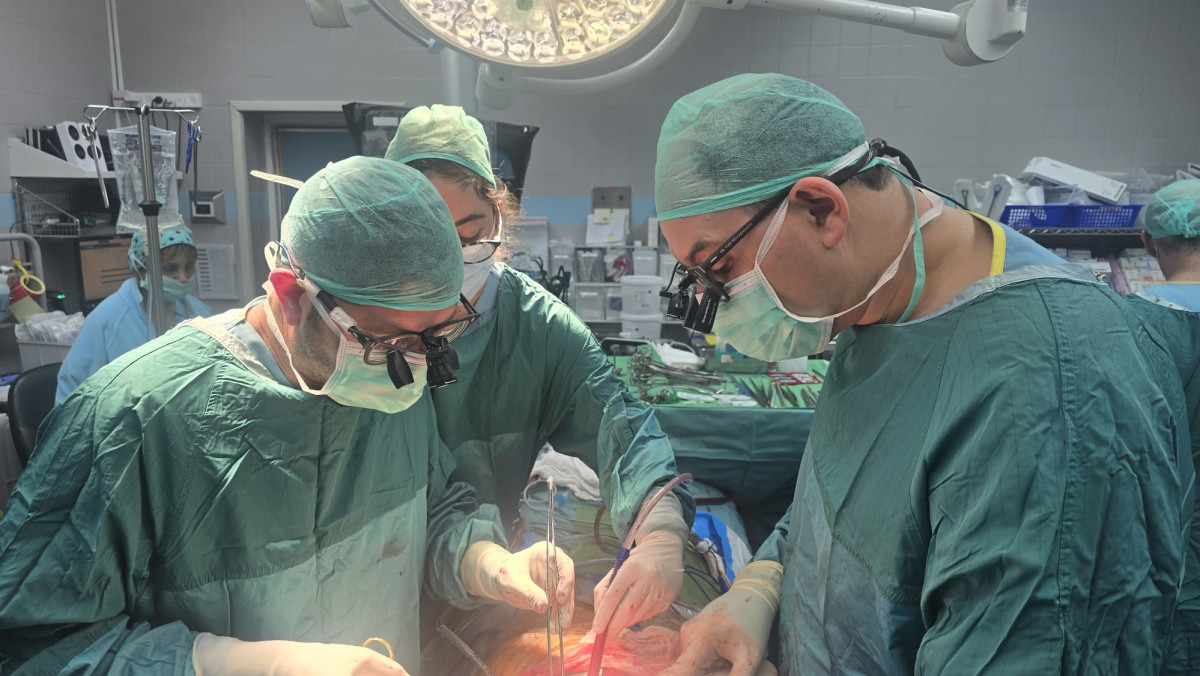
“It’s not a simple idea, and you have to open something in any case. The idea that you can enter the thorax under the rib cage,” Peishovitz pointed out.
He later explained: “You go under the sternum, you open the abdominal muscles, and there you can insert a human lung to the right and left. The name of the robot confuses people a bit, because it does not perform the surgery. The robot is a device that is operated by a surgeon, and simply allows you to do all the movements in a gentle and precise way, and all of this is initiated by a surgeon.”
On the role of the surgeon he clarified: “At the moment it is not safe and therefore a surgeon sits next to the patient.” He also added: “There is an assistant surgeon who during the operation can perform small operations, change instruments of the robot. But the entire operation is performed by the doctor, who sits next to the patient on the console.”
As for the patient’s recovery, he said: “The patient recovered very nicely, even beyond expectations, mainly because vision transplantation usually requires a painful opening of the chest and a long recovery. But after almost six days he had no pain, he was able to breathe, exercise his lungs properly, do physical therapy and recover quickly and went home after 9 days.”