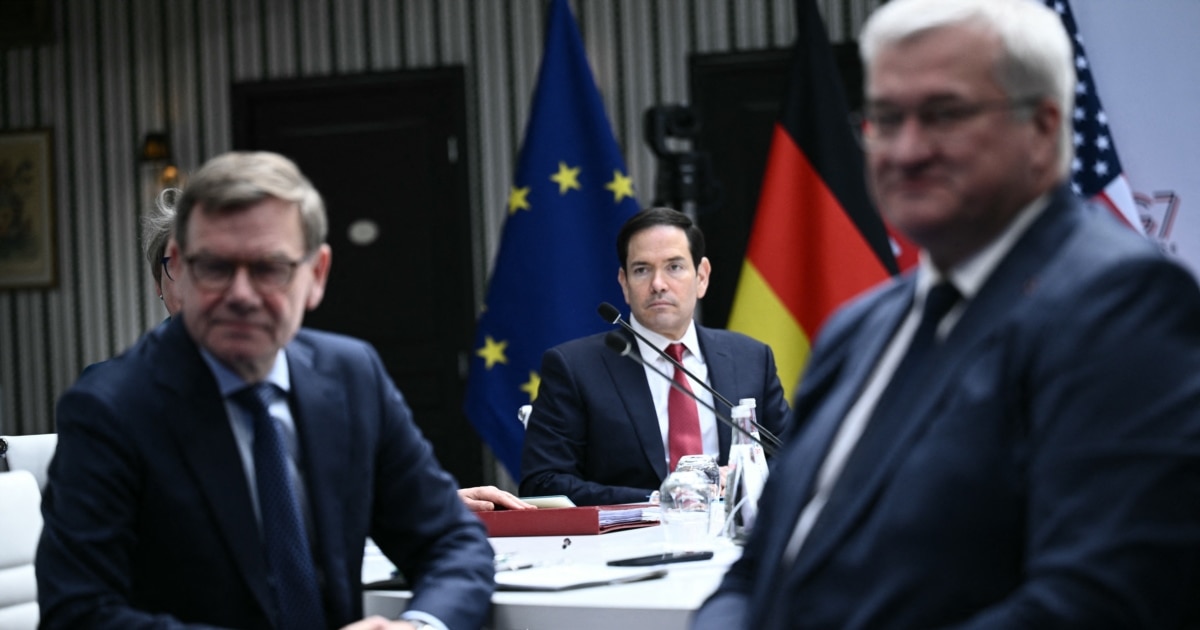
The ministers of economy and finance of the “Great Seven” announced today that they are ready to take “all necessary measures” to ensure the stability of the energy market.
The ministers gathered to discuss the economic consequences of the war in the Middle East.
In response to US and Israeli strikes on Iran, Tehran targeted oil-exporting countries in the region, closing the Strait of Hormuz, almost completely stopping transportation through the Persian Gulf.
These supply constraints have driven up oil and natural gas prices, causing serious knock-on effects in the supply systems of various sectors.
“We are ready to take all the necessary measures in close cooperation with our partners, including to maintain the stability and security of the energy market,” said the joint statement of the G7 energy and finance ministers, as well as the heads of central banks.
“We recognize the importance of coordinated international action to mitigate the consequences and protect macroeconomic stability,” they noted.
The G7 (USA, Canada, Great Britain, France, Germany, Italy and Japan) plays an important role in shaping the political agenda of the world’s richest countries.
At the moment, France chairs the G7. French Finance Minister Roland Lescure stated in a press conference that what is happening now in the Persian Gulf has energy, economic, financial market and possibly inflationary consequences.
After a meeting last week, G7 foreign ministers said it was “absolutely necessary” for Iran to restore free passage through the strait and called for an end to attacks on civilian infrastructure.
Amid mounting pressure, many governments have taken measures to mitigate the impact of supply problems and skyrocketing energy prices.
On Friday, the French government announced that it will allocate 70 million euros in April to support the fishing, agriculture and transport sectors.