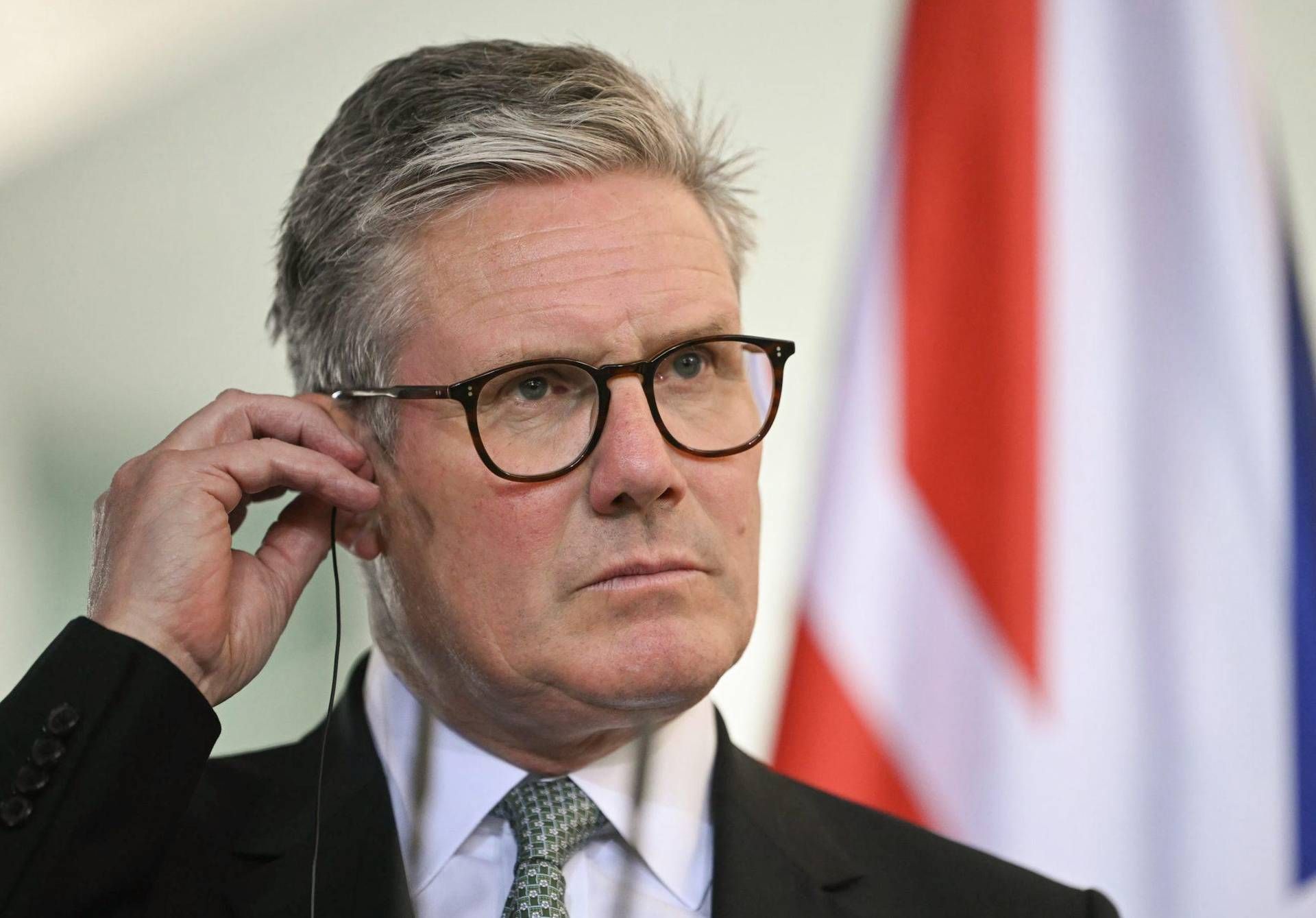
“The collapse of Labor and the rise of two other parties, Reform UK, an expression of the right and the Green Party, an expression of the left, is clearly the result of popular dissatisfaction with Government policies, and not because voters believed in the programs presented by two fundamentally new coalitions on the British political scene”. At Adnkronos, David Klemperer, academic at the Institute of Political Analysis at the University of Bath and co-editor of the British sociopolitical magazine “Renewal”, comments on the recent elections in the United Kingdom which involved the renewal of the councils of 136 local administrations throughout England, for a total of around 5,000 new elected councillors, and the renewal of Parliaments in Scotland, with the appointment of 129 members, and in Wales where the seats went from 60 to 96.
The verdict at the British polls outlines a deeply shaken political landscape, marking what many observers call a breaking point for Keir Starmer’s government. The final data shows a significant retreat of the Labor Party, which lost around 1,100 councilors and control of around 28 councils across the country, while the Reform UK wave overwhelmed traditional strongholds, leading Nigel Farage’s party to control ten councils with almost 1,500 seats won. No less significant is the advance of Zack Polanski’s Greens, who have wrested the leadership of historic areas such as Southwark and Hackney from Labor, also winning important challenges for the office of mayor.
Analyzing the vote, Klemperer observes that “the strong unpopularity towards Prime Minister Keir Starmer is clear which resulted in the loss of many seats in favor of Reform, but the flow of outgoing votes was directed towards other paths. If we analyze the results of the polls in depth, it is highlighted that Reform obtained seats because Labor lost votes not directly towards Reform, but rather towards the Greens, making Polanski’s party an alternative to Starmer’s. Therefore, while the two parties closest to each other are challenging each other, on the other front a gap has opened up which has allowed the populist right to overcome them in the most contested constituencies”.
This hemorrhage towards progressive parties is also visible beyond the English borders. In Wales, for example, Labor suffered heavy losses to Plaid Cymru, the main nationalist, centre-left party, which defends independence and Welsh identity, representing a strong alternative to Labour, historically the leading party in the country. Klemperer underlines how this is the result of a specific, poorly thought-out strategy: “Starmer’s party fundamentally made a big mistake: aware that it was losing support on a national scale, it thought it would regain the trust of its voter base by proposing fundamentally right-wing reforms. A strategy that proved counterproductive because it was received with contempt for the historical values of the Labor electorate. While the majority of those who vote Labor consider themselves progressive, the government adopted a line that made it appear mainly interested in obtaining the approval of people who voted for Reform UK, when instead at the polls the main blow was received by a coalition, the Green Party, closest to it and which it believed could not represent a real threat”.
The impression of a government pursuing the right-wing agenda has been fueled by high-impact political decisions. Klemperer explicitly cites issues such as the cut to the winter heating subsidy, the position on Israel and Palestine and the approach to immigration, which have created the impression of an executive that is “not interested in defending the kind of values that progressive voters care about”.
Another central element of the debate concerned the figure of Nigel Farage and his connection with Donald Trump. Klemperer is clear in separating the two phenomena: “Nigel Farage is succeeding despite his association with Donald Trump, who is a deeply unpopular figure in the UK. Indeed, the association with the American leader is something that will weaken his ability to build the kind of coalition needed to win a general election.”
In fact, it is worth remembering that this electoral round in England involved administrative elections, and not political ones. The natural expiration of Keir Starmer’s mandate is set for August 2029, so he has another three years available to try to regain consensus and adopt strategies more similar to his electorate. Even if, as we have seen, the United Kingdom is in the midst of a real political short circuit. While the prime minister enjoys a majority in Westminster, the rest of the country is fragmented on several fronts: from the far right represented by Reform UK, through the historic British two-party system made up of Labor and Tories, which has objectively lost appeal, up to the new left where the Greens stand out.
However, despite the humiliating defeat and the climate of crisis, the stability of the Starmer government does not appear to be in immediate question. David Klemperer categorically excludes the possibility of early general elections, recalling the solidity of the parliamentary majority. In fact, the academic concludes by stating that “there is no possibility, or almost no possibility, of an early general election called by Keir Starmer, since the government still has three years of mandate ahead of it and there is no reason why the prime minister should throw away that majority now. The fact remains that, without a decisive change of direction towards his electorate, the road to reconfirmation today appears extremely complex”. (Of Alessandro Allocca)