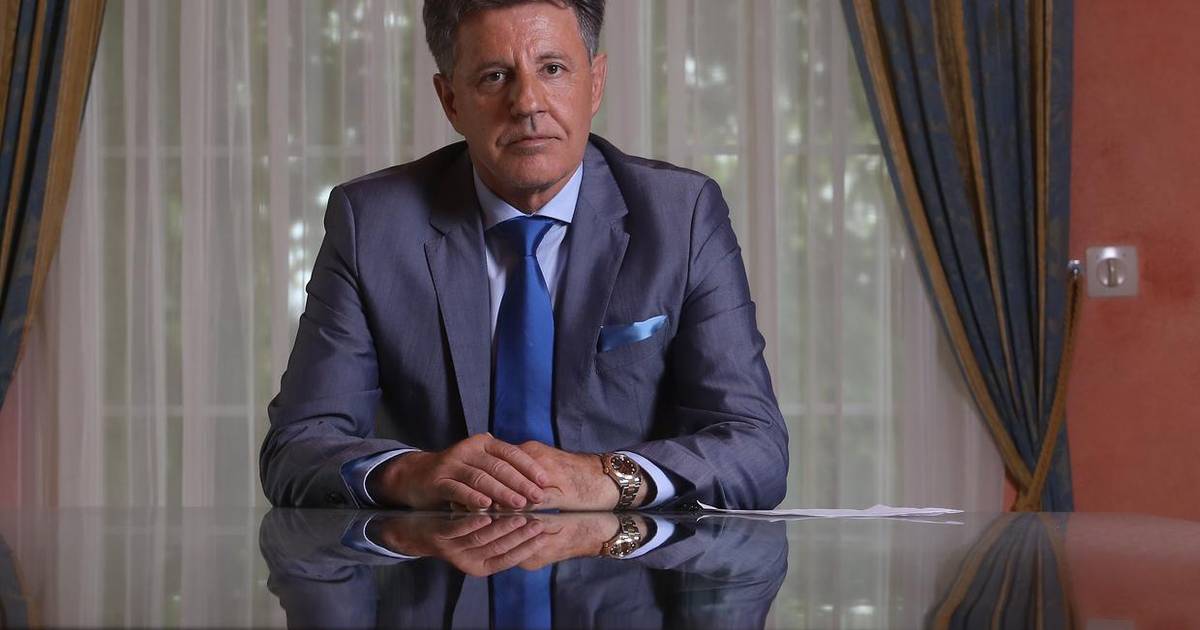
In the repeated procedure which is being conducted before the Municipal Civil Court in Zagreb based on the lawsuit filed by entrepreneur Zvonko Zubak against the Republic of Croatia over the S-300 anti-aircraft system, the State Attorney’s Office is trying to prove that Croatia settled its obligations for the delivered parts of the system even during the Homeland War.
The procedure was reopened after the Supreme Court on March 31, 2026 annulled the judgment of the County Court in Zagreb from 2024, as well as the earlier judgment of the Municipal Civil Court from 2021, and sent the case back for a new trial. The first hearing in the repeated proceedings was held on July 7.
According to the earlier verdict of the County Court, the Republic of Croatia had to return the parts of the S-300 system to Zubak or pay the equivalent of 200 million US dollars with late interest since 1997. Such a decision represented a complete reversal because the Municipal Civil Court had previously rejected Zubak’s claim on two occasions.
In the continuation of the procedure, the DORH presents evidence that tries to show that the system, that is, its key parts, is more was paid. Among the most important pieces of evidence is the testimony of a former employee from the Office of Assistant Minister of Defense Vladimir Zagorec, who described to the court, in the criminal proceedings against the retired general Zagorec, the way in which payments for the purchase of armaments were made during the embargo. The witness stated that her job was the calculation of transport costs and the recording of international payments for the procurement of military equipment. According to her statement, formal contracts with suppliers mostly did not exist because Vladimir Zagorec negotiated procurement directly with suppliers, who in most cases came to his office. Payments were made through international bank orders, i.e. SWIFT transactions, and because of the embargo, it was not allowed to indicate that missiles or military equipment were being paid for.
According to her testimony, during July or August 1994, payments were made for missiles marked 5V55R, which belong to the S-300 system, in the total amount between 11 and 11.5 million US dollars. DORH claims that the wordč about part of a total of ten international payments with which Croatia settled its obligations to suppliers. Zvonko Zubak, on the other hand, denies that he was paid any of that. At the same time, the issue of active identification for conducting the dispute is also open in the proceedings. Namely, the court requested from the plaintiff the delivery of the contract on assignment of rights between Zvonko Zubak and the company Winsley Finance Limited, registered in the British Virgin Islands. According to the documents, the contract was concluded on August 9, 2022 at the Croatian embassy in Prague. According to the contract, this company, and not Zubak personally, could be the bearer of any claims arising from the verdict.
At the hearing on July 7, for the continuation of the evidentiary proceedings, the court accepted the proposals of the prosecutor Zvonko Zubak for the hearing of several witnesses, among them the retired general Vladimir Zagorec, the testimony of which the prosecutors consider one of the key to shed light on the way in which the procurement and payment of the system was organized during the war years. S-300.
The S-300 system, i.e. parts of the system acquired by Croatia during the Homeland War, was publicly displayed for the first time at the military parade of the Croatian Army on Jarun in 1995. Although its introduction at the time had a strong psychological and political impact, over the years it has been argued that the system was never fully completed or operational, and its subsequent fate remained the subject of much speculation.
866764 Belleville
belleville casino
belleville | Users list | Community | Idol Story – Love Live!
GTA 5 Mods av casinonova – GTA5-Mods.com
Casinnovascotia
Bocman
Poser – 3D Rendering & Animation Software
Chordie Guitar Chords and Lyrics
chancescasino | Players list | Bandori Party – BanG Dream! Girls Band Party
chancescasino – Channel on Coub
chancescasino | Profile
chancescasino (@chancescasino) | Investagrams
Chancescasino
63504 Crowncasino
crowncasino Official Homepage | PubHTML5
Crown Casino
Crowncasino Public profile | SquarePlanet
crowncasino | Profile
crowncasinoo | Profile
crowncasinoo – MaiOtaku Anime
crown casino's (azudops) software portfolio | Devpost
150631
Home.Php
crowncasino – Member Profile – The 016 – Worcester, Mass.
crowncasino's profile – Giloo Documentary