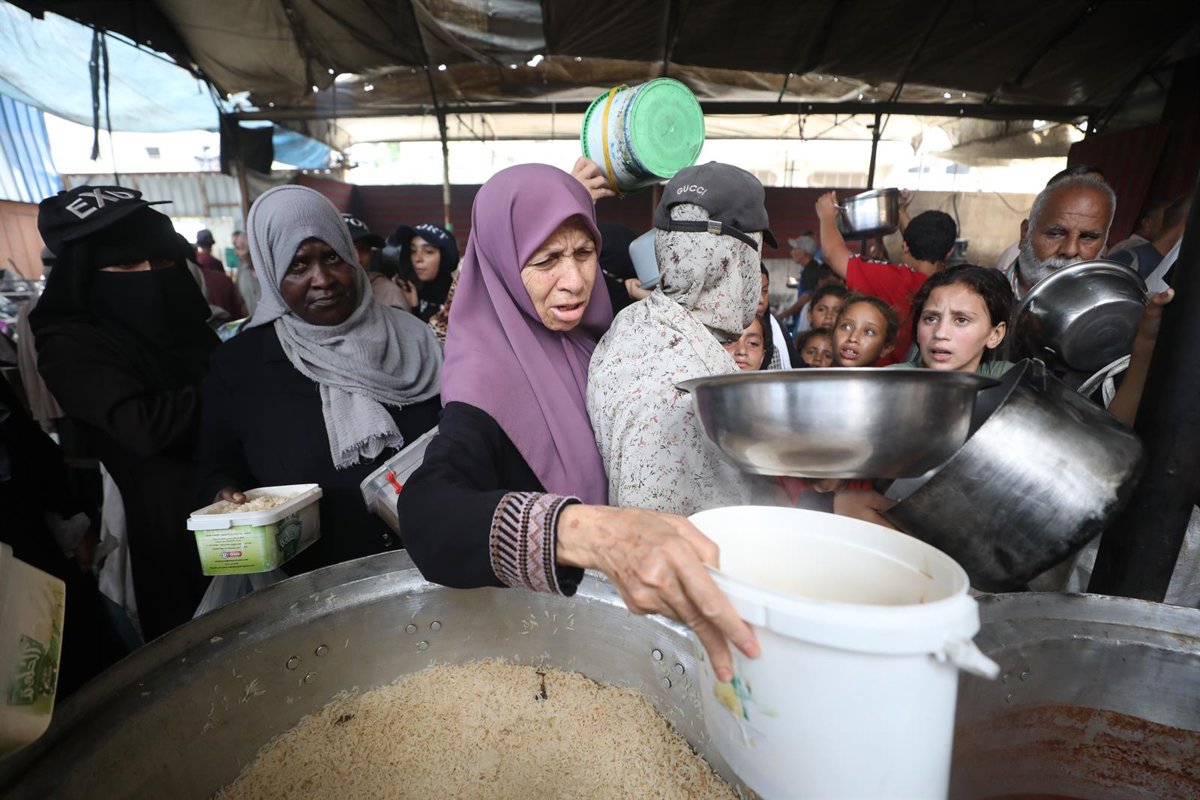
The latest analysis prepared by several United Nations agencies on the food situation in the Gaza Strip points to an improvement in food security and child nutrition throughout the Palestinian enclave, although it warns that these advances remain “fragile.”
The Integrated Food Security Phase Classification (IPC) estimates that 1.4 million people – that is 67% of Gaza’s population – are currently facing crisis levels or above of acute food insecurity, phase 3 of the scale. Despite the seriousness of the situation, this represents a slight improvement compared to the 1.6 million people – or 77% of the population – who were in this situation at the end of last year.
Likewise, 212,000 people remain in emergency or phase 4 conditions, according to the IPC classification. Many of them live in areas close to the line under Israeli military control, where access to humanitarian aid and services remains particularly difficult.
Regarding the distribution of food assistance, UN agencies indicate that since the signing of the ceasefire agreement between the parties, food and nutritional assistance has increased “significantly.”
“Food packages reached around 1.5 million people. Multipurpose economic assistance reached a maximum of around 700,000 people and nutritional support reached 60% of children under five years of age, while increasing access to treatment for acute malnutrition,” the IPC said.
Despite everything, only the Kerem Shalom crossing in the south remains open in the Strip, which according to the UN limits the entry of essential goods for recovery and keeps the majority of the population dependent on humanitarian aid.
“The people of Gaza continue to face enormous difficulties in recovering their livelihoods, local food systems and essential services,” said the joint statement from the Food and Agriculture Organization of the United Nations (FAO), UNICEF and the World Food Program (WFP).