China’s national airline re-operated the Beijing – Pyongyang route, ending the long period of traffic freeze caused by the Covid-19 pandemic.
On the morning of March 30, a flight of Chinese national airline Air China landed at Sunan International Airport, Pyongyang, resuming the direct flight between the two capitals after a 6-year hiatus. This event took place just a few weeks after passenger train service between Beijing and Pyongyang was restored on March 12.
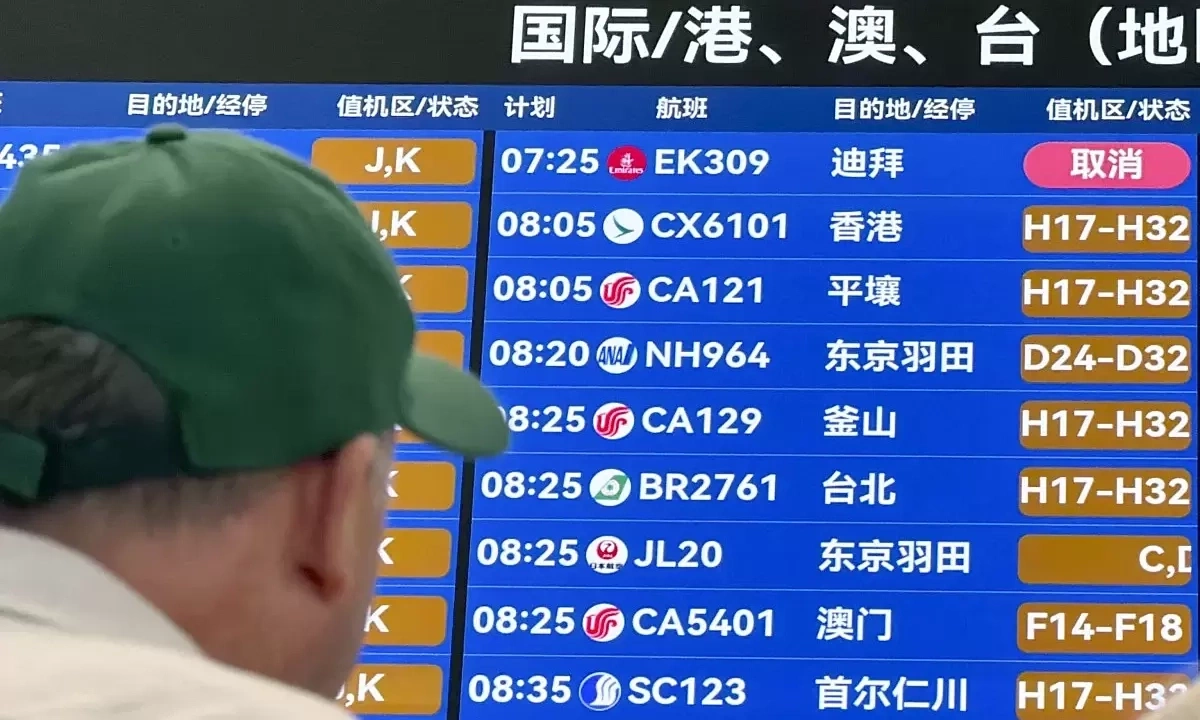
The Air China flight using Boeing 737 aircraft left the runway at Beijing Capital International Airport at 8:00 a.m. and landed in Pyongyang at 10:40 a.m. (local time). Then, the plane made a round trip back to China at around 12:00 the same day. Currently, Air China plans to maintain the frequency of one flight per week, every Monday.
The notice board for flight CA121 to Pyongyang reappeared at Beijing airport on the morning of March 30. Image: SCMP
At Sunan airport, Chinese Ambassador to North Korea, Mr. Wang Yajun, and diplomats were present to welcome the first passengers. Mr. Vuong affirmed that the resumption of flights is a “milestone event” in aviation cooperation between the two countries. “The event is a bridge to promote people-to-people exchanges, creating new momentum for tourism, economic cooperation and cultural exchange,” the Chinese Ambassador emphasized.
Since the beginning of 2020, due to the complicated developments of the Covid-19 pandemic, North Korea has implemented the world’s strictest “border closure” policy. All commercial flight and passenger train operations were completely suspended to prevent the virus from entering.
Although North Korea’s national airline – Air Koryo – has begun operating some flights to Beijing again from 2023, the official return of China’s national airline is considered a sign of complete recovery. A representative of passengers on the first flight shared with the media that this was a “perfect flight experience” and believed that travel would be more convenient.
Before the pandemic broke out, Chinese tourists accounted for 90% of all international visitors to North Korea. The delay in resuming tours from this billion-people country once surprised observers, because this is an important source of foreign currency for Pyongyang.
North Korea is gradually easing restrictive measures. In early 2024, a group of Russian tourists were allowed to enter, marking the first foreign visitors to set foot in the country. Experts predict that the wave of Chinese tourists and traders will soon return when the two countries restore both railways and air routes.
Restoring direct flights is not simply a traffic issue, but also a strategic step towards post-pandemic economic recovery and strengthening connectivity in Northeast Asia.