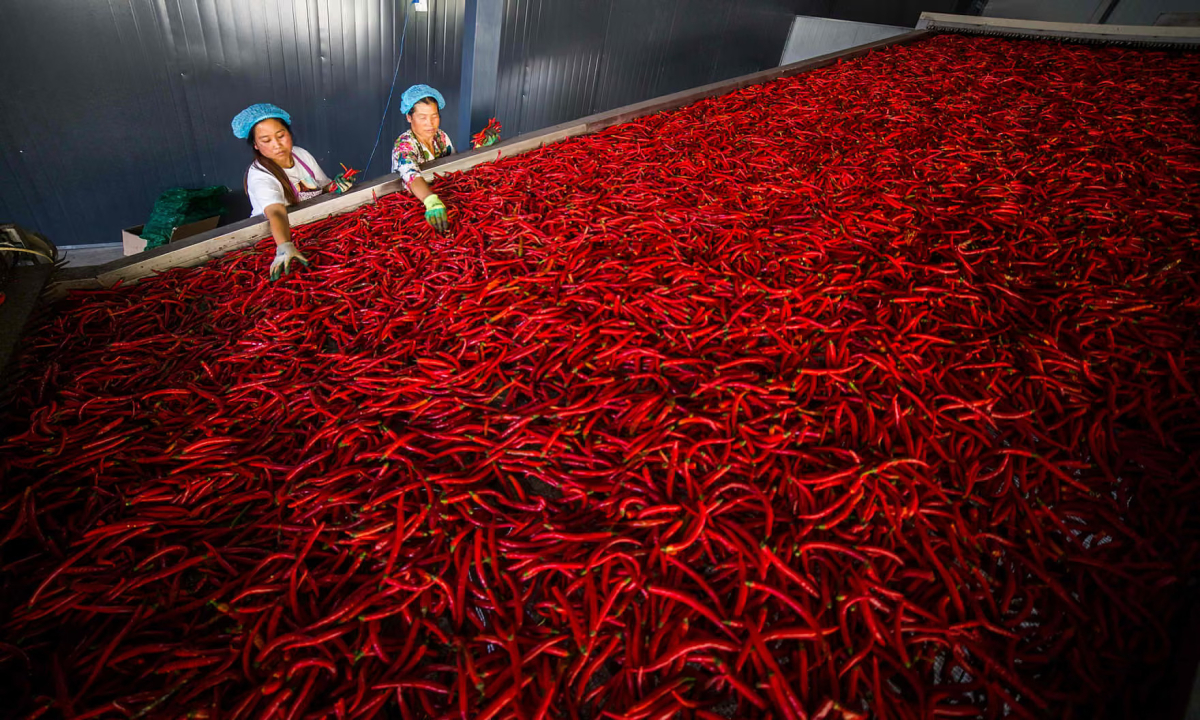
Many people often think of the spicy taste (mala) of Sichuan or the red hot pots like lava in Chongqing when talking about Chinese cuisine. However, historical documents of the Qing Dynasty prove that Guizhou people were the first residents to put chili into their daily menu more than 260 years ago.
Although the terrain is characterized by steep slopes and is the only province in China without plains, Guizhou possesses soil conditions for chili plants to grow, making it the largest chili growing region in the country.
During the low season, purchasing factories in Guizhou still operate continuously to process bales of dried chili. Statistics show that by 2025, the amount of chili circulating through this hub will reach 380,000 tons, serving export to more than 80 countries and territories.
Guizhou’s position comes not only from its output but also from its creativity in processing. Three centuries ago, when European traders introduced this plant, indigenous people initially only considered it an ornamental plant. Due to the lack of arable land and resources to raise livestock, they experimented with adding this spicy flavor to their meals and created countless unique products.
A typical dish is hula jiao (hand-pounded roasted chili), an indispensable dipping sauce in the daily meal of indigenous people. In traditional families, people still keep the habit of cooking on the terrace.
They use wild ferns as fire starters and burn pine branches to get ash mixed directly into the pan to maximize the smoked flavor. The finished products are batches of scorched chili peppers, emitting a strong aroma like grilled ripe fruit. When mixed with soy sauce and cooking oil, this sauce creates the slight bitter taste of kitchen smoke mixed with the natural sweetness of meat (umami).
The presence of the globally famous jar of steamed chili sauce born in Guizhou is the result of the adaptation and commercialization of agricultural products by indigenous people.
https://dev.to/leelee_stone_7831314ef57c/vos-experiences-avec-les-systemes-de-points-de-fidelite-des-bookmakers–42dd
https://faith.consulting/forum/financial-questions/comment-profiter-au-mieux-des-paris-combines-pour-les-promotions
https://dynamitesports.com/members/paraeagle22/activity/15659/?_login=d3708e4362
https://www.adrex.com/en/forum/climbing/what-defines-resort-wear-in-modern-women-s-fashion-84582/
https://www.chrt.co.uk/group/mysite-200-group/discussion/aa3201cd-871b-4ffa-a268-e56ed271677f
https://forums.delphiforums.com/hepcodyssey/messages?msg=4929.1
https://www.trustlink.org/Ask-The-Community/Question/Business/Looking-for-good-quality-linen-clothing-for-men-any-recommendations-19811
https://groups.diigo.com/group/TechNews/content/thinking-of-investing-in-some-quality-linen-pieces-for-summer-any-brands-you-love-20828365
http://www.cyberlord.at/forum/?id=11218&thread=129
https://discuss.micechat.com/forum/lounges/micechat-main-lounge/8699176-where-do-you-usually-shop-for-cocktail-dresses
https://dnfinance.freeflarum.com/d/5422-looking-for-some-really-nice-blouses-for-everyday-wear
https://aa.activeboard.com/t72830779/any-good-recommendations-for-womens-shirts-that-are-both-com/?page=last
https://urhistorydept.wixsite.com/mysite/group/mysite-group/discussion/db33ebce-8df6-43c5-8ab7-e7ef49b2878d
https://groups.google.com/u/0/g/kogepe61/c/6umIthKtmQc
https://forums.hostsearch.com/group.php?gmid=113922
https://hpad.dataone.org/s/bk87TLFcQ
https://telegra.ph/Thinking-about-getting-some-new-sandals-Any-good-brands-out-there-05-18
https://members.boardhost.com/RickXTN/msg/1779179671.html
https://www.runningahead.com/groups/mitbbs/forum/Post/08deb64a368a44ce58d90bd575f2f4e9
https://www.thedelancey.com/group/the-delancey-group/discussion/886b2f15-280e-4c5d-a31a-6fa83273ac47
https://lessons.drawspace.com/post/1085420/looking-for-some-stylish-tops-for-warm-weather-o
https://discuss.facts.net/threads/my-wardrobe-needs-some-new-shirts-any-recommendations.115644/
https://app.geniusu.com/activities/2524939
https://www.ewebdiscussion.com/threads/what-are-your-experiences-with-crypto-casinos-and-staking-options.394524/
https://www.thepartyservicesweb.com/board/board_topic/3929364/8364316.htm