Budapest attracts tourists throughout the year, and rightly so. The capital of Hungary manages to combine impressive European architecture, the Danube that crosses the city, excellent food, markets, shopping, nightlife, culture and of course the thermal baths that have become one of its hallmarks. Along with all these, it is still considered a destination that allows you to enjoy a European vacation at affordable prices compared to many capital cities in Western Europe, which is noticeable in the prices of hotels and restaurants up to the costs of entertainment and attractions.
One of the great advantages of Budapest is that it does not belong to one type of vacation. Couples can come there for a romantic and pampering weekend on the banks of the Danube, young people will find cool bars, restaurants and nightlife; Families can combine parks, attractions, markets and even water activities; And those looking for a classic urban weekend can easily fill a few days with a fun stroll between museums, cafes, shopping and local food. But Budapest changes a lot between seasons, as does the weather, congestion and prices. Therefore, the question is not if it is worth coming, but when, and which period will suit exactly the vacation you are looking for.
So when is the best time to fly to Budapest?
For those looking for the balance point between pleasant weather, traffic and price, May-June and September-October are usually the most successful periods. But it is important to understand that the “best time” depends on several variables. January and February are much colder, but are outside the peak season and are suitable for those who are willing to dress well in exchange for the chance of a quieter and more financially rewarding vacation. July and August are hotter and busier but there is a lot of interesting happening in the city, while the end of November and December is a completely different story: the weather is wintry and cold, but the Christmas markets and the decorated city make the period one of the most special of the year.
Budapest throughout the year: when should you come?
| month/period | Relative prices | Tourist load | Weather |
|---|---|---|---|
| January-February | relatively low | relatively low | Very cold, sometimes around zero |
| March-April | medium | Medium and rising towards spring | Cool to pleasant, changeable weather |
| May-June | medium-high | medium-high | Pleasant to warm, excellent for hiking |
| July-August | relatively high | high | Hot and sometimes very hot |
| September | medium-high | high but moderate | Nice and warm at the beginning of the month |
| October | medium | medium | Cool and pleasant, especially at the beginning of the month |
| November | low-medium | lower at the beginning of the month | Cold, shorter days |
| December | medium-high | Higher around the Christmas and holiday markets | Very cold and winter atmosphere |
The prices were for years one of the reasons for Budapest’s popularity among Israelis, and even after the recent price increases, it can still offer relatively good value for a vacation in a European capital. You can find a wide range of accommodation in the city, from apartments and simple hotels to boutique hotels and five-star hotels, and the gap between the low and peak season can be significant. Food and entertainment are also relatively accessible, although in the tourist areas and luxury restaurants you can of course pay much more.
Shopping, bars and baths: what is there to do in Budapest?
The price is only part of the story. Budapest is one of those cities that manage to cram a lot into a three or four day vacation. The Danube separates mountainous Buda from urban Pest, and along both banks are scattered some of the city’s great symbols: the impressive Parliament Building, the Chain Bridge, the Citadel Hill and the Fishermen’s Bastion. You can start the morning at a food market, continue to the museum or shopping, stop for coffee and cake, go to the baths in the afternoon and end the day at a restaurant or bar in the Jewish Quarter.
The markets are also part of the experience. The large indoor market (Great Market Hall) It is the largest and best known of the city’s traditional markets, and operates in an impressive building from the end of the 19th century. Among the stalls you will find vegetables and fruits, sausages, paprika, pastries, Hungarian products, local food and quite a few souvenirs. Those who want to get a little away from the tourist route can also visit neighborhood markets such as those in Rakutzi Square or Honiadi Square.
The local cuisine has long been much more than goulash and nagush. Alongside traditional Hungarian cuisine, a contemporary culinary scene of chef restaurants, bistros, bakeries, cafes and wine bars has developed in the city. The Jewish quarter, and especially the area around the seventh quarter, has become in recent years one of the most prominent entertainment centers in the city, with restaurants, cafes and nightlife, and of course theRuin Bars The famous ones who work inside old buildings and spaces.
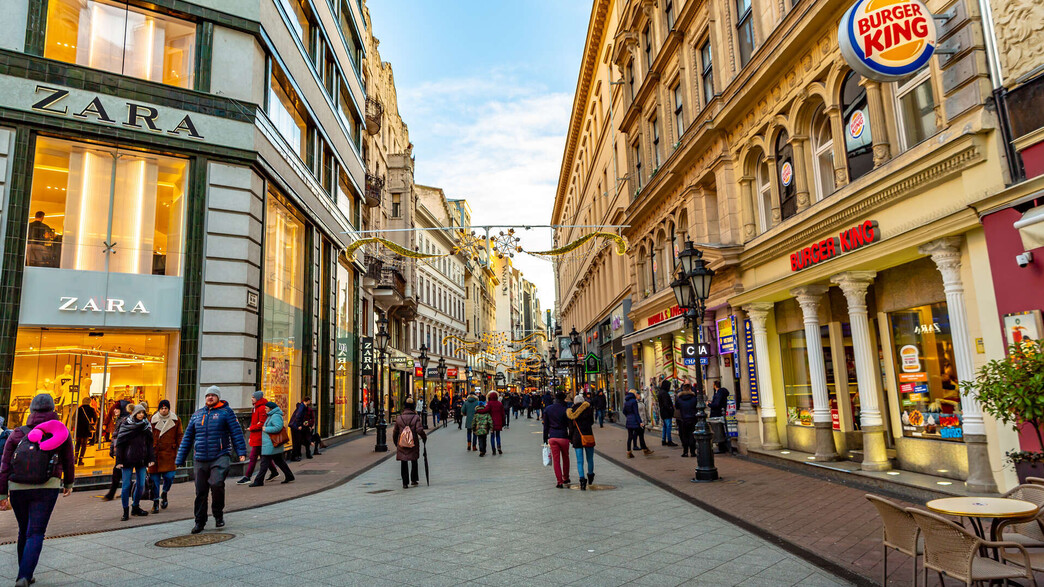
Shoppers will almost certainly come to Vatsi Street (Váci street), The famous shopping streets of Budapest, where national chains, shops, cafes and restaurants. For those who prefer culture, the city has a large selection of museums. Among the most prominent are the Museum of Fine Arts, Adjacent to Heroes’ Square and displaying a wide art collection, and the House of Music of Hungary, An impressive contemporary structure in the city park that combines exhibitions and music.
And above all of these is one of the attractions most identified with the city – The thermal baths. Budapest sits on thermal springs and the tradition of bathing in them is part of local history. The Secheni baths are among the most famous in the city, and there are other bathhouses operating alongside them. They can be enjoyed in any season, but in winter, when the temperatures outside approach zero and steam rises from the hot pools, they become an experience that is difficult to find an equivalent in another European city vacation.
Budapest according to the seasons
Spring in Budapest: the city is waking up
Spring is one of the most beautiful times for a city break in Budapest, but there is a big difference between its beginning and its end. In March it can still be quite cold and the weather is changeable, while in April the temperatures start to climb and in May you can already enjoy pleasant and even warm days.
As spring progresses, the parks fill up, the terraces of the cafes and restaurants return to activity and walking along the Danube becomes much more pleasant. This is a particularly good time for those who plan to see a lot of the city on foot, from the Parliament building to the Citadel Hill, from the Great Market to Heroes’ Square.
May is one of the most successful months for a trip to the city. The weather is usually pleasant, the daylight hours are getting longer and the peak summer heat has not yet arrived. However, spring can be rainy and changeable, so you should come with layers and a small umbrella in your bag.
Summer in Budapest: long days and lots of action
In the summer, Budapest is at its peak. The days are long, the parks and the banks of the Danube are filling up, the restaurants and cafes are bringing out tables and the nightlife is at its peak. June can still be very pleasant, but in July and August the temperatures rise and during heatwave periods they can climb well above average.
This is a great season for those who love a vibrant city. You can combine a cruise on the Danube, a picnic or a trip to Margaret Island, spending time in the city park, dining out and long evenings in the Jewish Quarter. In the summer, the city and its surroundings also host large events and festivals, which add to the atmosphere but can increase congestion and the demand for accommodation.
The downside is exactly the same demand. July and August are busy months, and the heat can make a day of walking between the attractions less pleasant. You should book flights and hotel in advance, especially if the dates are tight. Those who want to enjoy the benefits of summer but prefer slightly more comfortable weather can aim for June or the beginning of September.
Autumn in Budapest: perhaps the best season in the city
September-November
If you have to choose one season that balances almost everything, the fall season is a serious candidate. September can still feel like a continuation of summer, with pleasant days that are suitable for a long stroll in the city, and in October the temperatures drop but still allow you to enjoy outdoor attractions without the heat of July and August.
Besides the weather, there is something that is especially suitable for Budapest in autumn: the European architecture, the cafes, the parks that change colors and the cool evenings create a particularly pleasant atmosphere for a city vacation. As we move into October and November, the city cools down and the tourist load tends to moderate as well.
November is already a month beyond winter. The days are shorter and colder, but those who don’t need the sun to enjoy a city vacation also have advantages: the museums, cafes, restaurants and of course the baths become more attractive as the temperatures outside drop. Towards the end of the month, the Christmas atmosphere gradually begins to take over the city center.
If you have to choose only one month, September is probably one of the safest choices: The weather is still pleasant, most outdoor activities are relevant and the city continues to be vibrant.
Winter in Budapest: cold outside, hot in the baths
December-February
Winter in Budapest is a real European winter. In January the average daily temperature is around zero, the nights can drop below zero and also in December and February you should prepare for a good coat, layers and suitable shoes.
But in a somewhat paradoxical way, it is precisely in winter that one of the most special versions of the city is revealed. The thermal baths turn from a nice attraction into one of the highlights of the vacation: a dip in a hot and steamy pool when the temperatures outside are low is one of the experiences most associated with Budapest. The rest of the day can be built around museums, cafes, restaurants, shopping and warm bars, so a city break doesn’t have to be completely dependent on the weather.
December is the exception of the winter season. The Christmas markets, lighting and decorations give the city center a particularly festive atmosphere. Among the prominent focal points are the market in Vorośmarty Square and the events around St. Stephen’s Basilica. This period attracts many visitors, so those who come because of the Christmas atmosphere should take into account that the prices and congestion may also increase.
After the New Year celebrations the city enters a quieter period. January and February are suitable for those who are willing to face the cold in exchange for fewer tourists and the chance to find more favorable prices on flights and hotels.
frequently asked questions
When is the best time to fly to Budapest?
For most travelers, May-June and September-October offer the most successful combination of comfortable weather and a city break. If you have to choose one month, September is an excellent option thanks to the pleasant temperatures and the possibility to enjoy almost everything the city has to offer outside and inside.
When is the cheapest time to fly to Budapest?
There is no month that guarantees the cheapest price, because flight and hotel prices vary according to demand, availability and the time of booking. However, January and February, after Christmas and the New Year celebrations, are usually months to check if budget is the main consideration.
When is less busy in Budapest?
January and February are among the quieter periods in terms of tourism. Part of November can also be relatively calm, especially before the Christmas market season enters its peak.
Is it worth flying to Budapest in winter?
Definitely, especially for those who like city breaks. The thermal baths are a big advantage in winter, and along with them the city has plenty of museums, restaurants, cafes, shopping and indoor activities. You just need to arrive prepared for temperatures around zero and sometimes below it.
Is it worth flying to Budapest in summer?
Yes, especially for those who love a vibrant city, long days and nightlife. However, July and August can be hot and busy. Those who want a summer experience in more favorable conditions can consider June or September.