Indian parliamentst a third of the seats could be reserved for women in the future. This is what a legislative initiative by the government of Prime Minister provides Narendra Modi launched this week. “I believe that the voice of women in this House will bring new strength, new thinking and greater empathy,” said the Hindu nationalist politician.
Women are currently clearly underrepresented in the Indian Parliament: they make up only 14 percent of representatives in the lower house and 17 percent in the upper house. The women’s quota was actually already agreed in a law passed in 2023. However, its implementation is linked to the next census – and could therefore be delayed until after the 2029 parliamentary election.
Needs opposition support
Modi’s government does not have the two-thirds majority needed to pass the measure. It is therefore dependent on the support of smaller parties. The vote is scheduled to take place as part of a three-day special session of Parliament by Saturday at the latest.
Your exit is open. The women’s quota generally meets with cross-party support. However, it is linked to a second reform: the enlargement of Parliament. Specifically, it should Lok Sabha By the 2029 election year, it will have 850 seats instead of the previous 543, making it the largest democratically elected lower house in the world. The number of seats in the regional parliaments should also be increased. The last such reform was more than five decades ago, in 1973, when India had 548 million people. Today there are 1.4 billion.
This would also be accompanied by one Redrawing of constituencies (“Gerrymandering”) – and this is exactly where resistance forms. The opposition sees this as an attempt by the ruling Bharatiya Janata Party (BJP) to shift the system in its favor. In particular, the populous, poorer states in the north, strongholds of the BJP, could benefit disproportionately. The south of the country, where opposition parties are stronger, sees itself at a disadvantage. The government rejects these allegations.
Chancellor’s visit to India
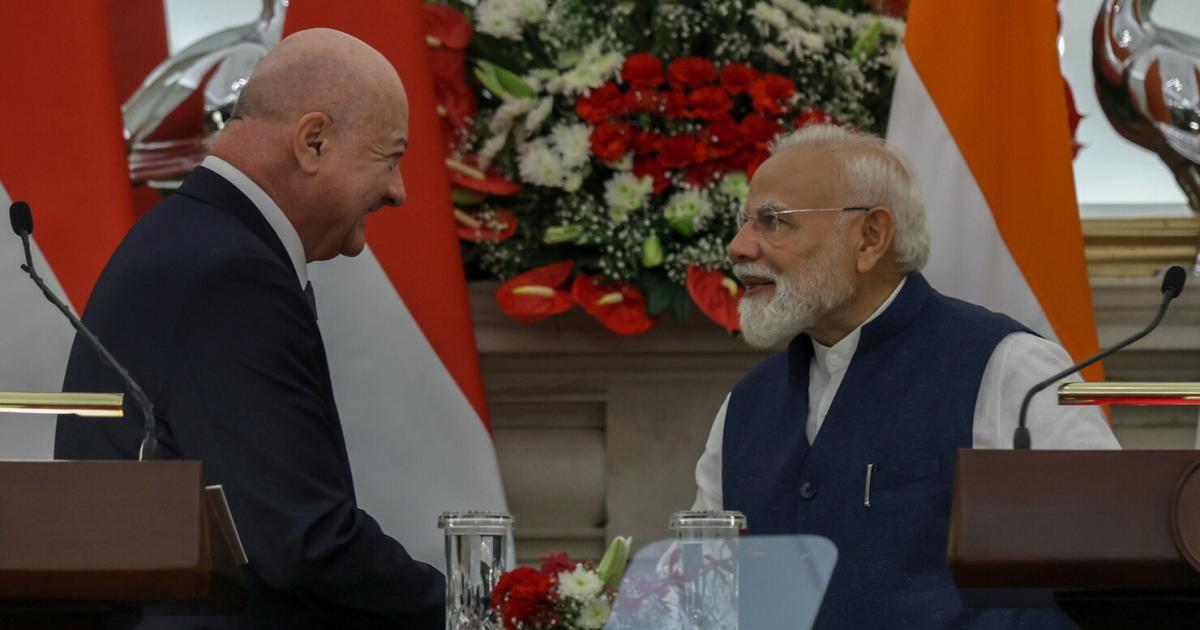
At the same time there were Federal Chancellors this week Christian Stocker and Minister of Economic Affairs Wolfgang Hattmannsdorfer (both ÖVP) with a high-ranking business delegation visiting India. They return to Vienna on Saturday.
Stocker was the first Austrian head of government since Fred Sinowatz to officially visit India. During the meeting, several agreements were concluded, including a memorandum of understanding in the field of defense. Stocker justified this with the desire to reduce dependencies on individual partners. Both sides also signaled great unity on global political issues. Together they called for peace, including in the Iran War, and committed themselves to a rules-based international order.
https://nvcasinoo.eu.com/
https://nvcasinoo.eu.com/en/
https://nvcasinoo.eu.com/fr/
https://nvcasinoo.eu.com/cz/
https://nvcasinoo.eu.com/bg/
https://nvcasinoo.eu.com/sk/
https://nvcasinoo.eu.com/at/
https://nvcasinoo.eu.com/be/
https://nvcasinoo.eu.com/ch/
https://nvcasinoo.eu.com/se/
https://nvcasinoo.eu.com/lv/
https://nvcasinoo.eu.com/dk/
https://nvcasinoo.eu.com/md/
https://nvcasinoo.eu.com/lt/
https://nvcasinoo.eu.com/no/
https://nvcasinoo.eu.com/ee/
https://nvcasino9.com/
https://nvcasino9.com/hu/
https://nvcasino9.com/pl/
https://nvcasino9.com/en/
https://nvcasino9.com/ro/
https://nvcasino9.com/nl/
https://nvcasino9.com/gr/
https://nvcasino9.com/fr/
https://nvcasino9.com/cz/
https://nvcasino9.com/bg/
https://nvcasino9.com/sk/