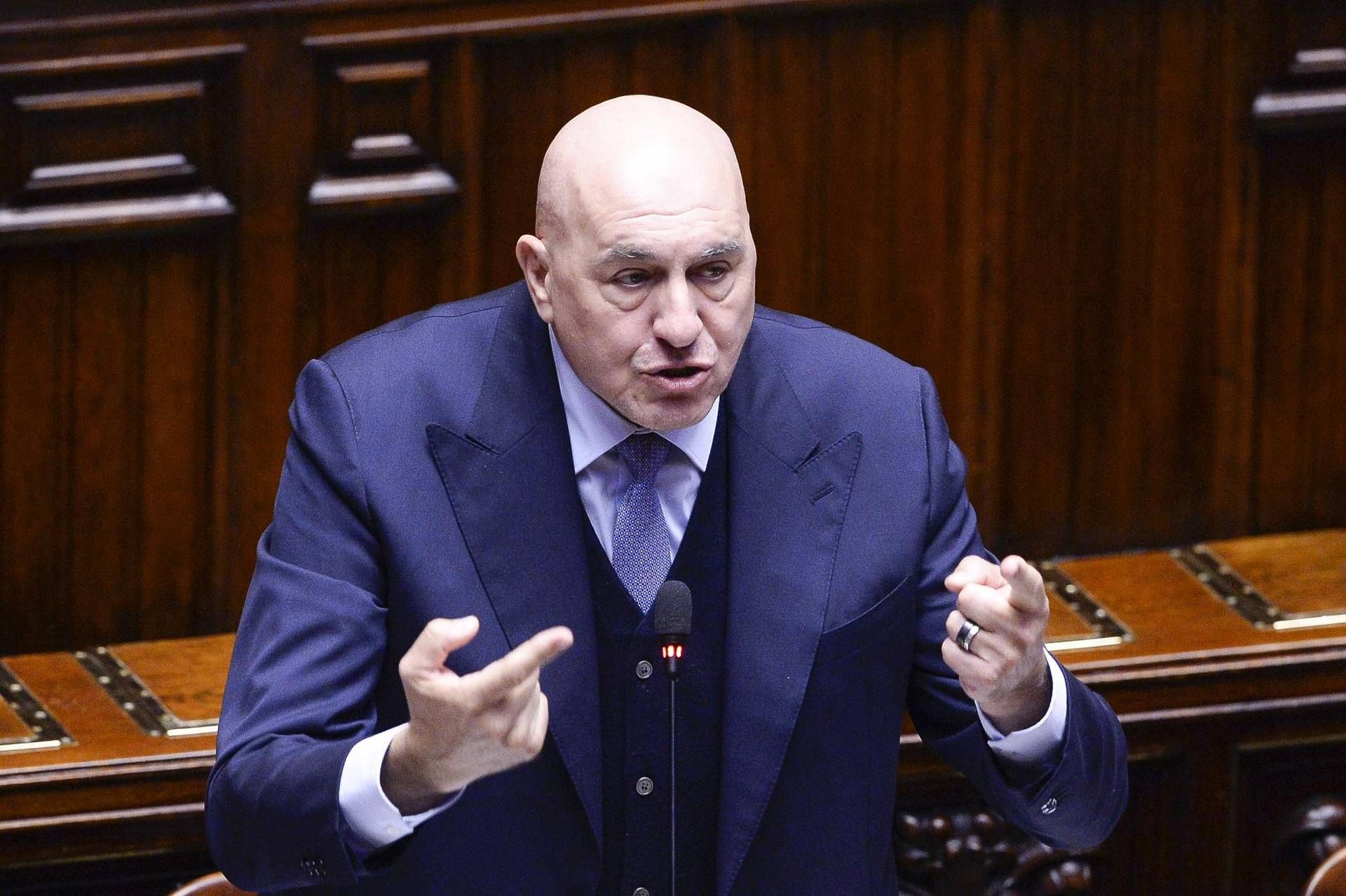
“The atomic threat is becoming current again that we had relegated to the history books”. This was stated by the Defense Minister Guido Crosetto before the Foreign Affairs and Defense Committees of the House and Senate speaking about the war between Russia and Ukraine. The minister explained that when the conflict ends, Europe “will have to deal with the effects of the war: financial, energy, with the large number of ex-combatants to be reintegrated, with the reconstruction of Ukraine, a resilient but tested country, and of Russia itself”.
“The estimates available in relation to war between Ukraine and Russia indicate that the total number of deaths and injuries among the parties involved could approach 2 million by the end of the yearover a thousand a day on the Russian side”, he said, further underlining: “These are data that are difficult to verify definitively but are sufficient to represent the intensity of the conflict and its long-term consequences”. And explaining that it is “a conflict that for over four years since its beginning has continued to record levels of violence that Europe has not known since the end of the Second World War. And the repercussions are many, in particular the financial ones”. Furthermore, Crosetto stated, “the atomic threat that we thought we had consigned to the history books becomes current again”.
“It is necessary to support Ukraine’s defensive effort together with the political and diplomatic effort”, Crosetto said, underlining that “the conflict appears to be characterized by a stalemate. Analysts seem to agree on the fact that, maintaining any operational rhythms, it would take ten years for the Russian Federation to complete the conquest of Donbass and several decades to achieve the conquest of the entire Ukrainian territory. This is a purely algebraic projection, but which confirms the desire of one of the parties to pursue an exclusively military solution appears difficult to pursue in the long term”.
As for the “military operation against theIranhas taken on a broader dimension, and Tehran has demonstrated its ability to conduct large-scale missile attacks on Israel and beyond.” “Iran has shown that its military capabilities and arsenals are not exhausted. This is demonstrated by last Sunday’s attacks which hit Israel with over 30 ballistic missiles”, added Crosetto who also underlined that ”Tehran was able to learn from the 12-day war by modifying its tactics and demonstrating extraordinary resistance, in particular through the dispersion of forces and the diffusion and independence of the various sectors of its chain of command. Two weapons have allowed Iran not only to survive, but to forcefully preside over the negotiating table: the regional chaos generated by the choice to attack indiscriminately its neighboring countries and the global crisis created with the blockade of the Strait of Hormuz – said Crosetto – What was initially supposed to be a limited military operation motivated by the need to counter the Iranian nuclear program and reduce the network of armed actors supported by Tehran in the region has taken on a broader dimension involving the entire area”.