Don’t eat after eight in the evening, what you eat at night turns into fat and if you ate at night – you “ruined the diet”: these are just some of the sayings that many of us have heard over the years. But is there any truth in them? Is a late dinner necessarily harmful to health? Well, the answer is complex.
The body does not “turn off” itself at eight in the evening
The good news is that our bodies continue to work even after sunset. The digestive system does not stop functioning at a certain time, and the calories in the food are not “counted differently” just because we ate them at night. Therefore, physiologically, there is no specific time after which every bite automatically turns into fat.
However, in recent years, studies have been accumulating in the field dealing with the connection between our biological clock and eating times. These studies indicate that not only what we eat is important, but also when. During the day the body is programmed to be more metabolically active. Insulin sensitivity, for example, tends to be higher in the morning and afternoon, while late at night the body prepares for rest.
In practice, this means that very large and heavy meals late in the day may be less metabolically efficient than similar meals eaten earlier in the day.
Observational studies have found a link between regular night eating and a higher risk of obesity, type 2 diabetes and heart disease. However, it is important to remember that connection does not necessarily indicate circumstance. People who eat late sometimes also tend to sleep less, exercise less or consume more ultra-processed food – all of these are factors that in themselves affect health.
It’s not the time that matters – but what you eat
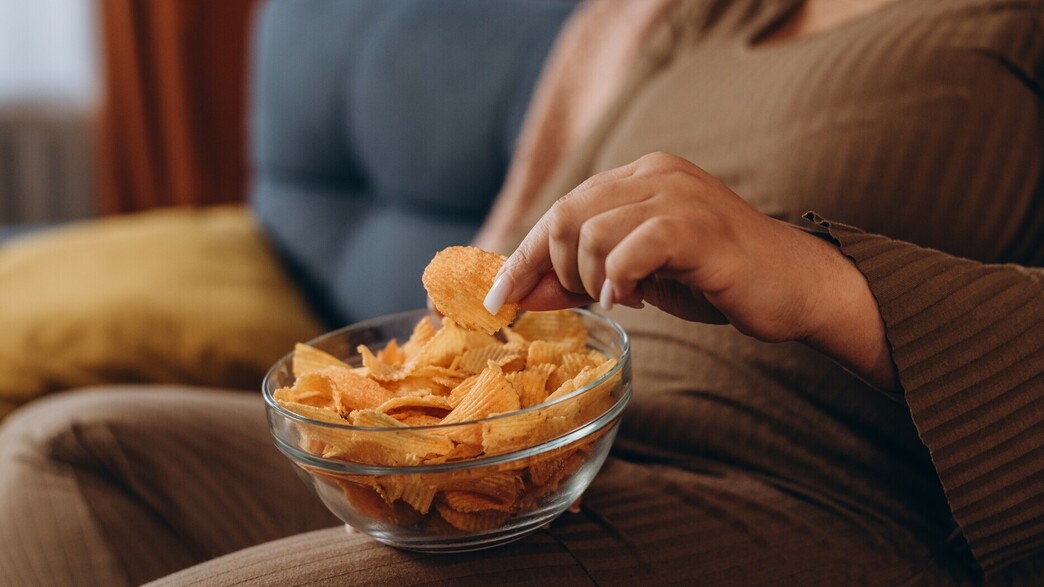
When looking at people’s eating habits, it turns out that late at night we usually don’t turn to a bowl of salad. Many choose salty snacks, cookies, ice creams, chocolate or snacks in front of the TV.
In other words, often the problem is not the actual eating at night, but the fact that it is done out of boredom, fatigue, stress or habit, and not out of real physical hunger.
Moreover, studies show that people tend to consume more calories when they are distractedly eating in front of screens, especially in the evening.
And what about weight loss??
Surprisingly, there is no good evidence that eating after a certain time prevents weight loss. Ultimately, the overall energy balance over time still plays a major role.
However, there is a reason why many people lose weight when they stop eating late at night: they simply cut down on unnecessary snacking and reduce their total daily calories.
Therefore, if eating at night is part of a regular eating plan and does not increase the total consumption, there is no reason to fear it.
What are the reasons why it is so? You should avoid late meals?
There are some situations in which eating close to sleep may be less recommended:
Lying down shortly after a meal can worsen reflux and heartburn symptoms. In these cases, it is customary to recommend waiting at least two to three hours between a large meal and going to bed.
Large, fatty or spicy meals close to bedtime may harm the quality of sleep in some people. On the other hand, significant hunger can also make it difficult to fall asleep.
shift work
In people who work at night, the biological clock is often out of sync with the working hours. Studies indicate that shift workers are at a higher risk of metabolic problems, although in this case it is a combination of factors and not just when eating.
So is it allowed to eat at night??
yes. If you are hungry at ten or eleven at night, there is no reason to stress or go to bed hungry just because of an old myth.
The more important recommendation is to pay attention to the reason why you eat: is it real hunger, or an attempt to deal with fatigue, stress or boredom? Is it a light and balanced meal, or an automatic snack in front of the screen?
If you feel like something before bed, you can choose relatively satisfying options such as yogurt, fruit, a small sandwich, cheese, a handful of nuts or a combination of carbohydrate and protein.
The bottom line
The claim that “you must not eat at night” is simply not true – the body does not stop digesting food at a certain time, and a late meal does not automatically turn into fat. On the other hand, there are good reasons to avoid heavy eating or unconscious snacking at night.
Instead of focusing on the clock or calories, you should focus on the big picture: the quality of the diet, the feeling of hunger and satiety, the total amount of food throughout the day and life habits in general. For most people, the food you eat is much more important than the time you eat it.
The author is Michal Sukman, a dietician for the Central District at Maccabi Health Services