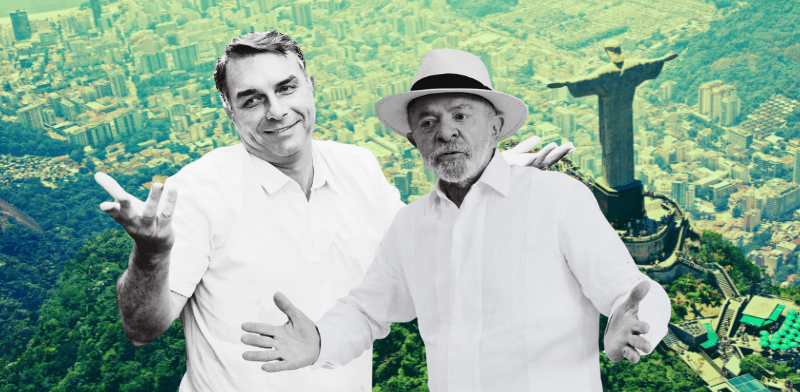
Brazil’s presidential election is going into a second round, after the first round ended in a surprise, with Flavio Bolsonero finishing ahead of incumbent President Luiz Incio Lula da Silva. Bolsonaro, 45, the son of former president Jair Bolsonaro, received 47.1% of the vote, compared to 45.1% for Lula, 80, who is running for a fourth term. Neither of them passed the threshold needed to win in the first round (50%), and the two will meet again on the ballot on October 25.
The result makes the second round more than just another election. The largest and most populous country in Latin America is faced with a choice between two very different conceptions of the economy, the role of the state, security, relations with the US – and also relations with Israel.
The continent turns to the right
The elections come after a significant political change that took place on the entire continent. Just a few years ago, Latin America was talking about the “pink wave”, a series of victories by the left that led to progressive governments in the largest countries in the region. Since then, the pendulum has moved in the opposite direction: in Argentina, Chile, Ecuador, Bolivia, Panama, Colombia, Peru, and even to some extent Venezuela, right-wing or center-right forces have risen in recent years.
Brazil is the biggest prize left in this fight. Lula is one of the last and most prominent leaders of the old South American left. Since returning to power in 2023, he has strengthened ties with China and the BRICS countries, while at the same time running into conflicts with the Trump administration. Bolsonaro, on the other hand, is identified with the pro-American camp of the right in the region and seeks to return relations with Washington to the path that characterized his father’s tenure.
For the Brazilians themselves, one of the most important issues is less geopolitical – the money left at the end of the month.
Lola comes to the elections with some positive data. Unemployment has fallen to historically low levels and inequality has narrowed. However, the data did not necessarily translate into a better feeling among households: the cost of living is high, millions of Brazilians face debt, and the high interest rates burden families and businesses. Reuters reported on the eve of the election that about half of Brazilians believed that the state of the economy had deteriorated in the past year.
How to fix the economy
The gross public debt climbed to about 82.5% of GDP, an increase of more than ten percentage points during the current government’s term, and the nominal deficit reached about 9.3%. Both candidates agree that the problem needs to be addressed, but the way they propose is very different.
Lola offers a gradual fix. His plan maintains the existing fiscal framework and aims to reach an initial budget surplus of 1.3% of GDP by 2030. For him, debt reduction should not come at the expense of welfare programs and public investment. His team also talks about increasing taxation on those with high incomes.
Bolsonaro offers almost the opposite picture. The term his campaign uses is “scissor blow” – a sharp cut in the state apparatus. The plan includes closing at least 10 government offices, reducing political positions and administrative expenses, creating a new spending ceiling and renewing the government’s privatization and concessions program.
Bolsonero’s economic team talks about a quick fiscal adjustment of about 1.5% of GDP within 18 months. Contrary to Lula, who wants to carry out the correction gradually, Bolsonero’s people claim that a quick move will create a “confidence shock”, will make it possible to lower interest rates and return investments to the economy. They also talk about the sale of state assets and privatization and the cancellation of some of the tax increases carried out during Lula’s time.
“We will include the expenses in the budget, spend less than we bring in and reduce taxes,” he explained. He said that his economic policy would be essentially similar to that of his father’s government.
And what about the attitude towards Israel?
There are few issues where the gap between the two is as sharp as Israel. Relations between Brazil and Israel deteriorated dramatically during Lula’s time, especially since October 7 and the war in Gaza. In February 2024, during a visit to Ethiopia, Lula said that “what is happening in the Gaza Strip with the Palestinian people did not happen at any other moment in history”, then added “in fact, it did happen: when Hitler decided to kill the Jews”.
In response, Prime Minister Binyamin Netanyahu accused him of trivializing the Holocaust, and then-Foreign Minister Israel Katz announced that Lula was an unwelcome personality in Israel as long as he did not retract his words. The Brazilian ambassador was summoned to Lid Vashem for a reprimand. Brazil responded by returning its ambassador to Israel for consultations and summoning the Israeli ambassador to Brazil. Lula did not apologize. On the contrary. About a week later, he said he would repeat the comparison.
The confrontation with Israel does not remain only at the level of statements. The Lula government froze the export of defense equipment to Israel and announced that it would increase controls on imports originating in West Bank settlements. Lula said at the United Nations in September 2025 that Brazil would continue to suspend exports of equipment that he said could be used to commit crimes against humanity or genocide.
Bolsonaro presents an opposite line here as well. His family’s connection to Israel is not new. His father, Jair Bolsonaro, became during his term one of the most prominent pro-Israel leaders in Latin America, and even promoted the opening of a Brazilian commercial mission in Jerusalem. Flavio has already made it clear that he intends to continue and even deepen this trend.
In January of this year, Bolsonaro arrived in Israel in order to participate in the international conference to combat anti-Semitism of the Diaspora Ministry – and there were also political commitments. Even before the conference, Bolsonaro expressed support for moving the Brazilian embassy from Tel Aviv to Jerusalem. During the visit, he met with Netanyahu, and said that he intends to restore commercial relations between the countries, which he claims were damaged for ideological reasons during the Lula era.
In a speech he gave in Jerusalem he went even further. He accused Lula of anti-Semitism and said that Brazil needed a “moral and strategic correction”. According to him, under Lula the Brazilian foreign policy underwent a “deep moral failure”. This is, of course, a political claim by Bolsonaro towards his opponent, and not a factual statement about Lula’s motives. During the visit he said he wanted to return Brazil to the camp that supports Israel, and described Brazil as a “Christian and Jewish country”.
These positions were not born for the purpose of the current election campaign. In February 2024, Bolsonaro said in the Senate that he visited Israel on several occasions and was impressed by the country’s attitude towards the Palestinians. He emphasized that the war is against Hamas and not against the Palestinians, concluding with a sentence that has become one of his regular messages on the subject: “If Hamas lays down its weapons, the war will end. If Israel lays down its weapons, Israel will end.”
A year later, at a ceremony in the Senate commemorating the victims on October 7, he called Israel “the democracy of the Middle East” and said: “This is our point of reference, this is our example and this is the country we recognize. We will always respect it and defend its right to exist.”
Even in the last days before the elections, he repeated this direction. In a meeting with representatives of the Jewish Confederation of Brazil, he pledged that if elected, Israel would be among the first destinations he would travel to as president.
The gap between the candidates is evident even in the vote of the Brazilians living in the region. Among Brazilian voters in Israel, Bolsonaro won first place, while Lula won among Brazilian voters in Israel.
For your attention: The Globes system strives for a diverse, relevant and respectful discourse in accordance with the code of ethics that appears in the trust report according to which we operate. Expressions of violence, racism, incitement or any other inappropriate discourse are filtered out automatically and will not be published on the site.
مول اورينت بيزنس العاصمة الإدارية الجديدة وطن للتطوير العقاري – Orient Business Mall New Capital
قرية ماجيستي باي الجلالة لاسيرينا للتطوير العقاري – Majesty Bay Galala
بيسكاي الغردقة – Biscay Hurghada
مول سولاريوم بيزنس التجمع الخامس يوتيجا للتطوير العقاري – Solarium Business New Cairo Mall
كمبوند بيراميدز ويلز 6 أكتوبر الباشا للتطوير العقاري – Pyramids Wales 6 October Compound
مول ذا لارك التجمع الخامس تميز للتطوير العقاري – The Lark Mall New Cairo
مول اليجرا العاصمة الإدارية الجديدة ماستر جروب – Allegra New Capital Mall
مول لي باساج العاصمة الإدارية أنكور للتطوير العقاري – Le Passage New Capital Mall
قرية سانسا الساحل الشمالي بريمير للتطوير العقاري – Sansa North Coast Village
كمبوند ذا ايكون ريزيدنس 2 التجمع الخامس ستايل هوم – The Icon Residence 2 Fifth Settlement Compound
الباتيو تاون القاهرة الجديدة لافيستا للتطوير العقاري – El Patio Town New Cairo Compound
كمبوند جراند ريزيدنس القاهرة الجديدة الأهلي صبور للتطوير العقاري – Grand Residence New Cairo Compound
كمبوند دي جويا 4 العاصمة الإدارية تاج مصر للتطوير العقاري – De Joya 4 New Capital Compound
كمبوند هيفين جاردنز بدر سيتى النسر للتطوير العقاري – Heaven Gardens Badr City Compound
كمبوند ويست لاين زايد الجديدة ليفينج لاين للتطوير العقاري – West Line New Zayed Compound
كمبوند فيلورا فيلا زايد الجديدة حرية للاستثمار العقاري
مول ألورا هب الشيخ زايد تيبيا للتطوير العقاري – Alora Hub Mall Sheikh Zayed
مول فايب التجمع الخامس SLVR للتطوير العقاري – Vybe Mall New Cairo
كمبوند ستاي إن ريزيدنس أكتوبر A Plus للتطوير العقاري – Stay’N Residence October Compound
كمبوند هازل القاهرة الجديدة سوديك للتطوير العقاري – Hazel Residence New Cairo Compound
بارك فيو هاب تاون المستقبل سيتي حسن علام بروبرتيز – Park View Mostakbal City
Hyde Park North Coast
White 14 Tower New Capital Master Builder Real Estate
V Business Tower New capital Mall
4T4 New Capital Mall VAI Real Estate
El Shorouk Springs Compound Hassan Allam
City Oval New Capital Master Group
Alca New Cairo Compound Saudi American Real Estate
In Town Mall New Cairo New Town Group
Zahya New Capital Mall Imtlak Real Estate
Town Plaza New October Mall West Way Development
Praia View North Coast La Verde Egypt Developments
City Hall 90 New Cairo Mall SERAC Developments
Evet Mall New Capital Empire State Developments
Annex26 Business Complex October Mall ARQA Developments
Voya 6 October Compound Voya Community Developments
West Clay 6 October Compound Remal Developments
Lusail Residence New Cairo Compound Margins Developments
Eins Park Mall New Capital EG Towers Development
Seventy Plaza New Cairo Mall Rejan Developments
Once Mall New Cairo Wealth Developments
Azha New Zayed Compound Madaar Development
The V Residence 6 October Compound Modon Developments
New Kairo Heliopolis Compound G-Development Properties
Fifty Five New Capital Mall HUB Development
Jirian Compound Sheikh Zayed Mountain View Developments
FLW Residence October Compound ZG Developments
Belami New Zayed Compound Pyramids Rocks Developments
KasaKuōn New Cairo Compound Ajna Developments
Mamsha Vista New Capital Compound City Edge Developments