Trade overview: current reports, trends, indices, stock prices, bonds, foreign exchange and commodities and analyst recommendations
13:30
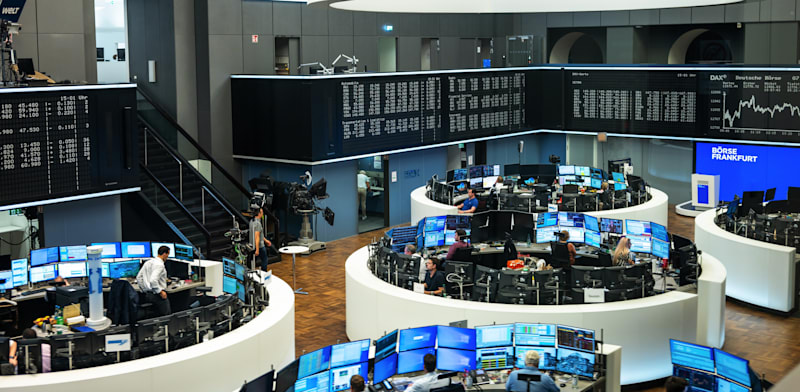
Trade in Europe continues to be conducted in a mixed trend. The DAX index rises by about 0.4%, the FTSE advances by about 1.1% and the KAC drops by about 0.5%.
Wall Street futures moved to slight increases of up to 0.4%, while oil prices erased all the sharp increases they recorded at the beginning of the trading day.
After the price of Brent oil rose to a four-year high (over $126 per barrel), amid reports that the US military is expected to brief President Trump on possible military operations in Iran, it has now moved downward. Brent crude is down about 1.5% and is trading around $116 per barrel, while American crude is trading steadily around $106 per barrel.
Warren Patterson, head of commodity strategy at the Dutch bank ING, wrote in a message to investors that “the oil market has moved from over-optimism to the reality of the supply disruptions we see in the Persian Gulf. The longer this disruption lasts, the less the market will be able to rely on inventories, and the greater the need to further reduce demand. The only way to drive this will be through higher oil prices.”
12:30
Preliminary growth data from the Eurozone revealed that the economy expanded at a negligible rate of only 0.1% in the first quarter of the year, against the background of the ongoing war against Iran and increasing inflationary pressures.
At the same time, the consumer price index in the Eurozone for the month of April was published, showing an annual increase of about 3%, compared to 2.6% in March. The index is published a few hours before the interest rate decision of the European Central Bank, which is expected to be published at 15:15 Israel time. The bank is expected to leave the interest rate unchanged at a level of 2.15%, although investors will mainly focus on the bank’s statement and the words of Governor Christine Lagarde, and look for clues regarding the continuation of the monetary policy.
In addition, at 14:00 the interest rate decision of the Central Bank of Great Britain will be published, which is also expected to leave the interest rate unchanged at 3.75%.
10:55
Trade in Europe moved to a mixed trend. The DAX index falls by about 0.3%, the FTSE advances by about 0.2% and the KAC falls by about 1.2%.
A mixed trend is also recorded in futures trading on Wall Street. As of now, the industrial-biased Dow Jones is expected to open the day down about 0.6%, the S&P 500 is expected to fall by about 0.1% and the Nasdaq is expected to climb by about 0.1%.
The Seoul Stock Exchange closed its strongest month since January 1998, with an increase of about 31%, which was supported by the rally of technology stocks and chips in recent days and weeks. South Korea’s two main players in the field of chips, SK Hynix and Samsung Electronics, closed the month with an increase of about 60% and about 35%, respectively.
10:15
European stock markets opened the day with prices falling, against the background of the sharp jump in oil prices and increased geopolitical tensions. The Frankfurt Stock Exchange falls by about 0.7%, the London Stock Exchange weakens by about 0.1% and the Paris Stock Exchange falls by about 1.1%.
Oil prices continue to climb. Brent oil is now trading around $122 per barrel, when earlier it was over $126; US crude oil (WTI) is currently trading around $108 per barrel.
7:45
Asia
Trading in the Asian stock markets is going down this morning, with oil prices climbing to the highest level since the start of the war against Iran. The Tokyo Stock Exchange falls by about 1.6%, the Hong Kong Stock Exchange loses its value by about 1.6%, the Shanghai Stock Exchange trades stably and the Seoul Stock Exchange falls by about 1.1%.
Brent crude is up over 6% and is now trading around $126 a barrel – the highest level in over four years. American crude oil (WTI) is climbing over 3% and is trading at around $110 per barrel.
The increases come against the backdrop of the impasse in talks between the US and Iran, but more specifically, relate to reports from this morning that the commander of Centcom is expected to brief President Trump today regarding new military operations against Iran.
Wall Street
The main indices on Wall Street closed in a mixed trend: the S&P 500 and the Nasdaq closed almost unchanged, while the Dow Jones weakened by about 0.6%.
Just before publishing their reports, the four giants – Microsoft , Alphabetical (Google) , Amazon andMeta – traded in a mixed trend. While Microsoft fell more than 1.3%, Amazon rose more than 1.2% and Google (Alphabet) and Meta traded relatively stable, as investors awaited financial results. The financial results also presented a mixed picture:
Alphabet brought in $109.9 billion this quarter and the profit per share was $5.11 per share, above expectations. The analysts expected that the revenues of Google’s parent company will amount to 107 billion dollars and the profit of the share will be 2.62 dollars. In the corresponding quarter last year, Alphabet’s revenue was $90.23 billion and it recorded a profit of $2.81 per share.
Cloud revenues stood at $20.02 billion, against estimates of $18.05 billion – a growth of 63%. The analysts estimated that the revenues from the cloud activity (Google Cloud) will amount to 18.4 billion dollars – a sharp jump of 50% from year to year in revenues. This is the fastest growth figure in cloud activity in relation to the two biggest competitors, Amazon’s AWS and Microsoft’s Azure, which are larger than Google in terms of their market share. The stock rose about 7% in late trading.
Meta brought in $56.3 billion and the profit per share was $10.44 per share. The analysts estimated that the revenues of Meta, the parent company of Facebook, will be 55.57 billion dollars and the profit per share will be 6.65 dollars per share. Capital spending in the quarter was $19.84 billion, below Wall Street estimates of $27.57 billion.
In addition, Meta reported a 4% increase in the number of daily active users in the past year to 3.56 billion when the market expected 3.62 billion. Meta explained that in the last quarter there was a slight decrease due to “internet disruptions in Iran” as well as “restriction on access to WhatsApp in Russia”. It expects its capital expenditures for the full year to be in the range of $125-145 billion – an increase of 8%, or $10 billion in the mid-range. The stock fell in late trading by more than 7%.
Microsoft reported adjusted earnings per share of $4.27 versus expectations for $4.06. Revenues were 82.89 billion dollars against expectations of 81.39 billion dollars – growth of 18% compared to the quarter last year. It reported quarterly capital expenditures of $31.9 billion — a 49% increase, but still short of the $34.9 billion analysts surveyed by Visible Alpha estimated. Revenue from Microsoft’s cloud platform, Azure, jumped about 40%, while analysts polled by StreetAccount and CNBC expected a growth rate of 39.3% and 38.8%, respectively. The stock rose a slight 0.3% in late trading.
Amazon beat analysts’ forecasts with revenue of $181.5 billion and earnings of 2.78 per share. Analysts’ forecast for Amazon revenue was $177.3 billion and the expected earnings per share was $1.64. Amazon’s cloud division, AWS, reported a 28% increase in revenue, which stood at $37.59 billion. This, while the expectation was 36.64 billion dollars. The stock rose in late trading by about 2.7%
Bill Ackman completed the IPO of his hedge fund Pershing Square USA and it began trading in New York at a price of $50 per share. The company raised 5 billion dollars and is traded under the symbol PSUS. As part of the issuance of his hedge fund, 6% of the shares of the parent company Pershing Square Inc were also distributed and are traded under the symbol PS. “Hedge funds are known for managing money for wealthy people. And now we have an opportunity for someone with $50 who can be a long-term shareholder,” Ackman told CNBC. “Normally, the institutional ones get priority, we did the opposite.” Still, the first trading day was painful and the stock fell by almost 20% to a price of around $40.
A Wall Street share stood out Intel the chip giant that has been enjoying positive momentum lately jumped by almost 11% following rumors of new agreements with Google and Apple. In fact, just in the last week the Intel stock jumped 41% and since the beginning of the year it has completed an unimaginable jump of 137%.
US debt market
In the US, in the shadow of the Federal Reserve’s interest rate decision, which left the interest rate unchanged at 3.75% (mid-term), government bond yields rose along the entire length of the curve, i.e. for all investment ranges, as they reflect an increase in the level of risk priced by investors. The sharpest increases occurred in the two- to five-year timeframes, where yields increased by nearly 2% (change). It is possible that the increase in energy prices, as well as the fear of a global crisis following them, overshadow the latest interest rate decision of the American Governor Jerome Powell.
The commodity and currency markets
In the local foreign exchange market, the shekel strengthened against the dollar during most of the passing trading day and the representative rate was set at 2.961 shekels per dollar; but in the evening, in the shadow of the declines on Wall Street and the sharp increases in oil prices, the continuous rate rose to 2.98 shekels per dollar. This morning, against the background of the sharp increase in oil prices and the decrease in futures contracts on Wall Street, the shekel weakened by about 0.3% and its rate against The dollar stands at NIS 2.99.
Oil prices jumped by a sharp rate of over 7% yesterday, against the background of President Trump’s decision to keep the naval blockade of Iran in place – and thus strangle it economically, until it flexes and agrees to make concessions on the nuclear program. “The blockade is to some extent more effective than the bombs,” Trump told Axios yesterday. “They’re suffocating and it’s going to be worse for them. They can’t have nuclear weapons.”
This morning, oil prices jump sharply again, amid reports from this morning that the Centcom commander is expected to brief President Trump today regarding new military operations against Iran. Brent crude is up more than 5% and is now trading around $125 a barrel – the highest level in over four years. American crude oil (WTI) is climbing over 2% and is trading at around $109 per barrel.
Traders also continued to examine the implications of the United Arab Emirates’ decision to leave the Organization of the Petroleum Exporting Countries (OPEC), although analysts speaking to CNBC noted that the move was likely to have limited impact on the market.
Strategists at the Dutch bank ING noted in a review published yesterday that the withdrawal of the United Arab Emirates from the group of oil producers is a “severe blow” to OPEC and will certainly be welcomed by Trump, “since it erodes the organization’s influence in the oil market, and at the same time should benefit importers and consumers.” However, the strategists added that “in the short term, the main driver for oil prices remains the developments in the Persian Gulf and the timing of the resumption of oil flow through the Strait of Hormuz.”
Macro
Jerome Powell parted ways with the US Federal Reserve with a third consecutive interest rate decision that leaves the federal funds rate unchanged. It was the most controversial decision at the Federal Reserve since 1992, when four members of the Open Markets Committee opposed the decision from different directions. The policy makers were required to balance the threats of inflation due to the increase in energy prices with the weakening of the labor market.
Cleveland Fed President Beth Mack, Minneapolis Fed President Neil Keshari and Dallas Fed President Lori Logan “supported leaving the target range of the interest rate unchanged, but did not support the inclusion of an easing bias in the announcement at this stage,” the committee said. Governor Stephen Mirren expressed reservations and supported an interest rate cut of a quarter of a percentage point.
In fact, even before the decision, the markets had already priced in a scenario of “higher for longer” – high interest rates for a long time, and it is clear that the Fed is not yet ready to declare victory in the fight against inflation, and this against the background of a complex macroeconomic environment, alongside geopolitical uncertainty and worsening political pressures on the central bank. Recent surveys have also indicated that the market has already faced a postponement of the interest rate cuts, with a significant portion exceeding the forecasts even moving the easing date to the end of 2026.
The current decision was the last under the leadership of Jerome Powell, who, after eight years, is expected to end his tenure as Fed chairman in mid-May. Powell, who led one of the most aggressive interest rate hike cycles in modern history, is ending a term characterized by a persistent fight against inflation and ongoing conflicts with the political system, especially with its leader, Donald Trump, who urged Powell to lower interest rates.
Today the Banking Committee of the US Senate approved the nomination of Kevin Warsh to head the Fed, thus paving the way for his election in a final vote in the Senate plenary. Although Powell’s term as chairman of the Fed ends in a little more than two weeks (May 15), his term as a member of the Board of Governors does not end until 2028. Traditionally, the chairmen also resign from the Board of Governors upon the end of their term as chairman. This time, Powell stated that he would remain on the board of directors of the Federal Reserve until the end of the federal investigation into the renovation of the central bank’s headquarters. “I said no. I will leave the council until this investigation is completely transparent and conclusive, and I stand behind that,” he said.
The chairman, who has served for eight years, congratulated his appointed successor Kevin Warsh. “I plan to keep a low profile as governor on the council,” Powell said. “There is only one chairman … when Kevin Warsh is confirmed and sworn in, he will be that chairman.” Powell also addressed the criticism he received from Trapp, calling it “unprecedented in our 113-year history. “I am concerned that these attacks harm the institution and endanger the thing that is really important to the public, which is the ability to conduct monetary policy without considering political factors.”