Data centers are now being built in Finland at such a pace that some of the business life’s horns are gasping for air.
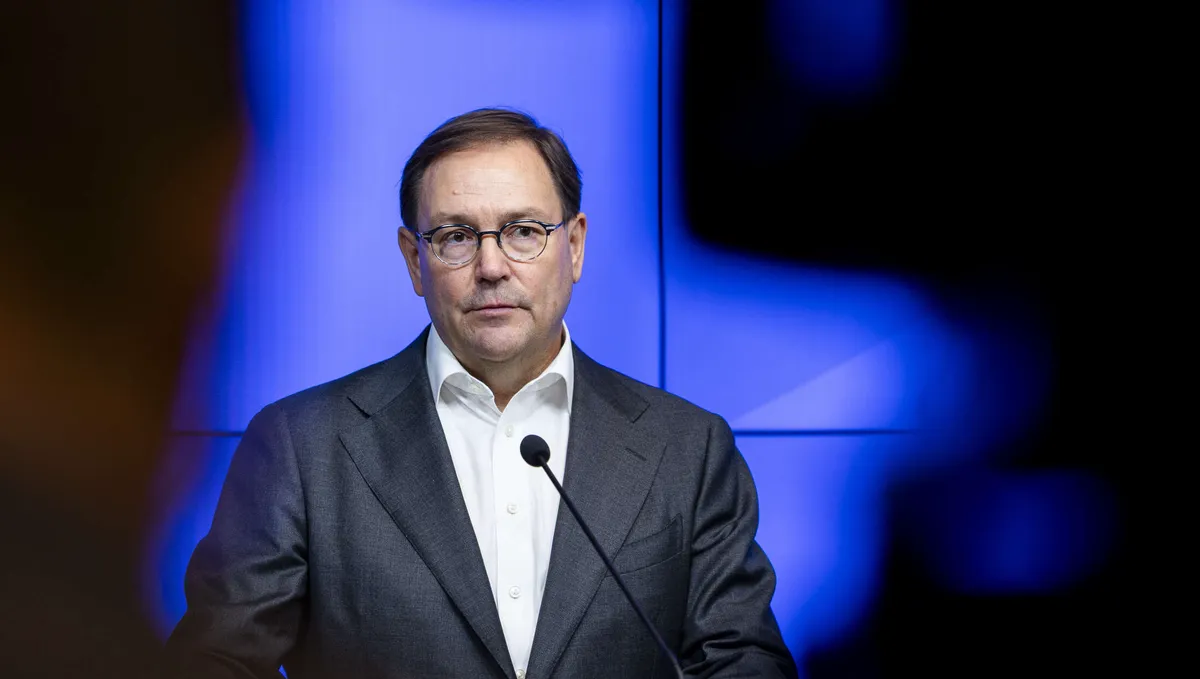
There are no special reasons for that. This is how the Prime Minister evaluates data centers For Petteri Orpo (kok) done the investigation Elisa’s former CEO Brother-Matti Mattila. According to him, the matter should be looked at from the point of view of Finland’s interest.
“It is excellent that Finland now has an industry with real growth opportunities right now. Certain other countries have benefited clearly more from the global data center boom in the past, but now Finland also has an opportunity,” says Mattila.
He raises such Western European cities as Paris, Amsterdam, Frankfurt, London and Dublin. According to him, they have been aware of data centers much earlier than in Finland.
So, in his opinion, it is not about bulk industry that consumes electricity, but about an opportunity that Finland should also try to get its share of in international competition.
“The electricity doesn’t run out”
Risto Siilasmaa warned In Helsingin Sanomat, Finns from being too enthusiastic about data center investments. He estimates that companies want to establish centers in Finland because of the cheap electricity. Concerns about “reckless” use of electricity presented also Outokumpu managing director Kati Ter Horst.
“I dare to say that Finland will not run out of electricity”, Mattila states.
He would like to emphasize that, as a surveyor, he and his support groups engaged in extensive dialogue with experts and stakeholders about the opportunities and also the threats brought by data centers.
The study was completed in November 2025, so the vision is quite fresh.
One crystal-clear conclusion is that there is a connection between investments in fossil-free power generation and data centers. It is still possible to significantly build clean electricity production in Finland, but the demand for electricity affects the desire to invest. Electricity users are needed.
Mattila points out that there is a lot of licensed electricity production capacity in the pipeline, which is waiting for committed users.
“After all, electricity is produced according to demand. Almost all data centers commit to buying renewable electricity with long-term contracts. There are not many others committed to new electricity production in sight. Thus, data centers will continue to play a significant role when more renewable electricity production is hoped for in Finland, which keeps the price of electricity under control,” says Mattila.
Although data centers need a lot of electricity, their importance in the total consumption is limited.
In 2024, data centers consumed 1.6 terawatt hours of electricity, which was about two percent of the total consumption. By 2030, the share of data centers in consumption is estimated to rise to 3–4 percent.
A solution for regulatory power
It has been seen as a problem that the data centers could be creating intermittent power shortages in a situation where electricity production also fluctuates more strongly, the more it depends on the weather, i.e. depending on the wind.
Mattila’s report identified the problem, but also proposed a solution. Finland should increase the flexibility of production by building more adjustment power.
“Its price tag is reasonable, from half a billion to a billion euros,” says Mattila.
According to him, in increasing the adjustment force, for example At Wärtsilä has advanced backup power technology. In Mattila’s opinion, society could participate in financing such a capability, but also large electricity consumers such as advanced data centers.
“I have also suggested in the report that such data centers with high added value and other operators that use electricity significantly could participate in the construction of the control force in accordance with jointly agreed solution models,” says Mattila.
Some advanced data centers are also able to flex according to the electricity market: to drive at full capacity when the price is cheap and to brake when the demand for electricity is otherwise high.
At the same time, the waste heat from data centers is fed into the district heating network of cities.
Wärtsilä and Nokia benefit
If the data centers bring about the desired investments in electricity production as well, then the question remains as to what kind of added value the data centers would bring to Finland.
According to Mattila, the current data center boom should be seen as a continuation of the fact that data has moved to the cloud away from machines and servers. The ongoing growth boom is based on the breakthrough of artificial intelligence and the technical requirements it brings.
“For example, companies such as Wärtsilä and Nokia will benefit from the data center construction boom and so will many Finnish companies specializing in the utilization of waste heat,” says Mattila.
According to Mattila’s report, the actual operation of data centers brought 200 million euros to GDP in 2025, when direct and multiple effects are taken into account. The GDP increase in construction, on the other hand, rose to one billion.
Regarding employment effects, the report estimates that by 2025, the employment effect of the construction phase alone will have been 10,000 person-years of work. In the years 2025–2030, the amount is estimated to be more than fourfold.
The data center does not eat innovations
Mattila emphasizes that building and maintaining data centers is a demanding activity and Finland has that expertise. Climate and a strong grid are also favorable competitive factors for Finland when the technology giants are thinking about where to build.
How Finland invests in innovation and product development is another question entirely.
“If we want to have demanding innovation activities and product development related to artificial intelligence, for example, then it does not conflict with the fact that we have development activities in relation to data centers. Investments in innovation and product development are separate issues. Data centers themselves do not bring us artificial intelligence innovation activities, but of course they can help a little with that too”, Mattila estimates.