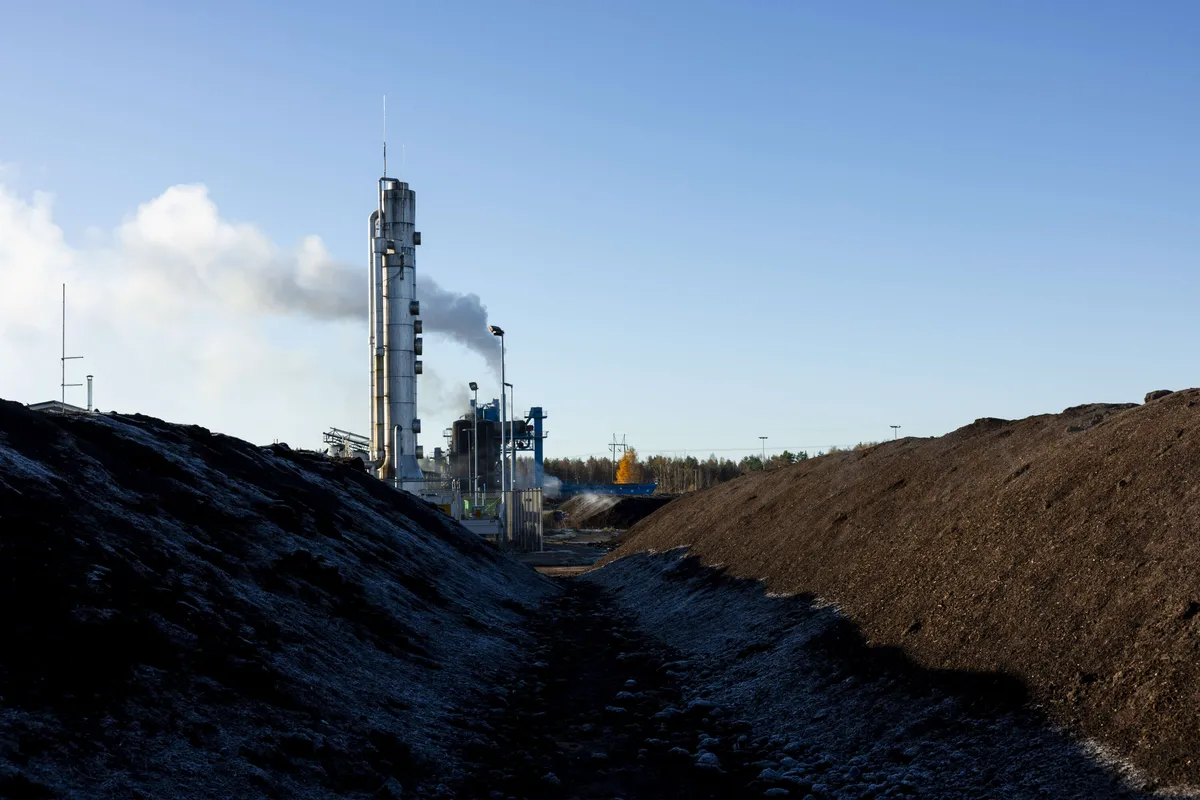
From the reader. On June 15, the Climate Panel and the Forest Bioeconomy Panel published a meritorious report report on the recovery of bio-derived carbon dioxide from the forest industry. However, the report lacked the perspective of small-scale utilization of carbon dioxide, which recovery from biogas plants could provide.
About one hundred biogas plants operate in Finland, one-third of which process biogas into biomethane for transport use. At the same time, almost pure carbon dioxide is produced as a side stream. It is significantly cheaper to clean and liquefy than the dilute concentration of flue gas, which is generated in, for example, the pulp industry.
Another advantage of biogas plants is locality. The key bottleneck in the carbon dioxide market is logistics, as the infrastructure is just developing. The transport cost based on trucking makes up a large part of the price of carbon dioxide for the end user. Decentralized production brings opportunities for many kinds of utilization.
Opportunities for industrial cooperation
The carbon dioxide capacity of biogas plants meets the needs of traditional utilization sites, such as greenhouses and the food and beverage industry, but also the needs of new applications. For example Carbonaide binds carbon dioxide to concrete products and Solar Foods use it in single cell protein production.
The market is now also opening up in practice through smaller-scale industrial cooperation: Auris Energy and Carbonaid’s collaboration are the first examples of how bio-derived carbon dioxide can be captured and used industrially.
The next phase of carbon dioxide capture is not just about scale.”
Distribution obligation important
The development of the market requires a predictable and long-term policy that also takes into account small players. In the investment support of the Ministry of Labor and Economy, a lower limit has been set for carbon dioxide capture, so only the largest biogas plants can apply for it.
An even more important driver for the biogas industry is the distribution obligation, which creates demand and enables investments in biomethane production – and thereby carbon dioxide recovery. Therefore, the distribution obligation must be adhered to.
Large projects need parallel distributed solutions that strengthen security of supply and speed up the emergence of the market. The next phase of carbon dioxide capture is not only born from scale, but from the ability to combine many streams into a functioning whole.
Erika Winquist
specialist researcher, Natural Resources Center
Willia Varho
specialist researcher, Natural Resources Center
The authors worked in the Hiiliketju project funded by Business Finland.