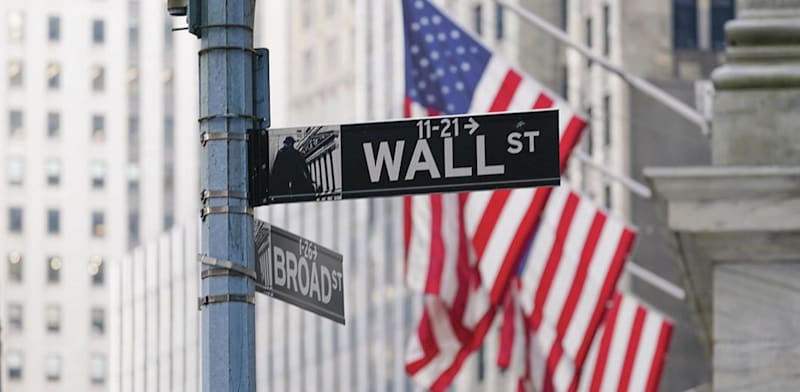
Trade overview: current reports, trends, indices, stock prices, bonds, foreign exchange and commodities and analyst recommendations
23:00
Green lock in Wall Street exchanges; The Dow and Nasdaq rose 0.3%. The S&P 500 rose 0.4%, led by Nvidia, which rose more than 4%.
Meta was also a bright spot in the tech sector, with the stock jumping 6% on its way to its best week since the start of 2024. This came after Bank of America maintained its buy rating and said an internal memo reviewed by Reuters indicated it may improve its artificial intelligence cost structure.
The S&P 500 rose by about 1% on average weekly. The Nasdaq also averaged more than 1% for the week, with the Dow down less than 1% in the past week.
The South Korean memory chip giant, SK Hynix, which tonight completed the largest-ever stock offering by a foreign company in the US, began trading today on the Nasdaq, jumping more than 12%.
22:00
rises on Wall Street; Dow rises 0.3%, S&P 500 rises 0.4%. Nasdaq adds 0.2% to its value.
The South Korean memory chip giant, SK Hynix, which tonight completed the largest ever IPO of a foreign company in the US, began trading today on the Nasdaq, rising -14%.
The company, which serves as a supplier of advanced memory components (HBM) for Nvidia’s artificial intelligence processors, raised a record $26.5 billion.
The offering comes after a record year in which the stock more than tripled its value (a jump of about 240%) on the Seoul Stock Exchange, which boosted the company’s market value to over a trillion dollars already in May.
As part of the move on Wall Street, which received exceptional excess demand of 7 times the supply, SK Hynix raised an amount of 26.5 billion dollars through the issuance of American Depositary Receipts (ADR). While the capital collected will partially support the company’s expansion plans, the analysts emphasize that most of the capital budgets for establishing the plants will be financed from its strong internal cash flow.
Meta is up about 6%. Shares of Instagram parent WhatsApp rose more than 14% in the past week, the biggest gain since early 2024, following a Reuters report that Facebook aims to put an artificial intelligence chip into production in September, suggesting that its computing costs will be lower than Wall Street expected.
W.D.-40 Jumps 10% after posting a profit of $2.33 per share in the third quarter, above the early forecast of a profit of $1.56 per share. The company also raised its forecasts for the entire year.
20:30
Wall Street is painted green: Dow rises 0.3%, S&P 500 rises by a similar rate. Nasdaq adds 0.2% to its value.
Chip stocks weakened as South Korean chip maker SK Hynix made its debut on the Nasdaq. The stock opened at $170 and is up more than 15%. There is concern among investors that the new addition may compete for investors’ money with US stocks such as Micron Technology, which rose 0.3%.
Marvel Technology andIntel decrease by 1.9% and 1.6%, respectively. Lam Research rising by 0.3%. Nvidia jumps by about 3.8%.
18:45
Warm welcome: SK Hynix jumps 14% on Nasdaq.
SK Hynix shares opened for trading on Nasdaq at a price of $170, an increase of about 14%, and American investors are rushing to take advantage of the opportunity to purchase part of the second most valuable company in South Korea.
SK Hynix ranks second in market value in South Korea, behind only Samsung. Like its larger competitor, SK Hynix also produces computer memory used by phones and computers to store temporary information. Among the company’s clients are some of the biggest names in the technology industry, including Nvidia and Apple.
SK Hynix’s market value has jumped sevenfold in the past year, amid demand for AI infrastructure that has created a shortage of computer memory and pushed up prices.
SK Hynix is the leader in high-performance memory used in the AI chips of Nvidia, the world’s most valuable company. Unlike regular RAM for phones or laptops, AI chips require high-bandwidth memory created in a complex process that involves layering many layers of regular memory on top of each other.
Some of the HBM memory will be packaged in the US, after the company announced the construction of an advanced packaging plant in Indiana at a cost of $4 billion. However, most of SK Hynix’s expansion plans in the coming years will take place in South Korea, including a complex of chip manufacturing plants in Yongin at a cost of $390 billion.
The SK Hynix IPO comes about a month after Elon Musk’s SpaceX company went public in its largest-ever IPO.
17:40
Wall Street moved to a mixed trend. Dow in positive territory, Nasdaq loses 0.2%.
stock Meta Jumps after Bank of America left the stock with a “buy” recommendation. According to Reuters, an internal company document indicates that Meta is managing to optimize the costs of its artificial intelligence activities – a move that may improve profitability and alleviate some of the concerns surrounding the huge scale of investments in the field.
Circle the company behind USDC, the second largest stable currency in the world, tied to the US dollar, is leaping forward after the company received regulatory approval to establish a National Trust Bank in the US.
The approval, given by the Office of the Comptroller of the Currency (OCC), will allow the company to manage the reserve assets that back the stable currency USDC itself, instead of relying on outside banks. In addition, Circle will be able to offer custody services for digital assets for institutional clients
16:30
Green opening on Wall Street: Dow rises at the opening of trading by 0.2%. The S&P 500 and Nasdaq are up about 0.1%.
The S&P 500 is on track for a nearly 1% gain this week. The Nasdaq is also expected to end the week up more than 1%. The Dow, on the other hand, is down about 1% this week.
Stocks rallied yesterday, helped by cooling oil prices after President Trump said Iran was interested in reaching a deal. Qatar and Pakistan are trying to bring Washington and Tehran back to negotiations.
An official in the US administration said that the two sides will continue “technical talks” even after airstrikes from both sides, MS Now reported on Thursday, adding that the US is committed to finding a solution to the conflict in the Middle East. All this against the background of Trump’s statements earlier this week that the ceasefire between the US and Iran has ended.
“The quiet response of the stock market to the re-escalation of tensions in Iran this week is key evidence that the market is looking beyond geopolitical tensions,” said Clark Bellin, president and chief investment officer at Bellwether Wealth.
As mentioned, the positive momentum of the chip manufacturers led to gains on Wall Street yesterday, with the hope that it will infect other sectors as well. That sentiment carried over to Asian stock markets, with South Korea leading gains in the region.
Japan’s Nikkei 225 closed up 1.2% while South Korea’s Kospi added 2.5%. China’s CSI 300 closed down 1.96%, led by the technology and industrials sectors.
In Europe, the Stoxx 600 index is up about 0.2%.
15:05
Trading on the Wall Street stock exchanges closed yesterday with decent gains: the Nasdaq index rose by 1.3%, the S&P rose by 0.8% and the Dow Jones by 0.3%, but fell in the weekly summary and interrupted four consecutive weeks of gains, its longest rally.
The major chip stocks led the gains on Wall Street, as investors ignored the renewed escalation between the US and Iran and focused on the artificial intelligence story. At the same time, the drop in oil prices also helped the positive sentiment in the markets.
Today, the futures signal a mixed trend at the opening of trading. The Dow Jones futures are up 0.13%, but the Nasdaq futures are losing 0.54% and the S&P 500 futures are down 0.14%.
The main event of the day that investors are waiting for is the first day of trading of the South Korean memory chip giant, SK Hynix, which tonight completed the largest ever share offering by a foreign company in the US, and will start trading today (Friday) on Nasdaq.
The company, which serves as a supplier of advanced memory components (HBM) for Nvidia’s artificial intelligence processors, raised a record $26.5 billion.
The offering comes after a record year in which the stock more than tripled its value (a jump of about 240%) on the Seoul Stock Exchange, which boosted the company’s market value to over a trillion dollars already in May.
As part of the move on Wall Street, which received exceptional excess demand of 7 times the supply, SK Hynix raised an amount of 26.5 billion dollars through the issuance of American Depositary Receipts (ADR). While the capital collected will partially support the company’s expansion plans, the analysts emphasize that most of the capital budgets for establishing the plants will be financed from its strong internal cash flow.
Accordingly, the main value of the move is strategic – gaining direct access to the world’s deepest pool of capital, opening a door to expanded activity in the American market, and a first attempt of its kind to reduce the historical “Korea discount”.
On the macro side – the number of weekly unemployment claims fell by 2,000 to 215,000, a positive figure than expected. On the other hand, there is concern around the level of yields that continues to weigh on sentiment.
The 10-year bond yield is around 4.54%, and the two-year yield is around 4.17%. Traders are currently pricing in a 79% chance that the Fed will leave interest rates unchanged at its upcoming meeting this month, but consistently high yields continue to raise the cost of mortgages, car loans and business credit, leaving on the table the possibility of another Fed rate hike.
The crypto market indicates optimism: the total crypto market rose 1.9% in the last day, with Bitcoin and Ethereum advancing moderately, with a total market value of $2.25 trillion and a daily trading turnover of approximately $60.3 billion.
The price of Bitcoin is trading around $64,000 this morning, still significantly far from the peak of October 2025. Ethereum is trading around $1,747.
In world markets, renewed tensions in the Middle East, which included Iranian attacks on commercial ships and an American response, raised serious concerns about energy supplies and spiked oil prices. However, signs of continued diplomatic efforts manage to calm the markets a little this morning. In the background, the NATO summit in Turkey ended in disappointment for President Trump, who left without new commitments from the defense alliance to help in the confrontation with Tehran, saying: “They were not ready to help us.”
Oil is the main geopolitical story right now. In the commodity and energy market, the International Energy Agency reports that global demand for oil is expected to decrease this year by 1 million barrels per day – the first annual decline in demand since the peak of the Corona crisis in 2020. The agency emphasizes that the contraction is “significantly skewed in regional terms” due to the closure of the Strait of Hormuz, which paralyzed energy exports from the Persian Gulf following the war between the US and Iran.
The IEA economists warn that although a recovery trend is developing, “the entire forecast is based on the assumption that tanker traffic in the Strait will gradually recover, which will allow producers to restart oil fields that have been shut down.” The agency also added that the recent exchange of fire this week “illustrates the risk that exists without reaching a peace agreement, which is a necessary condition for normalization in the markets.”
The price of WTI oil traded around $72.14 per barrel, and Brent around $76.39, amid the renewed flare-up between the US and Iran that threatens to undermine the fragile cease-fire in the Straits of Hormuz.
This week there were upheavals in the background of Iranian attacks on tankers near the strait, after which the US Treasury Department renewed sanctions on Iranian oil and the Central Command announced a wave of attacks against Iranian military targets. However, this morning actually saw a drop in crude oil prices, which supported the sentiment in the stock markets – meaning that there is currently a certain decline in the war premium despite the escalation.
The price of gold fell to a level of about 4,111 dollars per ounce (a decrease of 0.7%).
clubregent Official Homepage
GTA 5 Mods by clubregent – GTA5-Mods.com
clubreggent
Wikidot.com: clubregentcasino
Steelheart
User Cranbrook
cranbrook — DEV Community Profile
Cranbrook
Elenco utenti TdG
cranbookcasino
Profile of greyeagle on Walk Score
grey eagle
MEGAMU Mu Online Forum – Perfil de greyeaglee
greyeaglecasino on Brownbook.net
Lavef86273
Uno-en-ligne.com – Jouez à UNO® en ligne !
27539324 Lacleamy
3312106
lacleamycas
User lacleamycasino on maxforlive.com
magicpalace on Zortrax Library – Profile
magic-palace
User 291630.Html
Magicpalace
monzocasino in dhaka – 11998 – Contact Us, Phone Number, Address and Map