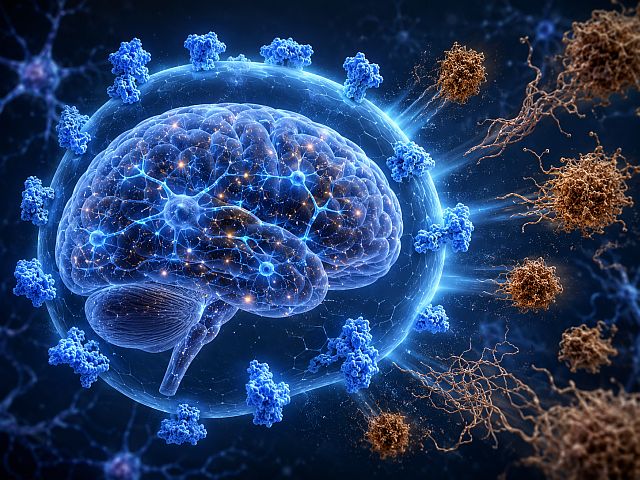
Researchers have discovered a protein that may protect the brain from damage associated with Alzheimer’s disease and other forms of dementia. We are talking about the SORLA protein, which, as experiments on mice have shown, is able to slow down the formation of toxic accumulations of tau protein – one of the key factors in the development of the disease.
Normally, tau protein helps maintain the structure of nerve cells and ensures their proper functioning. However, with Alzheimer’s disease, it begins to stick together into pathological balls, disrupting the connections between neurons and gradually leading to their death. It is these changes that are associated with deterioration of memory and cognitive function.
To find out the role of SORLA, scientists bred mice with elevated levels of this protein and crossed them with animals that develop a disease resembling Alzheimer’s disease. It turned out that additional amounts of SORLA significantly reduced the formation of tau tangles, reduced brain atrophy, and helped maintain healthy connections between nerve cells. In addition, the protein prevented the chemical changes in tau that make it toxic and prevented pathological clumps from spreading throughout the brain.
The researchers also studied the opposite situation – animals completely lacking SORLA. In these mice, the disease was much more severe: brain damage increased, and pathological tau accumulated faster. This confirmed that SORLA plays an important protective role.
Additional analysis showed that SORLA affects not only the neurons themselves, but also glial cells, which support the functioning of the nervous system and are involved in inflammatory processes. At high levels of SORLA, the activity of genes associated with the development of the disease decreased. In addition, scientists have discovered a Plexin-B family receptor whose activity increases in the absence of SORLA. There are already drugs that target these receptors, so they could be tested as a potential treatment for dementia in the future.
The next stage of the research will be to study how SORLA works in human nerve cells. To do this, scientists plan to use models in which human neurons and glial cells are transplanted into the brains of laboratory mice. This will help to better understand the mechanism of protection and evaluate whether the effects of SORLA can be enhanced with drugs. If the results are confirmed, the protein could become a promising target for the development of new treatments for Alzheimer’s disease and other diseases associated with the accumulation of tau protein.