The eardrum is a thin membrane that separates the outer ear from the middle ear, and has the role of transmitting sound. The eardrum can be perforated or torn due to many different reasons such as foreign objects, physical trauma, pressure trauma… Common symptoms include earache, ear discharge, tinnitus, feeling of fullness in the ear, hearing loss, sometimes accompanied by dizziness, nausea.
In some cases of small, non-infected punctures, the eardrum can heal on its own with medical treatment and proper care. However, when the hole does not heal on its own, the ear infection recurs with fluid discharge… the doctor will prescribe surgery to repair the eardrum. This method helps reconstruct a perforated or torn eardrum with a piece of tissue graft (usually autologous fascia or meniscus) to restore hearing and prevent complications such as otitis media and mastoiditis.
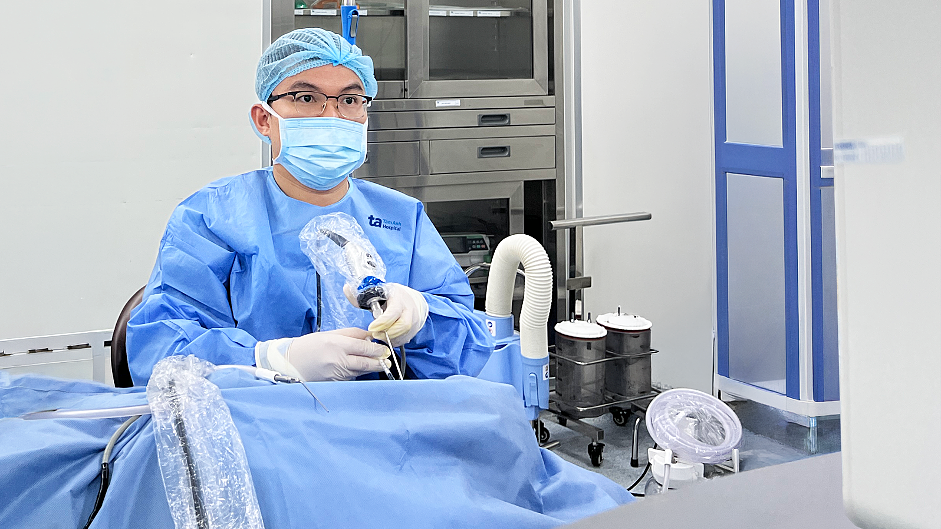
Doctor Nguyen is performing endoscopic ear repair surgery on a patient. Illustration photo: Tam Anh General Hospital
Currently, eardrum repair surgery is performed endoscopically. Before surgery, the patient is given general anesthesia so he does not feel pain during the procedure. The doctor cleans the inflamed tissue, straightens the edge of the hole, takes a piece of the patient’s own fascia behind the ear as a patch, and places it at the puncture site to reconstruct the eardrum. This surgery is less invasive, less bleeding, and the operating time is short, so it limits the amount of anesthetic used, and the patient recovers quickly.
After surgery, patients often have mild pain in the ear area for the first few days, and can use painkillers as prescribed by the doctor. Small incision behind the ear, stitches removed after about a week, leaving little scarring.
You should follow the instructions of an Ear, Nose and Throat specialist. If there is still inflammation before surgery, the doctor will treat the inflammation to stabilize it. Patients need to provide information to the doctor about underlying diseases such as hypertension, diabetes, and blood clotting disorders to evaluate the safety of anesthesia.
After surgery, you need to keep your ears dry, avoid getting water into your ears when bathing, and do not blow your nose strongly. Do not fly or exercise strenuously for the first few weeks so the patch adheres well. If there is increasing ear pain, unusual discharge or fever after surgery, the patient should immediately re-examine for a timely examination by the doctor.