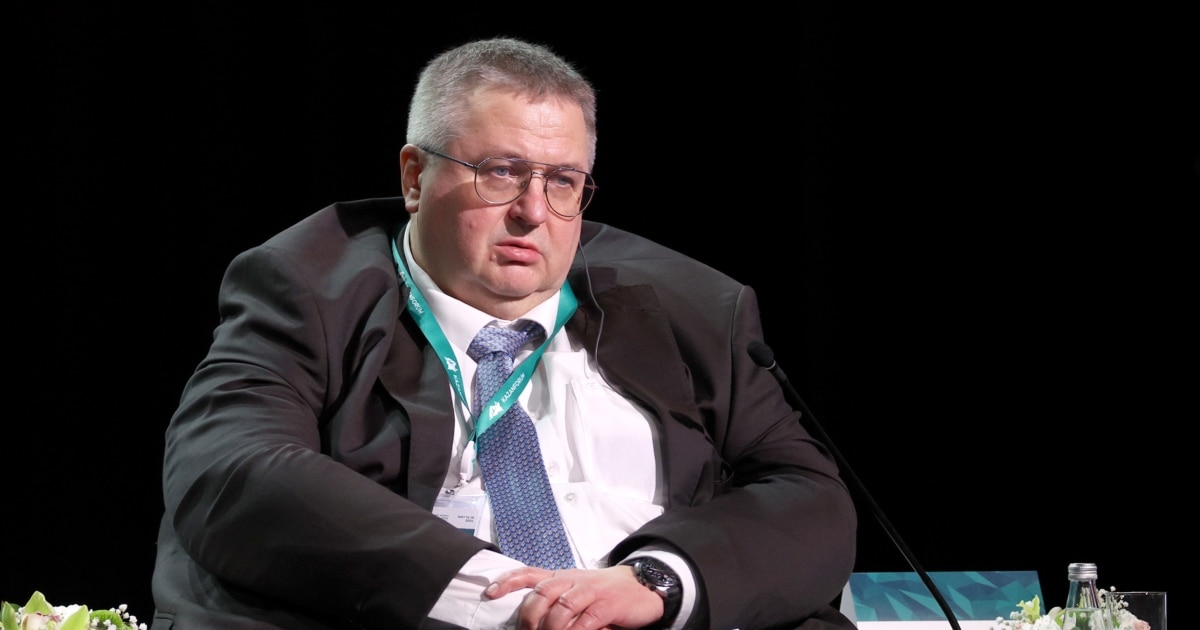
“During the EAEU summit to be held in Astana on May 29, the issue of Armenia’s status in that organization will be discussed,” Deputy Prime Minister of Russia Alexey Overchuk stated today in a conversation with TACC.
“It is a very difficult question. We don’t want Armenia to leave the EAEU, but we also see the problems that will arise in case of joining the EU or closer relations with that alliance,” Overchuk said, stating that these problems “are already arising in practice”.
“If the choice is made in favor of the EU, we have questions. First of all, why should we support that choice at the expense of our budget? If Armenia joins the states that are unfriendly to Russia, why should we protect it?” Overchuk said.
According to the Russian Deputy Prime Minister, the Armenian side declares that “they are passing the EU standards, but continue to use the privileges provided by the EAEU. It would be good if Armenia took an orientation quickly, because it would be an honest approach to both Armenia’s allies in the EAEU and Armenia itself,” Overchuk said.
Russian President Vladimir Putin recently urged the Armenian authorities to take a stand, noting that if Yerevan makes a decision soon, the confrontation with Moscow will be “civilized”.
Responding to Putin’s statements, Pashinyan repeated his thesis that has been repeated for a year: Armenia will make a decision when the moment is ripe, now and in the near future, Yerevan does not need to leave the Eurasian Economic Union.
“I also do not agree with the inappropriate wording, because I also had occasion to say in the National Assembly that we sometimes confuse interstate relations with marriage, I do not agree with that wording. The Republic of Armenia is guided by interstate logic in interstate relations. I say again, until the need arises, we are not going to raise any such question, including a referendum, we will do it at the moment when there is an objective need,” Pashinyan said.
https://imisslviv.com/prostitutka-4264/
https://imisslviv.com/prostitutka-4269/
https://imisslviv.com/prostitutka-4281/
https://imisslviv.com/prostitutka-4349/
https://imisslviv.com/prostitutka-4418/
https://imisslviv.com/prostitutka-4270/
https://imisslviv.com/prostitutka-4328/
https://imisslviv.com/prostitutka-4366/
https://imisslviv.com/prostitutka-4424/
https://imisslviv.com/prostitutka-4252/
https://imisslviv.com/prostitutka-4265/
https://imisslviv.com/prostitutka-4313/
https://imisslviv.com/prostitutka-4319/
https://imisslviv.com/prostitutka-4353/
https://imisslviv.com/prostitutka-4409/
https://imisslviv.com/prostitutka-4422/
https://imisslviv.com/prostitutka-4310/
https://imisslviv.com/prostitutka-4376/
https://imisslviv.com/prostitutka-4378/
https://imisslviv.com/prostitutka-4381/
https://imisslviv.com/prostitutka-4382/
https://imisslviv.com/prostitutka-4405/
https://imisslviv.com/prostitutka-4287/
https://imisslviv.com/prostitutka-4290/
https://imisslviv.com/prostitutka-4308/