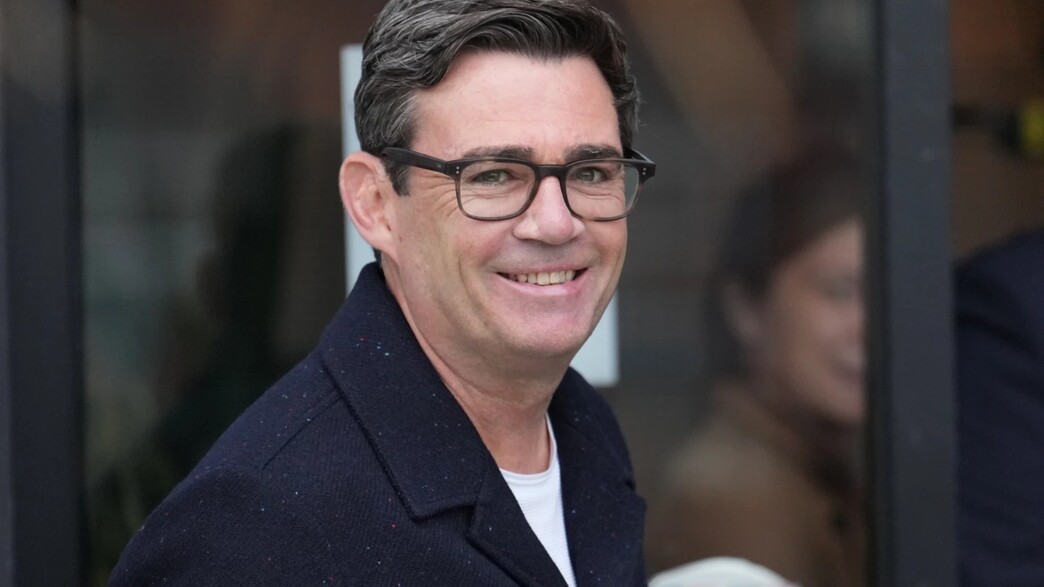
The disgraced British Prime Minister refuses to resign and emphasizes that he is determined to continue in his position despite the criticism • A dramatic survey among Labor Party voters reveals: Andy Burnham is expected to become the next Prime Minister • The gaps are large, and it seems that Starmer has no other option left
The news in brief:
- Pressure on UK Prime Minister Keir Starmer to resign is mounting following Labour’s defeat.
- YouGov poll: Andy Burnham beats Starmer among party members by a wide margin.
- Labor lost hundreds of representatives in local elections in England, Wales and Scotland.
- Former Health Minister Wes Streeting resigned and announced that he would run for the leadership.
- Starmer refuses to retire and emphasized: “My term is not over yet.”
Britain continues to be rocked by the great political storm that is befalling it, even though Prime Minister Keir Starmer signals that he is determined to stay in office. At the top of the Labor Party, headed by Starmer, pressure is mounting on him from senior officials and other factors to resign, but he refuses and emphasizes that “his term is not yet over.”
A new survey among the members of the Labor Party in Great Britain indicates a clear support for Andy Burnham as the preferred candidate for the leadership of the party and the Prime Minister, in the event of a direct confrontation with the current Prime Minister Keir Starmer.
According to a YouGov poll, Burnham would have beaten Starmer by a large margin of 59% to 37% among party members. In another situation examined in the poll, Burnham would have also prevailed over Wes Streeting, the resigning health minister who rebelled against Starmer, with 80% of the vote compared to only 10% for Streeting.
These figures come at a time when Burnham, the mayor of Greater Manchester, presents a line that is defined as leaning to the left within the party, and even signals his high political ambitions. According to the reports, his people announced that he supports continuing to adhere to the government’s current fiscal rules, despite the fact that he previously hinted that it would be possible to deviate from them in order to finance additional defense expenses through increasing the debt.
The poll also indicates a clear gap in the perception of the party’s chances in the next election: about three-quarters of Labor members believe that the party is likely to win the election if Burnham is at its head, but only a quarter think the same about Starmer.
The poll also shows that Angela Reiner, Stammer’s former deputy prime minister, has higher sympathy ratings than any other potential candidate, even though she is not necessarily seen as the leading candidate for prime minister. According to the Guardian, she leads the overall evaluation index, but Burnham is still seen as the more likely and preferred candidate.
The figures are published against a backdrop of growing tension within the party. Keir Starmer this week referred to the internal pressures and said that he has no intention of resigning and that he will not resign from the position and will not set a timetable for his departure. He emphasized that he is focused on his role as prime minister and on the civil service.
Rebel health minister Wes Streeting, who resigned last week, has stated that he will run for the leadership in any way if an election is held. At the same time, Burnham is still trying to establish a political path for himself that will allow him to enter parliament, a step that could allow him a real leadership challenge in the near future.
According to reports in the British media, after the results of the local elections about two weeks ago, which were difficult for Labor, almost a quarter of the party’s members of parliament called for Starmer to resign. In the meantime, any candidate who wishes to compete for the leadership of Labor is required to obtain the support of 20 percent of the party’s members of parliament, that is, 81 supporters out of the 403 seats held by Labor.
Starmer’s rule suffered a fatal blow after the results of the UK local and regional elections came out. The Labor Party recorded a painful defeat, losing hundreds of representatives across England, Wales and Scotland. This vote was largely a vote of no confidence in Starmer himself, with Nigel Farage’s “Reform” party on the right and the Greens on the left gaining heavily.
Starmer’s position was very uncertain even before the discrimination in the local elections on Thursday, following the uproar over the appointment of Peter Mendelsohn to the position of ambassador to the USA – until the revelation of Mendelsohn’s connections and friendship with the convicted sex offender Jeffrey Epstein. With the disclosure of the Epstein documents in the USA in January, the extent of Mendelsohn’s involvement became clear, and since then the storm has continued in the Labor Party.
https://nvcasinos.it.com/hu/
https://nvcasinos.it.com/ro/
https://nvcasinos.it.com/nl/
https://ubet.kz/line/australian-football
https://ubet.kz/line/beach-soccer
https://ubet.kz/line/billiards
https://ubet.kz/line
https://ubet.kz/line/american-football
https://ubet.kz/line/athletics
https://ubet.kz/line/badminton
https://ubet.kz/line/bandy
https://ubet.kz/line/baseball
https://ubet.kz/line/basketball
https://ubet.kz/line/basketball-3×3
https://ubet.kz/line/biathlon
https://ubet.kz/line/boxing
https://ubet.kz/line/chess
https://ubet.kz/line/curling
https://ubet.kz/line/cycling
https://ubet.kz/line/darts
https://ubet.kz/line/esports
https://ubet.kz/line/fencing
https://ubet.kz/line/football
https://ubet.kz/line/futsal
https://ubet.kz/line/golf