After more than three months of fighting, the US and Iran are facing a sluggish negotiation process, with both sides refusing to make concessions to each other.
Mr. Donald Trump was elected president in 2024 with the promise of not letting America be dragged into endless wars. But now, President Trump is facing a difficult task, which is to end the war he launched against Iran on February 28.
Iranian President Masoud Pezeshkian signed a memorandum of understanding with the US in Tehran, Iran on June 18. Image: AP
Washington and Tehran last month signed a memorandum of understanding to end the fighting, open the Strait of Hormuz and lift the US blockade of Iranian ports. The two sides agreed to discuss more difficult issues, such as Iran’s nuclear program and other sanctions, within the next 60 days.
However, two weeks after the memorandum took effect, nuclear negotiations have not yet actually begun. Instead, the US and Iran are still arguing over who controls the Strait of Hormuz, whether Israel must end the war in Lebanon, and whether Iranian assets frozen by US sanctions will be released.
“These are issues that should have been resolved,” said WSJ analyst Benoit Faucon. But so far, the US and Iran have not achieved any mutual concessions to be able to move on to negotiating more complex issues.
Faucon commented that President Trump is facing a “negotiation quagmire”, when Iran applies a familiar tactic, which is to prolong the negotiation time and delay any concessions that reach their red line.
This tactic is not unfamiliar to those who have participated in nuclear negotiations with Iran before. It took the United States under President Barack Obama and the powers of the P5+1 group many years of dialogue and countless delays with Iran to sign the Joint Comprehensive Plan of Action (JCPOA) in 2015 to curb Tehran’s nuclear program.
However, the parties were ultimately unable to force Tehran to make concessions beyond their red lines. Iran still maintains the right to enrich uranium as well as its nuclear program, which it claims is for its civilian purposes.
Richard Nephew, a former senior US diplomat who spent many years negotiating with Iran, said it is not surprising that Tehran has so far abandoned all substantive negotiations on the nuclear issue, and has drawn Washington and intermediaries into arguments over ceasefire terms.
“The history of nuclear negotiations with Iran from 2003 until now shows that the Iranians are very good at delaying sensitive and important nuclear issues, while trying to direct the discussion to terms and topics where they have the advantage,” Mr. Nephew said.
Mr. Trump’s special envoys, including Steve Witkoff and Jared Kushner, hoped to revive the stalled peace negotiation process when they arrived in Qatar this week, before turning to the issue of how to rein in Iran’s nuclear program.
But the negotiation process was threatened recently when the two sides fought for three days.
Tehran feels dissatisfied when Oman establishes a maritime route in its territorial waters for ships to pass through the Strait of Hormuz without Iran’s permission. They responded by resuming attacks on shipping, forcing the US to launch air strikes on Iran before both sides agreed to a ceasefire and restarted negotiations in Qatar.
President Trump on July 1 praised the progress of indirect negotiations between Iran and the US in Doha, saying that the parties had favorable exchanges.
“The President will not send our troops back unless required,” US Vice President JD Vance said on July 1. “If they try to rebuild their nuclear program or continue to attack commercial ships, that will change our calculations. But right now, what the President is saying is: let’s go and make a deal.”
Mr Trump said in a later interview that Iran “agreed to almost everything we needed”.
But soon after, Iranian Foreign Minister Abbas Araghchi posted a message saying that it was the US that was “causing insecurity in the region”. This is considered a message that the negotiation process in Doha is not going as smoothly as Mr. Trump claimed.
“Peace in the region can only be sustainable when it is comprehensive, inclusive and without outside interference,” Foreign Minister Araghchi declared. The negotiation process between the two sides is on hold, at least until July 9, when Iran holds a funeral for the late Supreme Leader Ali Khamenei.
Commentator Alan Eyre, an expert at the Middle East Institute, told Al Jazeera that the negotiation process between the US and Iran in recent days has been quite fragmented and he hopes the two sides will speed up the pace after Mr. Ali Khamenei’s funeral.
“The two sides have yet to agree on a mechanism to maintain the transparency of the Strait of Hormuz, as well as how to resolve issues related to Lebanon and Iran’s nuclear program,” Eyre said. “The more thorny nuclear issue is almost being shelved.”
The lengthy negotiations are posing a difficult problem for Mr. Trump, who declared on social media in 2020 that “Iran has never won a war, nor has it ever lost a negotiation.”
However, if the two sides return to the spiral of war, this will go against his long-standing commitment to avoid being bogged down in endless conflicts. During the 2024 election campaign, he vowed to “permanently end the era of senseless, stupid and endless wars”.
When the White House clearly opposes the idea of resuming military action, the likely scenario is a prolonged deadlock, with negotiations continuing without end or gradually falling into deadlock, according to WSJ commentator Laurence Norman.
During that time, the US and Iran will only maintain the minimum terms of the memorandum, including that the US will not impose new sanctions, Iran’s nuclear program will maintain its status quo, and Tehran will continue to relax sanctions on oil exports.
“Iran is completely willing to prolong the process instead of making progress. They understand that, at least in the short term, time is on their side,” said expert Eyre.
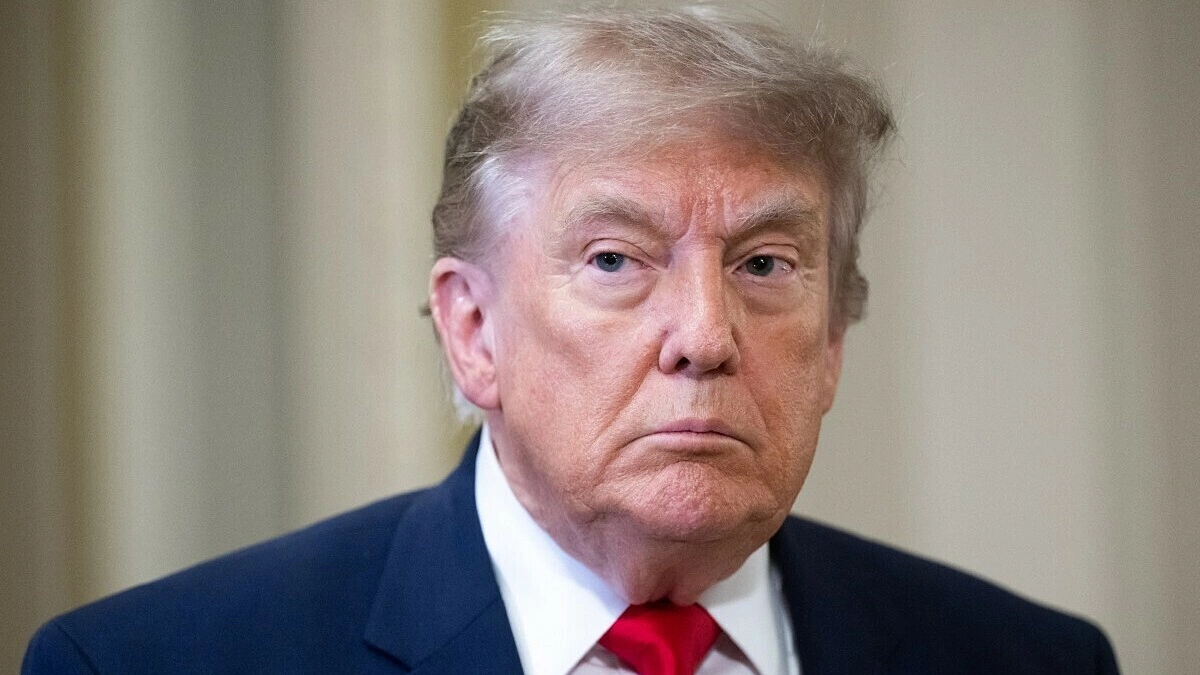
US President Donald Trump in Washington, DC on June 24. Image: AFP
The temporary memorandum actually sets out a few important conditions as “rules of the game” until the two sides reach a final agreement, according to David S. Cloud, a WSJ commentator. The expected deadline is August 18, but negotiations can be extended if both sides agree.
The US Treasury Department has also fulfilled the Trump administration’s promise to relax oil sanctions against Tehran and allow Iran to freely receive this source of revenue. This is considered an important economic lifeline for the Iranian government, helping them earn $10 billion in just two months.
Hamidreza Azizi, a researcher at the German Institute for International and Security Studies, said that despite using all delay tactics, Iran’s leadership ultimately still wants to find a long-term agreement with the US to reduce economic isolation and minimize the risk of recurring conflict.
“They need leverage to gradually bring the country back to normal. But at the same time, they are also worried that fighting could flare up again at any time,” he said.
Ships anchored off the Iranian city of Bandar Abbas in the Strait of Hormuz on June 1. Image: AFP
Commentator Faucon believes that maintaining the status quo still brings certain benefits to both sides. Iran will not have to make major concessions on its nuclear program, which it claims is for peaceful purposes.
The Trump administration meanwhile will not have to fulfill its commitment to lift all sanctions against Iran, a move that could face a reaction from Congress and provide large financial resources for Tehran to rebuild its military and continue to support allied forces in the region.
However, analysts also point out that there are many scenarios that could bring the current deadlock to an end. Tensions between Israel and Iran may once again escalate into a direct conflict over the situation in Lebanon, where Prime Minister Benjamin Netanyahu’s government has launched a war against the armed group Hezbollah. Tehran has repeatedly warned that Israel’s continued military operations in Lebanon will be considered a violation of the terms of the ceasefire.
The White House may also conclude that Iran lacks seriousness in nuclear negotiations. Coupled with Tehran’s deliberate control of the Strait of Hormuz, these will make the status quo no longer tenable.
“It is likely that the signed memorandum of understanding will be the first and last agreement that Mr. Trump and Iran sign with each other,” said Michael Singh, former director of Middle East affairs at the National Security Council under President George W. Bush.
mohammadhasana (1 link)
MdKarim הפרופיל של — The Movie Database (TMDB)
Casino by smrwilly on DeviantArt
Головна сторінка
Post by @wilmerfloressss
fapaveb194's Profile
Web Application Development
Find A Spring – Members
Farhan Khan's | Portfolium
17053
@shakibmiah
1X2 Betting Strategy: Getting Genuine Value From the Three-Way Football Market
Badger Luxe Cleaning on BizLink Builder
Garth Animal Hospital on BizLink Builder
Lakeside Spine & Wellness on BizLink Builder
Luxury Staircase Railings Llc
Jaroslav Tymouch on BizLink Builder
Millennial Contracting Inc on BizLink Builder
Dale's Transport Truck Wash on BizLink Builder
Istituto Marangoni Miami on BizLink Builder
The Hot Water Heater Pros
Kuna Wellness and Acupuncture on BizLink Builder
BalloonLab on BizLink Builder
Yolo
The Greenwich Tent Company