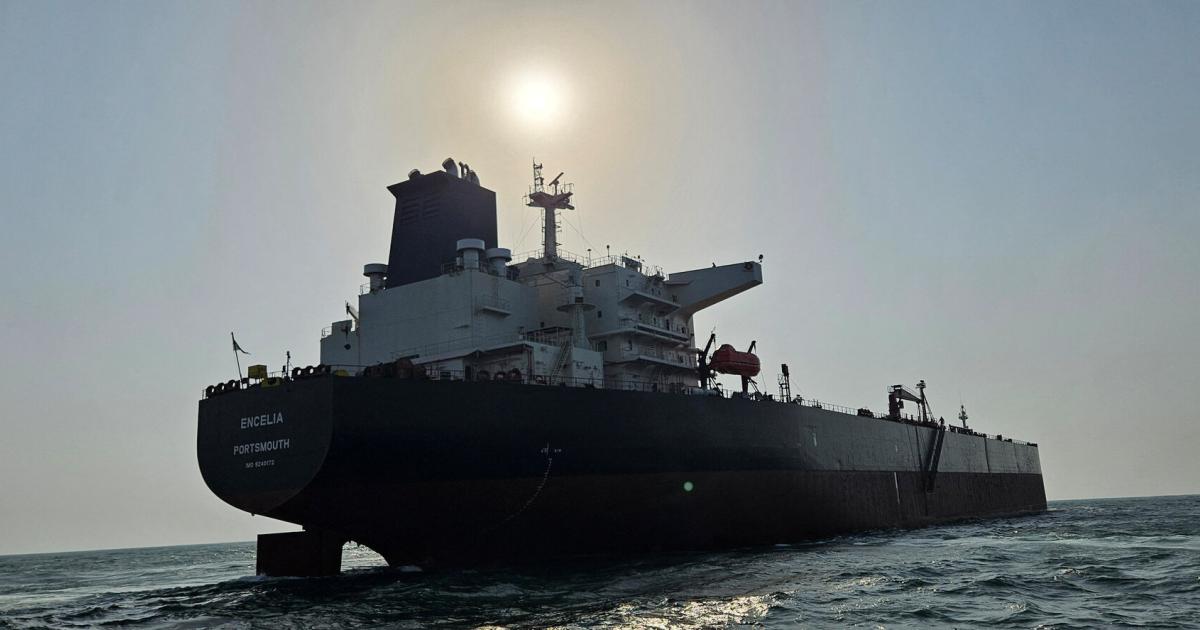
The one allied with Iran Houthi-miliz Yemen, which controls the western Red Sea coast, banned Saudi tankers from passing through Bab al-Mandab on Monday. The Houthis’ driving ban came about a week after a new confrontation with Saudi Arabia, with which the militia has been at war for more than ten years.
The 27 kilometer wide strait Bab al-Mandab (“Gate of Tears”) has great blackmail potential for the Houthis. Located between the Red Sea and the Gulf of Aden, the strait, along with the Strait of Hormuz, which Iran is blocking, forms the second bottleneck for global oil trade. With their ban on Saudi ships, the Houthis are increasing the pressure on the international oil markets and thus indirectly on US President Donald Trump in the Iran war.
Initially, the Houthi threat remained that no Saudi tankers would be allowed to pass through. The first two tankers were finally fired on on Thursday. Fire broke out on the ships and ten other ships were forced to turn back.
The result was expected. The Brent price passed the psychologically important mark of $100 per barrel again on Thursday. Crude oil rose in price during trading by 6.4 percent to $100.08. The question now is whether the Houthis’ pinpricks will continue or whether shipping traffic at Bab al-Mandab will come to a complete standstill.
Because of the blockade of the Strait of Hormuz in the Iran War, Saudi Arabia exports much of its oil via a pipeline from the vast oil fields in the east to the Red Sea port of Yanbu in the west of the Arabian Peninsula. From there the tankers with their cargo travel through Bab al-Mandab towards Asia.
Saudi Arabia counts alongside the USA and Russia one of the largest oil producers in the world. Bab al-Mandab has become a crucial alternative to the Strait of Hormuz for the Saudis in the Iran war.
It will soon become clear how serious things really are in the strait. As Reuters reports, two Chinese supertankers carrying a total cargo of four million barrels of Saudi oil attempted to leave the Red Sea via Bab al-Mandab on Thursday. Whether the tankers can pass unmolested is a signal for the entire shipping industry. A Chinese oil tanker was later granted passage, reported the specialist media Lloyd’s List.
US Secretary of State Marco Rubio says the Houthis were “drawn into this situation” by Iran. He expressed the hope that the situation would soon ease.
After the attacks by the Houthi militia, US President Donald Trump threatened Iran with retaliation in the event of another attack. “If they do this again, the United States will hold Iran accountable as the Houthis act as Iran’s proxies,” Trump said on his Truth Social platform.
He announced “severe military punishments against Iran and of course against the Houthis themselves.” At the same time, Trump was disappointed with the militia, which had recently behaved “very responsibly”.