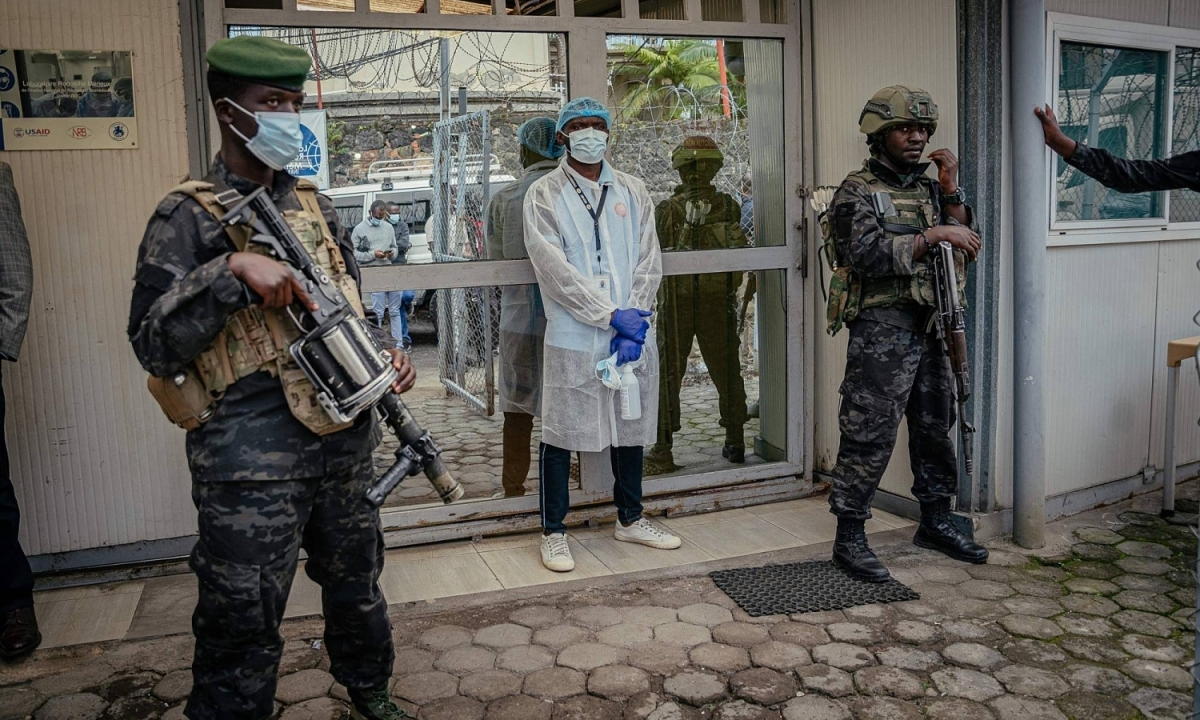
Many Asian countries have strengthened border controls and raised the level of medical response after an urgent warning from the World Health Organization (WHO) about the Ebola outbreak in Central Africa.
On May 20, WHO Director-General Tedros Adhanom Ghebreyesus said the risk of spread of the Ebola epidemic in Congo and Uganda is high at the national and regional level, although globally it is still low.
To date, the Democratic Republic of Congo has recorded 51 Ebola cases, concentrated in Ituri and North Kivu provinces. WHO warns that the actual scale may be much larger because there are nearly 600 suspected cases and 139 other related cases being monitored. Previously, on May 17, this organization declared the Ebola outbreak in Central Africa to be a medical emergency of international concern.
Before this development, a series of destinations in Asia such as Vietnam, Singapore, Japan, Korea, Hong Kong, Indonesia, Nepal and India have activated surveillance systems at international border gates to prevent the epidemic from entering.
In Vietnam, the Ministry of Health is closely monitoring disease developments, regularly updating information from WHO, while strengthening supervision at medical facilities and medical quarantine at border gates. To prevent disease, the Ministry of Health recommends that people returning from epidemic areas need to self-monitor their health for 21 days, and not have direct contact with people with suspected Ebola symptoms, blood, body fluids or belongings of the sick person.
Rodolphe Mérieux Laboratory in Goma, Congo, where samples suspected of being infected with Ebola are processed. Image: AFP
In countries in the region, epidemic prevention measures have also been pushed to a high level.
South Korea and China require all passengers coming to or having traveled through epidemic areas such as Congo, Uganda, and South Sudan to declare their health status. People with symptoms of fever, nausea or epidemiological exposure will be transferred directly to health authorities for evaluation. The Hong Kong government (China) has prepared the Penny’s Bay quarantine facility on Lantau Island – which was used during the Covid-19 pandemic – to activate as soon as there is an infection.
Singapore, Japan, Indonesia and Nepal apply measures to monitor the health of passengers from the affected area for 21 days, corresponding to the incubation period of the Ebola virus. The Singapore Infectious Diseases Agency affirmed that it will conduct medical checks right at the border gate for anyone with suspicious symptoms. In India, the National Institute of Virology in Pune has been designated as a nodal testing center to expand rapid diagnostic capacity.
Quarantine facility on Lantau Island in Hong Kong. Image: SCMP
Health experts recommend that people consider and closely monitor epidemiological information if planning to travel to Central Africa and East Africa. People moving through border gates need to truthfully declare their travel history, avoid contact with people with symptoms of high fever, unusual bleeding or wild animals of unknown origin.
https://bitty-pop.com
https://themilbemax.com/
https://mybbbelt.com/
https://mynerfgun.com/
https://the13fishing.de
https://clumpandsealcatlitter.com/
https://kevlar-gloves.com/
https://greatstuffinsulating.com/
https://thenomex.com/
https://thebessey.com/
https://thedrontal.com/
https://enoonelink.com
https://vlado-shoes.com
https://thepowerbear.com
https://oury-grips.com
https://thebuckmesser.de
https://tahariluggage.com
https://theknonew.com/
https://thegiotohun.com/
https://thehomotek.com/
https://eco-garden-pro.com/
https://thecrittertrail.com/
https://thetheragun.de
https://mymarpac.com/
https://advantageforcats.com/