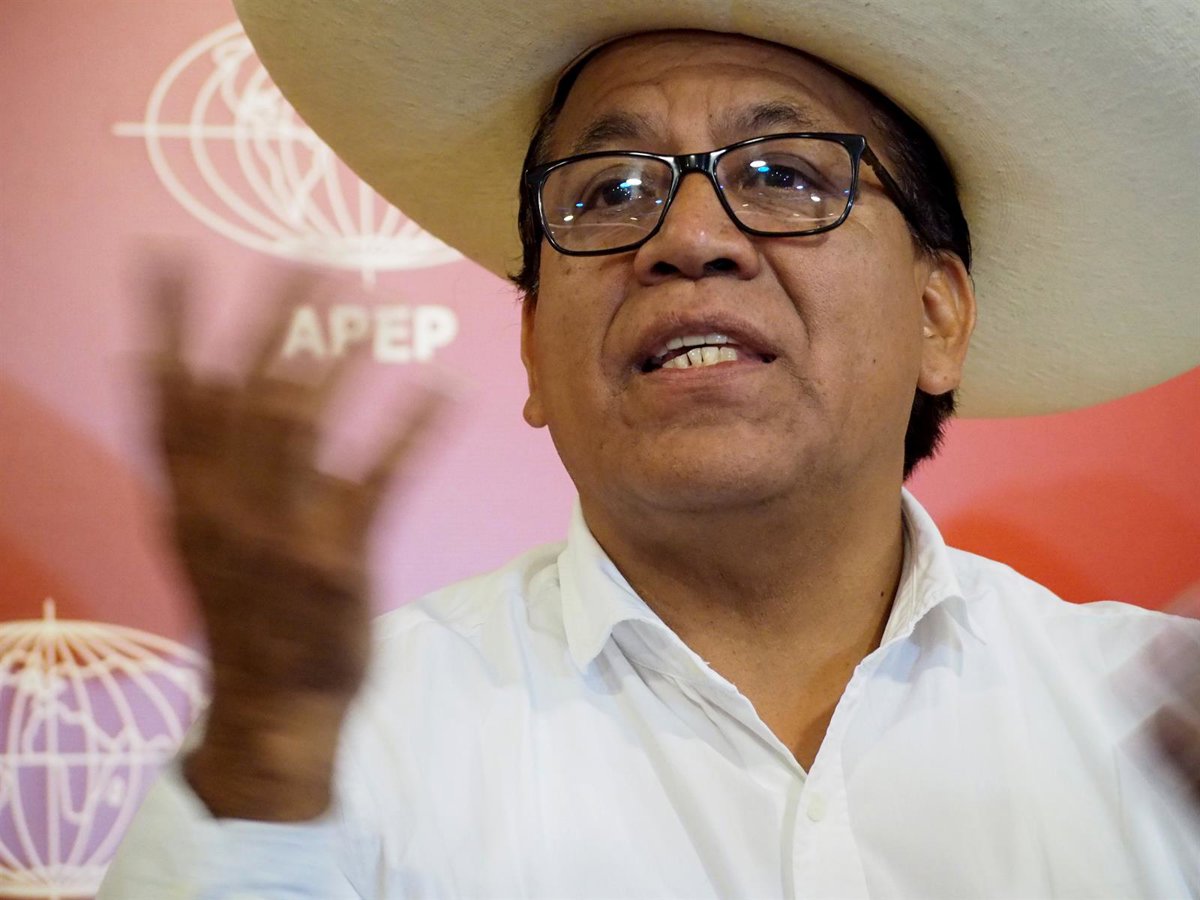
The candidate of Together for Peru (left), Roberto Sánchez, has won the second round of the Peruvian presidential elections with 50.043% of votes compared to 49.957% for the candidate of the far-right Fuerza Popular, Keiko Fujimori, when 94.24% of the minutes have already been scrutinized.
Specifically, Sánchez has obtained 8,816,996 votes compared to Fujimori’s 8,801,992 votes, according to official data published by the National Office of Electoral Processes (ONPE).
At first, the partial official results gave Fujimori a slight advantage over Sánchez, but the trend increasingly narrowed the margin until finally the left-wing candidate surpassed the daughter of former president and dictator Alberto Fujimori.
Fujimori has specifically advocated maintaining serenity during the recount and has pointed out that now the job is up to his legal representatives, who will have to “fight” each record. He has also once again asked that the results be respected, regardless of the winner.
“What corresponds is patience and a lot of serenity. I also make a call to the representatives, no longer the table representatives, but the legal representatives who we have more than 100 of them throughout Peru, because they are going to have to fight, analyze each of these minutes and well, we are going to have to wait and respect the results regardless of the winner,” he stated, according to the newspaper ‘La República’.
Meanwhile, Sánchez has expressed his gratitude for the support received. “I thank all the leaders of the popular movement, the social movement, the one that put us in the first round, the open and social, cultural, academic leaders and many citizens who have said critical vote, supervisory vote and who resolved, I believe with their vocation, to achieve this eventual triumph in standards of peace, justice and reconciliation,” he stated in statements collected by Exitosa radio.
“We appreciate this support. We are confident and optimistic, but as appropriate, the 100% count has yet to be revealed. We call on the officials to do their job, on our technical team, but the real and concrete thing is that we must wait for the issuance of the 100% results,” he noted.
In addition, he has reported that he has visited former president Pedro Castillo, imprisoned after being removed from office, and has appealed to “recover standards of democracy and call for social peace, for the fight against Peru’s number one enemy, which is corruption and poverty.”
Since Sánchez’s campaign, Gustavo Guerra García, a member of the Together for Peru technical campaign team, has highlighted the work of the ONPE during the second electoral round. Thus, he highlighted that more than 95% of the tables presented compliant minutes and that the level of challenges was low, between 1 and 2%. “This time the ONPE has been up to the task. We have not had the problems of last time,” he indicated in reference to the first round of the elections.
More than 27 million Peruvians, including 1.2 million citizens residing abroad, had an appointment with the polls this Sunday, in what has been one of the closest electoral disputes in recent times.
In his fourth attempt to achieve the Presidency, Fujimori has won in the main population centers, such as Lima, the capital, or Cuzco, while Sánchez has achieved the favor of the electorate in areas that have traditionally protested the excess of centralism in the country.
Sánchez has majorities in the center, south and east of the country, which are home to the rural, jungle and mountain areas. For his part, Fujimori has had his best records on the coast.
https://winspiritca.org/
https://ca-888casino.com/
https://ca-888casinos.com/
https://888casinos-canada.org/
https://888casinos-ca.org/
https://888-casinoca.org/
https://888casinoca.org/
https://888-casinosca.com/
https://888-casinos-ca.com/
https://888casino-ca.net/
https://888-casinos.net/
https://replatz.co.it/
https://replatz.bz.it/
https://replatz.eu.com/
https://replatzit.com/
https://replatzit.org/
https://replatzit.eu.com/
https://replatz-it.it.com/
https://ca-captaincookscasino.com/
https://captaincookscasino-ca.org/
https://captaincooks-casino-ca.org/
https://captaincookscasino7.com/
https://captaincookscasinos-ca.com/
https://captaincookscasino7.org/
https://captaincooks-casinos-ca.com/