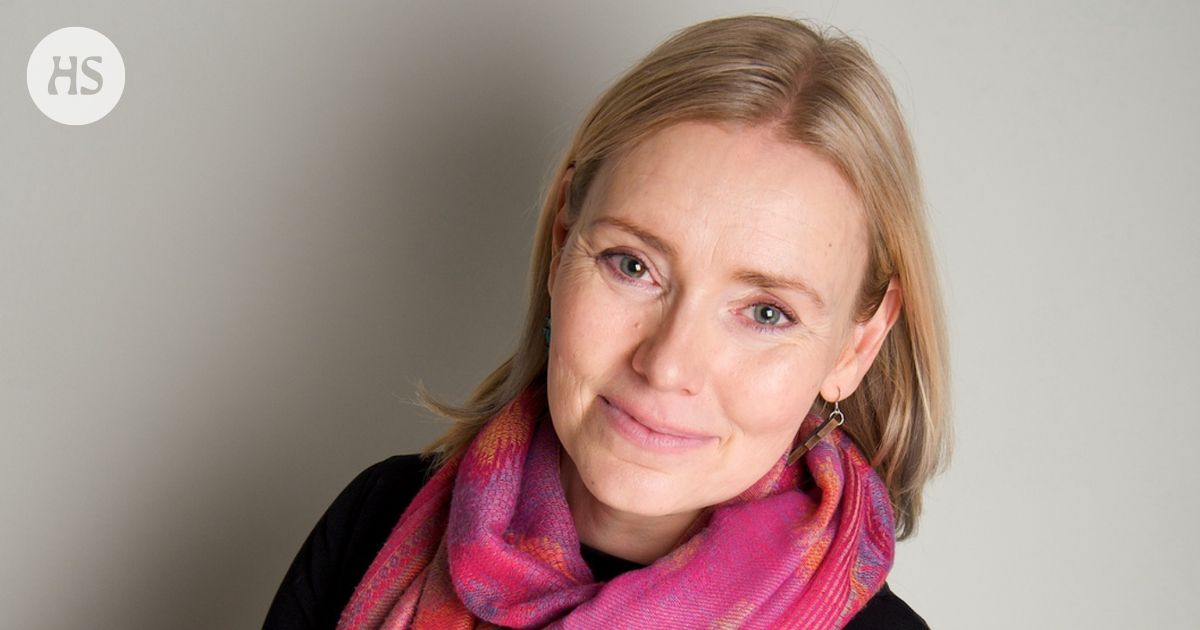
If a child living outside of Finland does not learn Finnish, as a young adult he may feel regret for a lost opportunity, claims a multilingual researcher Kaisa Pankakoski.
Pankakoski is a PhD researcher at Cardiff University, Wales. His work published in July Multilingual Family Language Policy and Wellbeing (2026) is based on years of doctoral research.
Finnish citizens living abroad is at least 300,000. According to Pankakoski, a large number of Finnish children abroad do not speak their second mother tongue fluently.
However, Article 30 of the UN Children’s Rights stipulates that a child has the right to his own language, the researcher points out.
Foreign Finn learning a child’s language requires hard and planned work from both the adult and the child. Not everyone has the resources for that.
“It can be quite challenging. On the other hand, it can be even more challenging if the child doesn’t learn the language.”
This can result, for example, in a situation where the child does not have a single language in common with his grandparents. Then the young person may feel remorse.
A researcher talks about repentance Pankakoski by Janice Nakamura through the English term used, language regret. Nakamura has studied half-Japanese youth who have not learned the language of the other parent.
“Language regret” is regret and experience of the lost opportunity to learn and speak the parent’s language. The feeling has connections not only to identity but also to a sense of belonging.
With what So, in what ways can the transfer of the language be facilitated?
“There are a surprising number of people who think that if you just speak Finnish to a Finnish child from abroad, the child will learn it. But it doesn’t actually work like that,” says Pankakoski.
There are many language strategies. Pankakoski mentions, among other things, the importance of language communities. In addition to schools in Finland, it would be good if relatives or friends were able to visit the country of the Finnish child abroad. Visits to Finland are equally important.
It would be essential to create a space for the Finnish language in the everyday life of a child from abroad. Otherwise, the minority language will remain cramped.
“There is no such thing as perfect language skills.”
To London Pankakoski, who moved after high school, has practically lived abroad his entire adult life, in addition to London and Cardiff, for example in France, Spain and Chile.
The researcher himself speaks six languages, four of which are actively present in his everyday life. Among them, Finnish is clearly his emotional language.
“For example, I speak Finnish to my dog Sisu and my children. Today in the morning I was at the boxing gym and my local friend’s baby was there: that’s when the Finnish language came up immediately,” says Pankakoski.
He considers it important that the parent passes on the heritage language because it is often the parent’s emotional language. Many other things also transfer with the language, in addition to vocabulary, cultural nuances and heritage.
Many the parent may experience, for example, anger or disappointment if there have been no resources to transfer the language.
“It is quite common for a child not to speak the immigrant parent’s language if there is no support of any kind. You should not feel bad about it,” says Pankakoski.
According to Pankakoski, if a child living outside of Finland has not learned Finnish as a child, he can also learn it as an adult. Learning a language is a lifelong process.
According to the researcher, one should not strive for flawlessness in languages. Instead, he encourages making mistakes.
“There is no such thing as perfect language skills. Let’s boldly make mistakes and speak languages at different levels.”
At the moment Pankakoski is doing further research on the families he studied in his dissertation.
The families’ children are now teenagers and young adults. Everyone has grown up with at least three languages.
When Pankakoski has asked young people about the negative aspects of learning languages, there have been only a few. It is challenging to maintain all the languages, and sometimes the languages get mixed up.
However, there are plenty more positive comments. Knowledge of languages provides perspective and enables communication with more people. It is also easier to learn other languages when you already know a few.
The effort to learn the languages was seen as worth it.
“If you have succeeded in teaching a child the Finnish language abroad, then it is an incredibly wonderful achievement and usually behind a lot of work,” says Pankakoski in conclusion.
“It would be really important to at least try.”
Kaisa Pankakoski
-
PhD student at Cardiff University.
-
The work Multilingual Family Language Policy and Wellbeing (2026) was released in July.
-
At home, a spouse and two trilingual children.
-
In his free time, he enjoys saunas, trail running, walks his dog Sisu and surfs on the beaches of Wales.
Sugar Detox: Myths and Facts
Where do you buy window tint?
8758183.Htm
Retinal health is more important than ever, and the world of
Gaming discussions: Sitting on the morning
Considering a Christmas themed photo booth?
I run a small local business and have been trying to improve
Mentor KHAI
It turns out that HGH treatment is really expensive, which s
News.Aspx
BACKSTAGE AT FRINGE with The Fusion Theatre Ensemble | The Weathering
Where do you buy window tint?
dumps101.com: Real Dumps with Pin Shop – CC Dumps – Good Cvv – Buy Dumps Pin ATM – theorchestrafornow.com
Soulja Boy Group | Soulja Boy
How do our children feel about leaving isolation?
Our hallway always felt a bit gloomy, but the front door had
Raakte iemand toevallig via vrienden bij Legionbet casino te…
Home.Php
IM Highlights March 2021
Welcome to Papa's Freezeria
Mastering The Madness Your Guide To Conquering Drive Mad
+SYRONA General Forum | +SYRONA
Home.Php
151107
New RPS™ (Ratchet Plate System) are in stock & ready to ship.