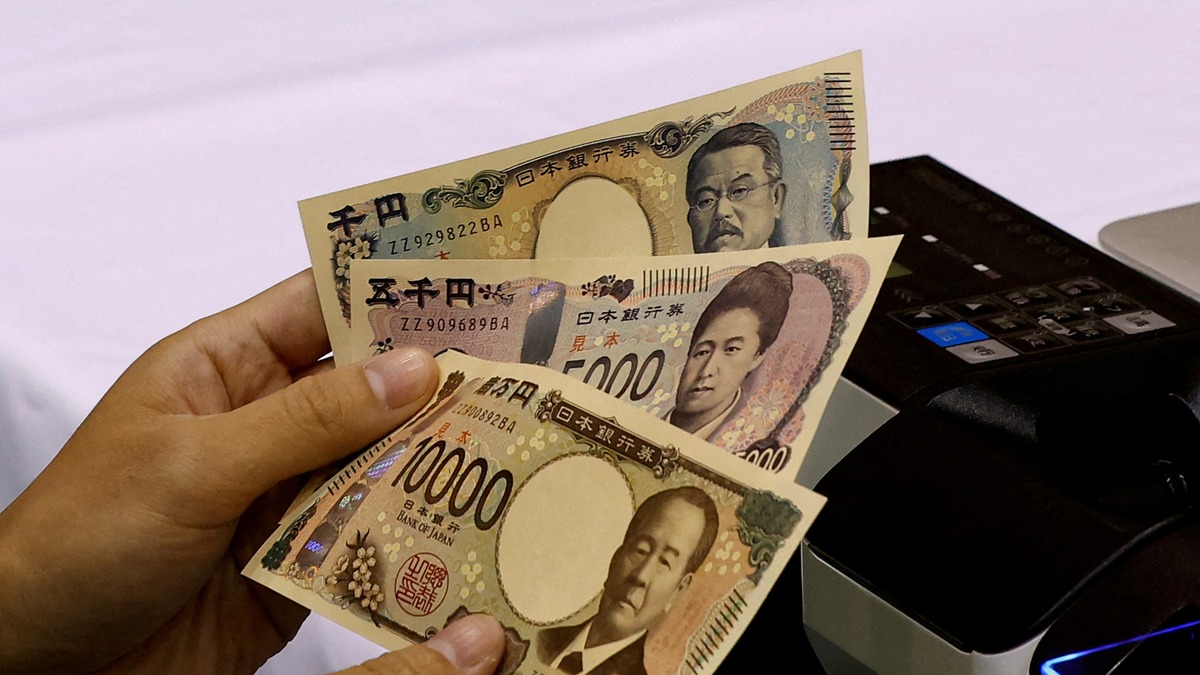
The yen price increased for the third consecutive session against the USD, a few days after the US and Japan intervened in the foreign exchange market.
On the morning of August 3, the Japanese yen price increased 1% compared to the US dollar, at one point 1 USD was exchanged for 155.2 JPY. This is the strongest level of the yen in the past 3 months.
Yen also appreciated against other currencies, such as the euro and British pound. This development raises speculation that Japanese authorities may continue to intervene in the market.
Above Reuters, an investor also said that in this morning’s session, many short yen contracts were closed.
“Given the level and timing of fluctuations in the USD/JPY exchange rate, the possibility of intervention cannot be ruled out,” said Hirofumi Suzuki – exchange rate strategist at SMBC. He said previously, the number of short yen contracts was very large. Therefore, buying to close a position tends to amplify the price increase.
Last weekend, the yen increased in price by more than 3% against the USD in just 2 sessions. On July 31, the Japanese Ministry of Finance confirmed that it joined the US in buying yen on the market. Data from the Bank of Japan (BOJ) shows that about 58.9 billion yen was purchased on July 30.
“History shows that coordinated intervention in the foreign exchange market is very effective. Investors should follow the moves of the authorities instead of betting against it,” said Elias Haddad – Director of global market strategy at BBH. He said since 1998, all three coordinated US interventions in the foreign exchange market have been successful.
The last time the US directly supported the yen was in 2011, by coordinating with other countries in the G7 to stabilize the market after the double earthquake and tsunami in Japan.
The yen has been under pressure for many years, because the BOJ has been slow to tighten monetary policy. This causes a large difference in interest rates in Japan and other countries. US interest rates are currently around 3.5-3.75%, while this figure in Japan is 1%.
“Without a change in policy or global growth prospects, we believe that encouraging capital repatriation will have the biggest impact on yen prices in the long term,” Goldman Sachs analysts said.