The back of the knee joint is the area located between the posterior thigh muscle (hamstring) and the calf, which usually folds when the leg stretches. Pain behind the knee is a common condition, which can appear transiently when moving, sitting for a long time, or standing up suddenly. But if the pain lasts for many days, to the point of affecting movement, it may be due to external soft tissue damage or problems inside the knee joint.
Below are some common causes of pain behind the knee.
Joint synovitis occurs when the articular cartilage is eroded or damaged, causing the ends of the bones to rub, causing pain from the front to the back of the knee, accompanied by stiffness and limited movement. The pain often increases with exercise and decreases with rest.
Baker cyst Forms when joint fluid accumulates behind the knee, forming a bulge. When the cyst increases in size, it causes tension, pain in the back of the knee and difficulty bending and stretching the leg. In some cases, cyst rupture causes pain and swelling that spreads down the leg.
Posterior cruciate ligament (PCL) injury causes swelling, marked pain behind the knee, joint loosening and limited movement. The condition often occurs after a strong impact on the knee joint such as a fall, sports injury, traffic or daily life accident.
Tendonitis Occurs when the tendons around the knee joint are irritated or overloaded due to repetitive movements, causing a dull pain behind the knee with a slight burning sensation, especially when stretching or standing for a long time.
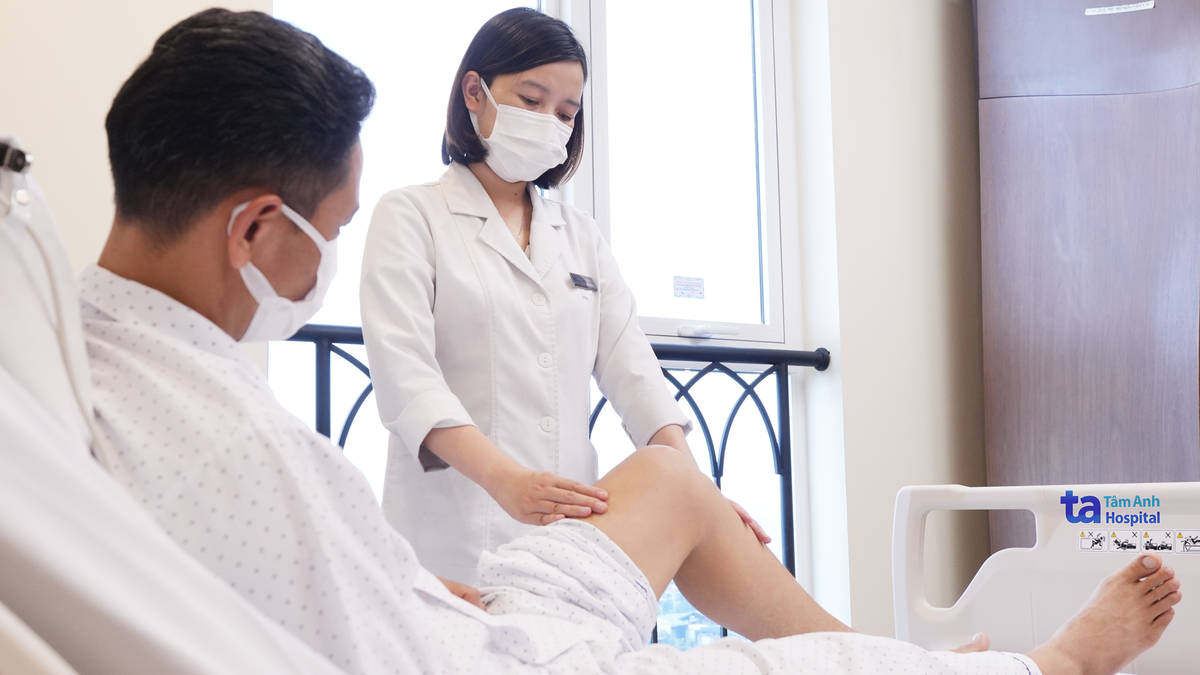
Doctor examines patient with knee pain. Illustration photo: Tam Anh General Hospital
Meniscus tear causes pain and limits knee movement, often occurring when the knee is suddenly rotated or sports injuries. The pain may spread to the back of the knee, accompanied by a feeling of stuck joint or crunching sound when moving.
Strained or torn muscles in the thighs and lower legs It often occurs when exercising too hard or not warming up carefully before working or playing sports, causing pain behind the knee, which gets worse when continuing to move or stretch the muscle.
Deep vein thrombosis Occurs when a blood clot forms in the leg veins, which can cause pain behind the knee, swelling, heat and tightness in the leg, and intermittent claudication – sometimes disappearing and then coming back. This is a dangerous cause that needs to be detected and treated early to avoid complications.
If you have pain behind your knee that lasts for many days, does not decrease even after resting, affects movement, has difficulty bending and extending your legs, and has difficulty walking, you should go to a specialized hospital for examination early. Based on clinical symptoms, the doctor will take the history of the injury and prescribe some tests and diagnostic imaging such as X-rays and MRI when necessary. Correct diagnosis of the disease helps effective treatment, quick pain relief, and early recovery of the patient’s movement.