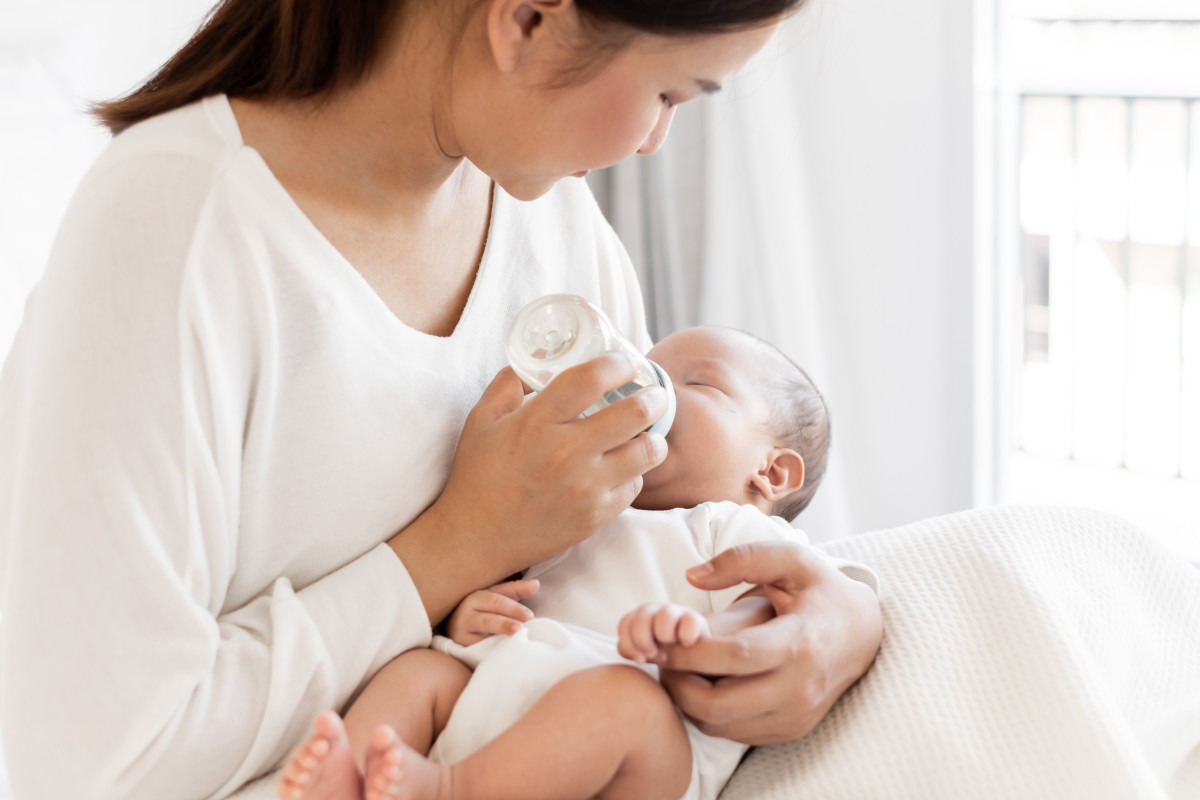
Young babies are more susceptible to infections, so feeding equipment should be very clean. A bottle left with milk at room temperature can quickly become a breeding ground for bacteria. That’s why the first and most important step is washing immediately after use or an orderly separation until washing, disassembling all parts of the bottle, cleaning with soap and water, using a clean brush and air drying on a clean surface.
In the first months, and especially in premature babies, babies with a weakened immune system or very young babies, it is more important to disinfect according to medical instructions or the instructions of the local Ministry of Health. Disinfection can be done by boiling, in a dedicated device or by other methods designed for this, as long as they are used correctly. But disinfection does not replace cleaning. If dirt or milk residue remains, the disinfection is less effective.
One of the most dangerous mistakes is leaving a baby with a supported bottle unattended. Beyond the danger of suffocation and inhaling liquid, it is also a violation of feeding habits. A baby needs an adult who holds him, watches his rhythm and stops when necessary. Feeding is not a technical act of introducing milk into the body, but a safe interaction.
When should equipment be replaced? When there are cracks, tears in the nipple, discoloration, an odor that has not disappeared, mold, worn parts or a bottle that has fallen and been damaged. A torn nipple can change the flow rate and cause choking or swallowing air.
The practical recommendation is to build a simple routine: a reasonable number of bottles, immediate washing, clean drying, disinfection according to age and medical condition, and avoiding reuse of milk that has stood for too long. Good hygiene doesn’t have to look like panic. It should be permanent, simple and safe.
General warning signs that always require a visit to the emergency department: