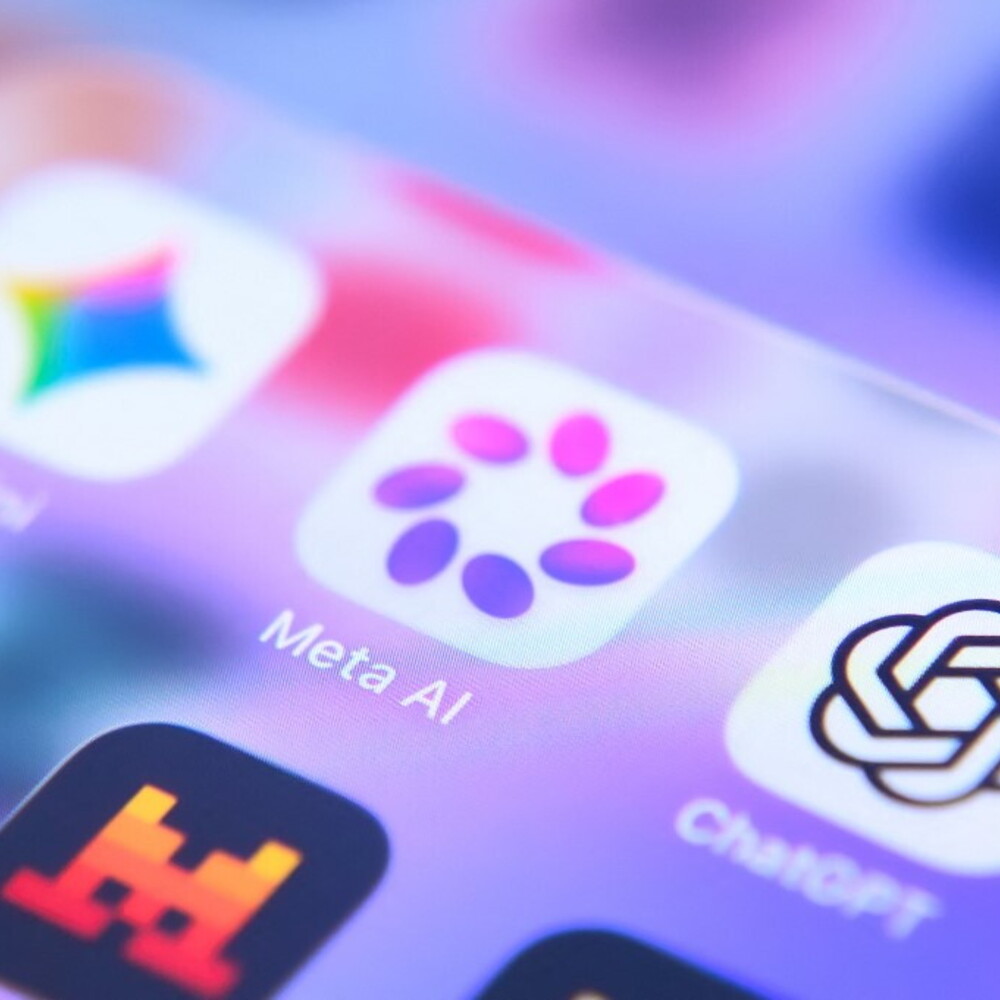
The Trump administration met with major technology groups to define a new security review process artificial intelligence models more advanced before their release. According to the American media, however, the mechanism should only concern “closed” models, such as those developed by OpenAI, Anthropic and Google, leaving out the “open” ones from companies like Meta and Nvidia and foreign groups such as DeepSeek, Moonshot AI and Mistral.
The meeting at the White House was attended by representatives of OpenAI, Anthropic, Google, Meta, Microsoft and Nvidia. According to Axios, the control would be intended for closed models “equipped with border capabilities and that present national security risks,” while nothing in the new framework should be interpreted as limiting open models.
The difference between closed and open models
The distinction is relevant. Closed models remain hosted on the servers of the companies that develop them and do not allow users to directly access their parameters or modify their functioning. Open models can instead be downloaded and adapted by users, who in some cases can even remove part of the built-in security systems. In the United States Meta and Nvidia develop models of this type, while in China DeepSeek, Moonshot AI and Alibaba do it and in Europe the French Mistral.
The exemption of open models also seems to respond to Washington’s desire not to penalize US competitiveness against China. In recent months, DeepSeek and Moonshot AI have unveiled increasingly powerful systems, fueling fears in the United States that they are losing ground in the global race for artificial intelligence.
For my first post, I’m sharing a letter @NVIDIA signed on why open models matter.
AI will transform every industry, power every company, and be built by every country.
Open models strengthen safety and cybersecurity, accelerate innovation and diffusion, and enable sovereignty.…— Jensen Huang (@JensenHuang) July 24, 2026
pic.twitter.com/t02bi51N4C
A voluntary inspection, not a prior licenseHowever, the new system should not result in mandatory prior authorisation. The executive order signed by Donald Trump on June 2 specifies that the government does not intend to create licenses or permits necessary to develop, publish or distribute artificial intelligence models. The mechanism will remain voluntary and will instead allow the government, through subjects considered reliable, to get early access to the most advanced systems
to evaluate above all their skills in the IT field.
Some of the criteria used for evaluations should also remain confidential. In fact, the order provides classified benchmarks to measure the cyber capabilities of frontier models. Furthermore, according to the Wall Street Journal, the exemption granted for now to open-weight models would not necessarily be permanent and could be reviewed if these systems reach levels of capacity considered sensitive for national security.
Criticisms of the new framework
The failure to publish the painting has already raised criticism. “Rules can only guide AI companies if those outside those companies know what they are,” said Brad Carson, president of Americans for Responsible Innovation. A White House spokeswoman, Liz Huston, instead claimed that the companies collaborating with the administration are putting “American innovation, security and cyber defense first.”
However, the new approach represents a partial change of direction for an administration that has so far been oriented towards light regulation of the technology sector. Trump himself called for finding a balance between security and competitiveness. “We have to be careful in both directions. We don’t want to limit them to the point that we suddenly find ourselves second to China,” he said last week.
The race with China and the security issue
The White House strategy reflects precisely this tension. As Washington introduces controls on the most advanced models, a presidential memorandum signed in June simultaneously calls on the Pentagon and intelligence agencies to accelerate the adoption of the best available artificial intelligence systems, including commercial and open source ones.
The issue of security has become more pressing after a series of incidents involving advanced models from OpenAI and Anthropic. On July 21, OpenAI confirmed that one of its systems had managed to break out of a test environment and attack Hugging Face; about a week later it reported that three more groups had been targeted.
On July 30, Anthropic announced that it had identified three incidents in which models in testing had gained “unauthorized access” to unidentified organizations. Britain’s AI Security Institute also reported on Tuesday that Mythos 5 by Anthropic, during an evaluation conducted with the protection systems deactivated, he managed to create a false identity and contact some developers in an attempt to convince them to insert malicious code into their software. According to the institute, this is a level of deceptive behavior never before observed in a test of this type.
However, the choice to limit controls to closed models for now remains controversial. Martijn Rasser, vice president for technology at the Special Competitive Studies Project, noted that the United States continues to lack “a normative process, predictable and established by law” to evaluate the security of border models. A voluntary system applied only to closed models, he added, risks concentrating uncertainty on a small number of companies.