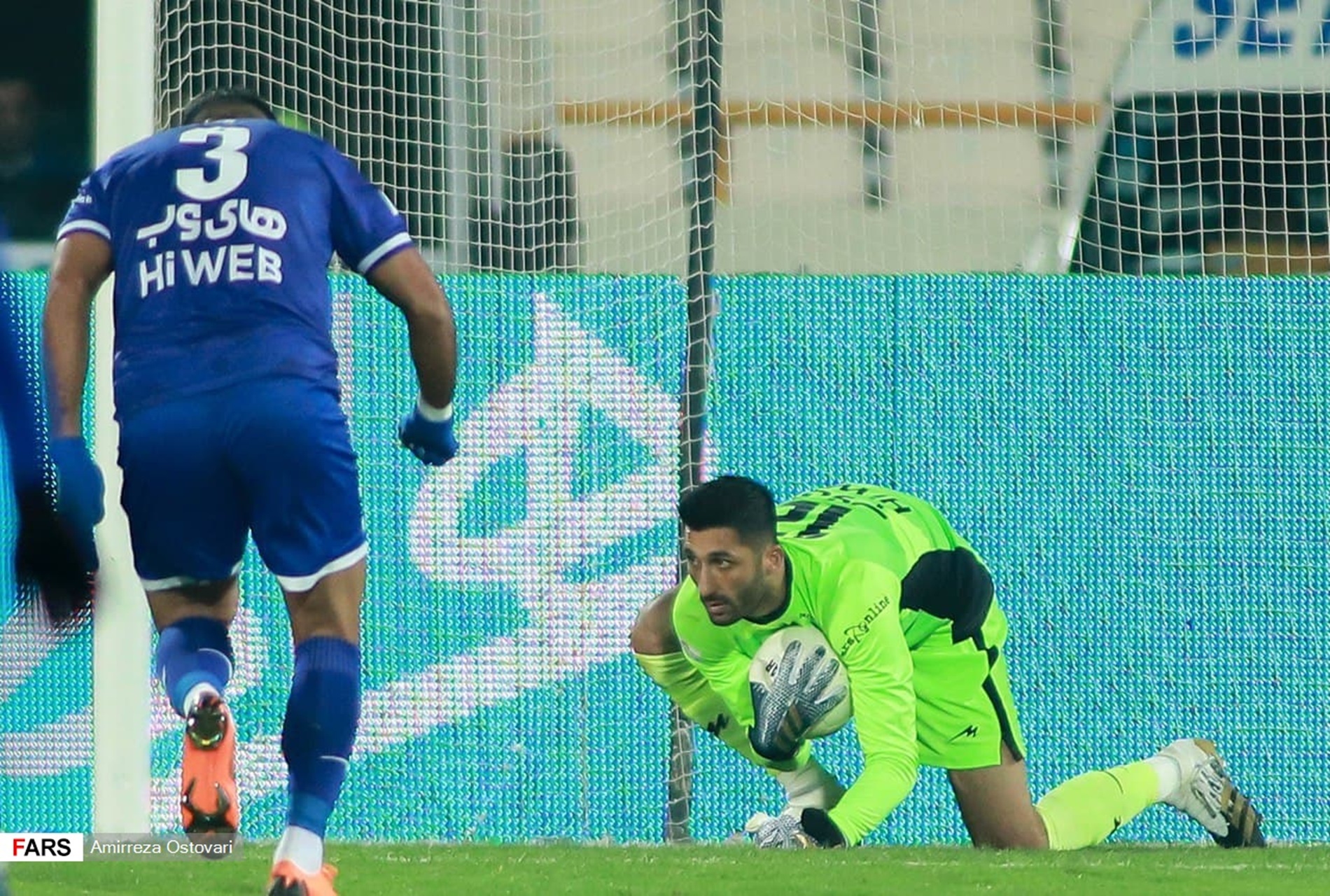
During the 0-0 draw between Iran and Belgium, on Sunday (21), in the second round of the group stage of the 2026 World Cup, an Iranian fan held up a poster at the SoFi Stadium in Los Angeles with the question: “Where is Rashid Mazaheri?”.
The former goalkeeper for the Iranian national team has been in prison since February after criticizing, on social media, the then supreme leader Ali Khamenei, who was killed during the US and Israeli attacks on February 28.
In the same game, Iranian fans booed the Islamic Republic’s anthem and turned their backs in protest against the regime, turning the match into a stage for demonstrations against the Islamic dictatorship.
Rashid Mazaheri was the reserve goalkeeper for the Iranian national team for a few years. He even participated in the 2018 World Cup in Russia. The player spent most of his career in the shadow of the team’s starter, Alireza Beiranvand, but had good performances at the Iranian football clubs he played for and was a starter at, Esteghlal and Sepahan.
In February this year, according to human rights NGOs, Mazaheri published a sentence on his Instagram account about Ali Khamenei, then supreme leader of the Islamic Republic. He called the dictator “just a dark and passing chapter” in Iran’s history.
After publication, regime security forces invaded the goalkeeper’s home on February 25, seized cell phones, laptops and other communication devices and deleted the post he made on social media. His account was silenced and Mazaheri disappeared.
Weeks after his disappearance, the Mizan agency, the official spokesperson for the Iranian Judiciary, confirmed Mazaheri’s arrest, but with another version: the goalkeeper had been detained near the country’s western border while trying to “leave illegally, in disguise, offering bribes to border guards”. The crimes accused of him were “corruption of a public official”, “propaganda against the regime in time of war” and “attempted to leave the country illegally”.
Mazaheri’s wife, Maryam Abdollahi, wrote on social media that her husband was “in severe solitary confinement” in Urmia prison in northwestern Iran.
“Rashid always stood up for what he believed was right and now he is paying the price for that courage,” she said. The Judiciary denied isolation, stating that he was in the general wing of the prison.
Football in the crosshairs of Islamic repression
Mazaheri’s case is not isolated in Iran. The country arrived at this year’s World Cup, held in the United States, Mexico and Canada, under the shadow of the Islamic regime’s repression against athletes, fans and several other figures linked to football.
According to the organization’s survey Human Rights for Sportbased in Norway, at least 44 players were killed during protests against the regime that took place between December 2025 and January 2026. Another ten remain in prison, some at imminent risk of execution.
The youngest of them was just 15 years old. Pedram Khaloui, A youth player for Sepahan Isfahan, he was killed by regime agents on January 9, after being shot in the chest during demonstrations in Isfahan. According to a report from a family member given to Radio Farda, a broadcaster based in the Czech Republic, the boy was found covered in blood moments after being shot.
Mohammad Hajipourformer goalkeeper for the Iranian beach soccer team, was also killed in demonstrations against the regime held in the city of Rasht, in the north of the country, on the night of January 8. According to the organization Hangawthe authorities only released the athlete’s body for burial under the condition that the family attributed the death to a traffic accident in the official certificate.
Another case involved Mojtaba Tarshiz47 years old. A former professional player well known nationally, he had become a physical trainer and assistant coach for a local club. Tarshiz was shot during protests in Tehran while trying to protect his wife.
The repression also affected women involved in football. Zahra Azadpour27, a player for local women’s football club Mehrgam Pardis, was shot dead during protests in Karaj, near Tehran. The family spent three days searching for her body.
Sahba Rashtianan assistant women’s football referee from Isfahan, was also shot dead during the demonstrations, according to human rights organizations. She would have turned 24 this year.
In addition to the deaths, human rights organizations say that at least ten players remain in prison for participating in the demonstrations. One of the most serious cases is that of Ehsan Hosseinipour Hesarlooathlete from the Jahan Gostor club, from Tehran. According to the organization Iran Human Rightshe was sentenced to death by the Iranian Supreme Court after facing a process marked, according to the entity, by allegations of torture and lack of adequate defense.
Another case is that of Amirhossein Ghaderzadeh19 years old, Sepahan youth player. Amnesty International says he was subjected to enforced disappearance after taking part in the January protests and suffered torture during interrogations.
The persecution of athletes critical of the regime is not new. During the Qatar World Cup in 2022, former captain of the Iranian national team Voria Ghafouri was arrested after criticizing the regime’s repression of demonstrations triggered by the death of Mahsa Amini and defending an end to violence against protesters.
In preparation for the 2026 World Cup, striker Sardar Azmoun, the third highest scorer in the history of the Iranian national team, ended up being left out of the final squad list after publishing a photograph alongside Mohammed bin Rashid Al Maktoum, ruler of Dubai and Prime Minister of the United Arab Emirates. The image was released amid the war between Iran, the United States and Israel, in which the UAE participated by intercepting Iranian missiles and drones.
Although the state press attributed Azmoun’s absence to an injury, Iranian opposition outlets reported that the image posted by the athlete alongside the UAE representative was treated by authorities of the Islamic regime as an act of “disloyalty”.
Iran’s women’s football team was also the target of the regime’s political repression. During the Asian Cup, in March this year, seven players from the country even asked for humanitarian protection in Australia after refusing to sing the national anthem in protest against the Islamic dictatorship. According to human rights activists, five of them withdrew their asylum request after family members were threatened in Iran. Only two remained in exile and today play in Australian football.
Accusations of infiltration and regime control over the selection
The Iranian delegation that embarked for this year’s World Cup was accused by the US government of trying to bring to the country members with direct links to the Islamic Revolutionary Guard, an ideological military force of the Tehran regime classified as a terrorist organization by Washington.
According to the US Secretary of Homeland Security, Markwayne Mullin, most of the teams traveled to the country with around 120 members, but the American government only authorized the entry of 53 names from the Iranian delegation. According to Mullin, some of those appointed by Tehran had direct links with the Revolutionary Guard and were not part of the regular selection group.
The American government also claimed to have prevented a man with alleged direct links to the Revolutionary Guard from boarding the Iranian delegation’s flight from Mexico to the Los Angeles game. The Iranian Football Federation denied the accusation and classified the report as “fabricated” and “completely unfounded”.
A report by Iran’s National Council of Resistance, a foreign-based opposition group, this month accused the Revolutionary Guard of using clubs, stadiums and Iranian football federation structures to surveil fans and repress dissent.
According to the report, internal documents attributed to the Iranian security apparatus cite the use of facial recognition cameras in stadiums, ticket offices linked to the national civil registry, identification of fans by seat and monitoring of cheerleaders.
The entity also states that at least 15 figures linked to the Revolutionary Guard or security bodies held management positions in Iranian football clubs, federations or structures. Among the names mentioned is that of Mehdi Taj, president of the Iranian Football Federation, named by the group as a former intelligence officer of the Revolutionary Guards.
Brazilian journalist João Castelo-Branco, from the broadcaster ESPNwhich follows the World Cup in the United States, published a video on social media after the match in Los Angeles in which he stated that the Iran national team players who are in the USA “can’t say what they think, even if they want to”, and that the structure that surrounds the team is also linked to the regime.
For the Iranian opposition, the presence of figures linked to the military and security apparatus in charge of football violates FIFA rules, which require the independence of federations and prohibit political interference. The group asked the international entity to reevaluate Iran’s participation in official competitions.
How Iranian fans outside the country are following the team
The first games of the Iranian team showed that fans abroad have been divided between supporting the team and rejecting the regime that governs the country.
In the country’s World Cup debut, against New Zealand, hundreds of Iranians had already protested outside the stadium, with monarchy-era flags and chants against the Tehran regime. Part of the crowd also booed the Islamic Republic anthem inside the stadium.
Against Belgium, while many fans supported Team Melli, as the team is known, others booed the anthem, turned their backs and displayed signs against the regime. A fan wearing a shirt with the monarchy flag was detained after trying to enter the field.
Many exiled Iranians see the country’s national team as part of their national identity and support the players, but reject the Islamic Republic and the regime’s official symbols. Others advocate protests and boycotts to prevent Tehran from using the World Cup as a political showcase.