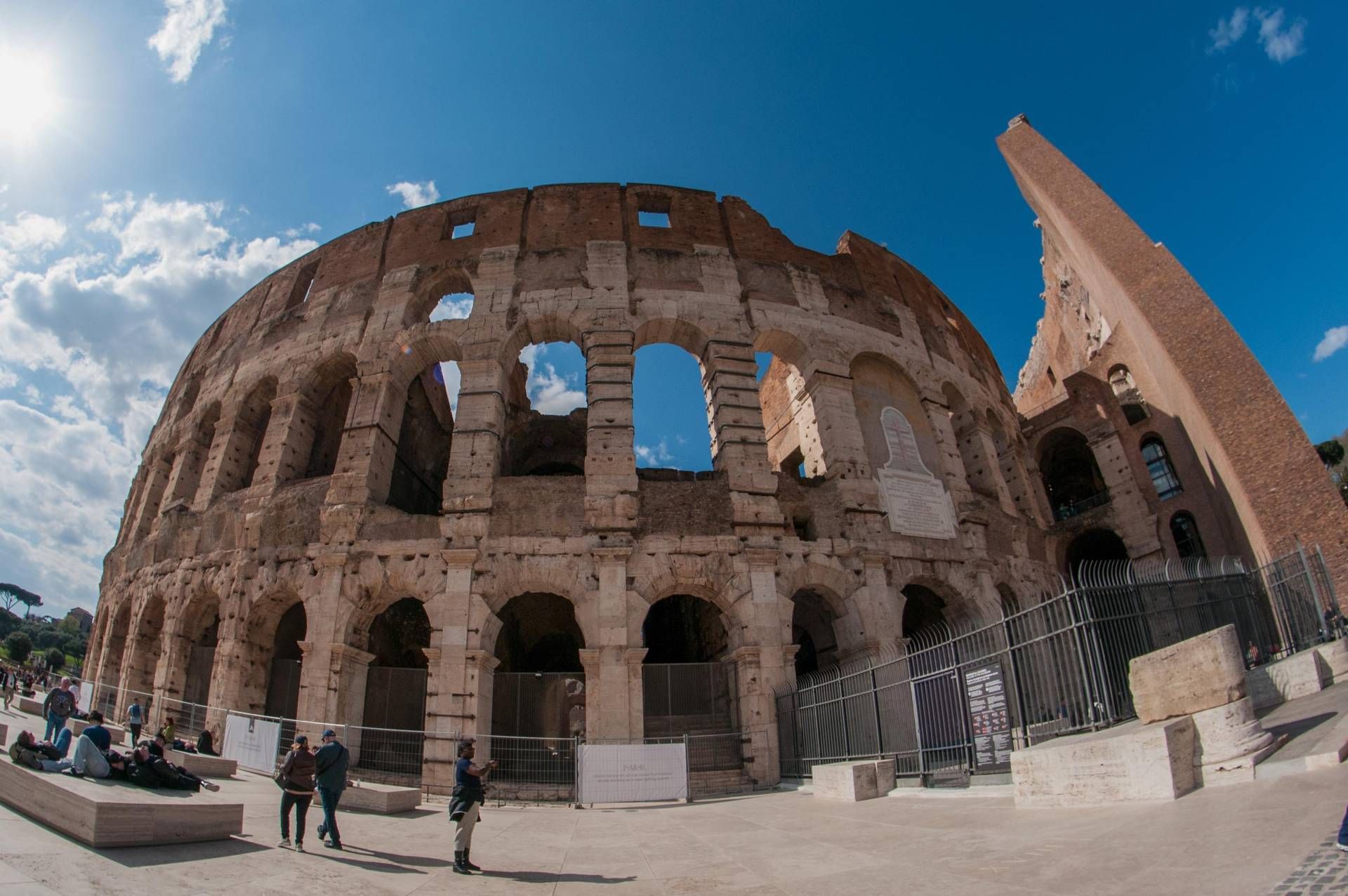
A digital wall, almost more insurmountable than the ancient one. Buying a ticket for the Colosseum on the official website has become “an impossible mission” for tourists and small operators, often forced to turn to the “secondary ticketing” market, where prices increase and dynamics are influenced by large players in the sector. The alarm was raised through a dossier and a report to the Agcm and Anac by Isabella Ruggiero, president of the Association of Qualified Tourist Guides (Agta), who to Adnkronos denounced a system which she said was undermined by “hoarding, technical flaws and a management that needs to be reviewed”. The situation, which has been critical since mid-January 2026, recalls what happened in 2023. “We are back to square one”, explains Ruggiero. “On the official website, tickets are almost always impossible to purchase upon release and sold out shortly thereafter, even in low season periods such as January and February. This is anomalous and unacceptable.”
For those awaiting release, the experience is frustrating. Either he can’t even view the available tickets, because they already appear sold out, or when he tries to put them in the cart the system gives an error. Tourist guides send customers “tutorials” for purchasing, but this year that’s not enough. “We have collected dozens of testimonies and videos”, continues Ruggiero. According to the association’s analysis, the causes of the chaos are multiple. The main problem lies in the official sales portal, which appears to be suffering from interactions and connection attempts, including bots and cyber attacks, to which it is subject.
There are two sales channels: B2C (for the public) and B2B (for accredited agencies and tour operators). The rule would be that those who are accredited do not draw from the public channel. “We know for a fact that this is not the case,” says Ruggiero. “Many large operators, for various reasons, also buy massively on the public platform using different accounts, drying up availability for individual visitors.” The reasons? Miscellaneous: Increase the quantity and type of tickets granted to him, avoid paying in advance the ticket quotas foreseen for accredited persons or circumvent the ban on sales in the last 3 days before the visit, a rule designed to combat street “skip the lines” but which, according to Ruggiero, harms many other operators.
If some accredited agencies limit themselves to buying from the other platform in exceptional cases, other operators instead draw from there hands down also through Bots, automated programs that allow you to purchase huge quantities of tickets in fractions of seconds. Among these, it is worth noting the use of software which, with the “freezing” technique, “grabs” and keeps the tickets blocked in the cart, even for days. In this way, the tickets are not available to the public but have not yet been paid for by the operator, who will finalize the purchase only when they have a request, guaranteeing availability even at the last minute.
Faced with the reports, the management of the Colosseum Park has announced that the site has been subject to “cyber attacks” (which is different from hoarding Bots), attributing however the sold-out also with a record turnout. An explanation that doesn’t convince Ruggiero: “I can’t believe that in February there was the same turnout as in June. The anomaly is in the speed with which the tickets disappear, not their gradual exhaustion. Hearing the Park reply that visitors will have to ‘plan their visit well in advance’ is a mockery, given that on the Park website they cannot book before 30 days and that it was impossible to find the February tickets 30 days before on the hour.”
The problem, according to Agta, is not only technical but also managerial. The association underlines that for years it has put forward concrete proposals that would have remained “unheeded”. Among these, it is fundamental to “extend the opening hours in summer”, since it is considered “unacceptable” that the Park does not adopt wider opening hours in the face of the enormous demand and the increase in temperatures. Another proposal is to “abandon the 30-day release” of tickets, suggesting a sale at least six months in advance to adapt to travel planning: “The tourist sees that there are no tickets on the official website and immediately flocks to private platforms, where he finds them available throughout the year at a higher price”, explains Ruggiero.
The need to review itineraries and types of tickets is also highlighted: “They have created a ticket that no one wants, the 20-minute Only Arena, and others that instead allow you to visit everything with the result of staying there for almost 2 hours. They need tickets that give access to limited itineraries but with times acceptable to everyone, more streamlined itineraries, to speed up flows. People spend an hour and a half for the visit also due to queues for the only lift, for the few bathrooms and the length of the routes for disabled people and people with walking difficulties. By optimizing the routes, many more people could enter per day.”
The association’s conclusion is that the symbol of Rome is a prisoner of a system that penalizes visitors and favors a parallel market where the 18 euro ticket is resold in packages with audio guide or other services starting from 33 and reaching around 100 euros. “And these are the prices of ordinary tickets – explains Ruggiero – The most ‘precious’ tickets, those of the Underground, if combined with a guided tour cost several hundred euros per person. On the official website they would cost 24 euros but they are constantly and regularly sold-out, impossible to purchase, and not just this year”. “The visitor should be able to choose. The purchase of private tourist packages must be a choice, not an obligation because the public one doesn’t work”, comments Ruggiero, hoping for more efficient management.