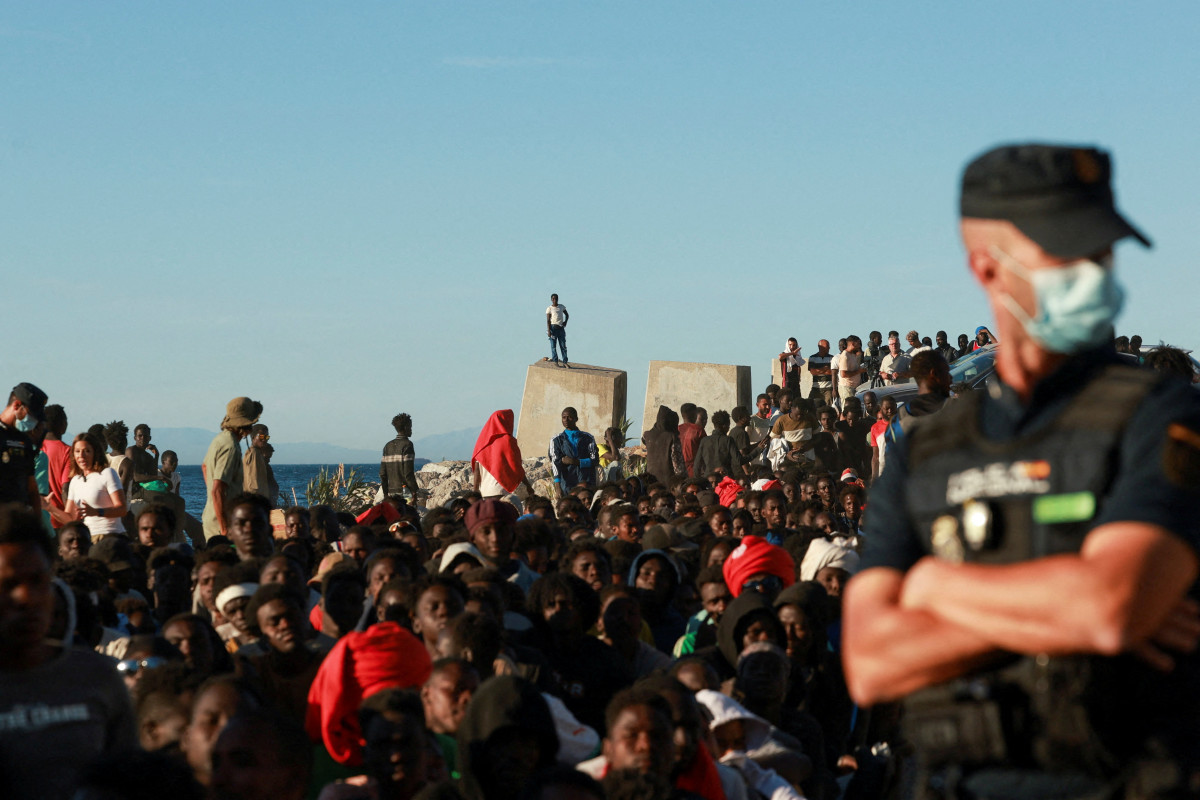
Madrid now estimates that about 69,500 migrants have already been returned to Moroccan territory after crossing the border, a number tens of percent higher than the original estimate of only about 50,000 people. Beyond the monstrous numbers of border crossers in such a short period of time, the cost in human life turns out to be unbearably heavy: the official death toll on the Spanish side of the border stands at 72 people, while on the Moroccan side, 11 more deaths were reported who drowned or were trampled to death.
Sharp criticism and punitive measures against Madrid
According to critics, Spain’s lenient immigration policy, and in particular the mass regularization program that granted legal status to hundreds of thousands of immigrants – a move that led to notable growth in Spanish GDP but sparked outrage in European capitals – is what encouraged the current wave of infiltration. Sánchez himself tried to fend off criticism and accused the smuggling networks of cynically exploiting the decision of the Spanish Supreme Court, which recently limited the government’s right to deport to immediately those who arrived in its territory by sea.
Von der Leyen, whose initial reaction to Madrid was described as particularly cool and gave impetus to the attacks, did indeed change her tone later in her letter to Sanchez and praised his government’s “quick handling” of most of the infiltrators. However, she made it clear unequivocally that Spain “must do much more to strengthen its borders at critical points”, and called for extensive use of physical barriers.
Anger in Spain: “an egotistical and polarized reaction”
In Madrid, on the other hand, there is a resounding feeling of abandonment and great anger towards the European partners. Prime Minister Sanchez did not remain oblivious and publicly defined the reaction of the EU countries as “egotistical, polarized and illegal”, one guided solely by “prejudice, fake news, ignorance or cold political interest”.
Beyond the purely immigration issue, it seems that Spain’s isolation stems from much broader and more complicated geopolitical reasons. Madrid’s opposition to increasing the defense budget to 5% of GDP is infuriating among the Northern European countries, which are very disturbed by the war in Ukraine. At the same time, Spain’s critical positions towards Israel and Sánchez’s ongoing public confrontation with the global right-wing movement contributed to his political isolation.